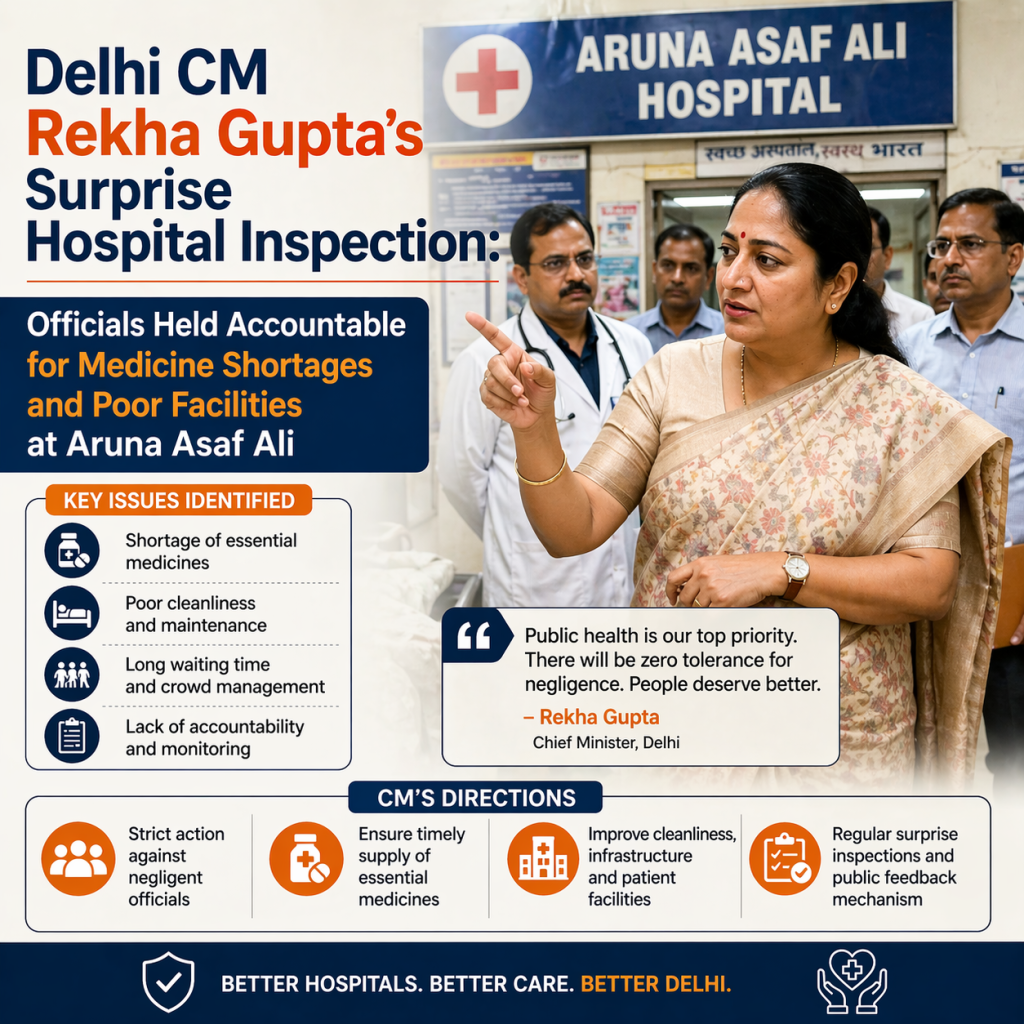
If you’ve ever spent hours in a government hospital waiting for basic care only to find the prescribed medicine isn’t available or the washroom is unclean you know how frustrating it can be. On April 23, 2026, Delhi Chief Minister Rekha Gupta saw this reality firsthand during a surprise inspection of Aruna Asaf Ali Hospital in central Delhi. She didn’t just walk through the corridors; she listened directly to patients, especially elderly ones who had been queuing since early morning and held officials responsible for the shortcomings.
This wasn’t a ceremonial visit with advance notice and photo ops. It was the kind of on ground check that cuts through bureaucracy and it has sparked fresh conversations about fixing public healthcare in the capital. In this article we’ll break down exactly what unfolded, specific problems she flagged, steps she’s ordered and most importantly practical takeaways for anyone who uses Delhi’s government hospitals. Whether you’re a patient, a family caregiver or simply someone who cares about better public services, there’s useful insight here.
Surprise Inspection: What Actually Happened
Aruna Asaf Ali Hospital, a busy government facility serving thousands of patients daily, became the focus when Chief Minister Rekha Gupta arrived without prior warning. According to a statement from the Chief Minister’s Office (CMO), she toured key areas including the Outpatient Department (OPD), patient wards, pharmacy counters, sanitation facilities, water supply points and digital service systems.
She spent time interacting with patients, their attendants, doctors and hospital staff. Many elderly visitors shared similar stories: they had arrived as early as 8 a.m. but waited for hours without being seen by a doctor. Others pointed out overcrowding in the OPD and glitches in the online appointment system that weren’t syncing well with on site processes.
CMO statement noted that Gupta expressed clear displeasure at these lapses, describing the situation as “completely unacceptable.” She immediately asked officials to check stock registers and address complaints on the spot. This direct approach talking to people rather than relying only on official reports gave her a real picture of daily operations.
Key Issues Identified During the Visit
Several practical problems stood out, based on patient feedback and the CM’s own observations:
- Medicine shortages: Multiple patients reported that even after consultations, the hospital pharmacy didn’t have the prescribed drugs. They were forced to buy them from outside, adding unexpected costs and inconvenience.
- Poor sanitation and basic amenities: Concerns ranged from unclean facilities to inconsistent water supply issues that become especially critical as summer temperatures rise in Delhi.
- Long waiting times and overcrowding: Elderly patients highlighted the lack of proper seating and inefficient token systems, turning simple visits into exhausting ordeals.
- Gaps in doctor availability and system integration: Online booking system wasn’t fully coordinated with offline queues, leading to unnecessary delays.
These aren’t isolated complaints. They reflect common challenges in many public hospitals across India, where high patient loads often strain limited resources. By addressing them publicly and promptly, Chief Minister signaled that such gaps won’t be tolerated.
CM Rekha Gupta’s Directives: From Words to Action
Gupta didn’t stop at criticism. She issued clear, actionable instructions to the hospital administration:
- Ensure full availability of medicines, vaccines, drinking water and hygiene standards, with special attention to summer preparedness (think heatstroke management, dehydration prevention, and infection control).
- Provide prescribed medicines to patients on the same day they are examined by doctors no more sending people outside.
- Improve integration between online and offline appointment systems to cut down waiting times.
- Streamline processes like token distribution and add better seating arrangements for waiting patients.
- Modernize overall services to make them faster and more citizen focused, including better staff accountability measures like biometric attendance and visible nameplates.
In a post on X (formerly Twitter), she emphasized her government’s commitment: “Our resolve is that every citizen of Delhi should experience a healthcare system that ensures timely treatment, availability of modern facilities, a clean environment, and services to the patients in a dignified manner.” She added that hospitals should become centers of “service, sensitivity, and trust” for every household.
These directives come with a clear expectation of follow through. CMO has indicated that progress will be monitored, reflecting a pattern in Gupta’s governance style of combining surprise checks with measurable improvements.
Why This Matters for Delhi Residents: Broader Insights
Delhi’s public healthcare system serves millions, especially lower and middle income families who can’t always afford private options. Hospitals like Aruna Asaf Ali act as a safety net, handling everything from routine check ups to emergencies. When basics like medicines or cleanliness slip, it doesn’t just inconvenience people it can affect health outcomes, increase out of pocket expenses and erode trust in the system.
This inspection highlights a few important realities:
- Accountability works when it’s visible: Surprise visits like this encourage staff to maintain standards daily, not just during scheduled audits.
- Patient voices drive change: By prioritizing direct feedback from elderly patients and attendants, the CM showed that real world experiences matter more than paperwork.
- Summer preparedness is urgent: With rising temperatures, issues like water supply and hygiene become life and death matters for vulnerable groups.
For context, this isn’t Gupta’s first such review. She has conducted similar checks at other facilities, consistently pushing for discipline, modern tools and patient centric care. It sends a message that public resources must deliver results not just exist on paper.
Practical Tips for Patients Visiting Government Hospitals in Delhi
Inspections like this are helpful but day to day experiences still depend on how individuals navigate the system. Here are some straightforward, battle tested tips based on common scenarios:
- Book online where possible: Use the hospital’s digital appointment system early in the morning. Even if it’s not perfect, it can reduce your wait compared to walk-ins.
- Carry essentials: Bring a water bottle, snacks, ID proof, previous prescriptions, and a notebook to note down doctor instructions. For medicines, politely ask the pharmacist to confirm stock before leaving the consultation room.
- Arrive prepared for waits: Elderly or mobility challenged patients should have a family member accompany them. Request seating or assistance if queues are long staff are trained to help.
- Know your rights: Under government guidelines, essential medicines should be available free of cost at public hospitals. If they’re not, you can note the issue and follow up via the hospital grievance cell or apps like Delhi Arogya Kosh.
- Follow up smartly: After a visit, keep a copy of your prescription and track improvements. Many hospitals now have feedback kiosks or helplines use them.
- Stay informed: Follow official Delhi government health updates on X or their website for announcements about new facilities, medicine stocks or schemes.
These small steps can make your experience smoother while larger systemic fixes take effect.
A Step Toward Better Healthcare: Looking Ahead
Chief Minister Rekha Gupta’s visit to Aruna Asaf Ali Hospital underscores a simple but powerful idea: public services improve when leaders stay connected to ground realities. By pulling up officials on medicine shortages, sanitation lapses and waiting times and by ordering immediate fixes,she has set clear expectations for the entire healthcare machinery.
For Delhiites, this is more than one hospital story. It’s a reminder that change happens when citizens speak up and authorities respond. As implementation begins, keep an eye on follow!up actions: Are medicines consistently available? Have waiting times improved? Is the environment cleaner?
In the end quality healthcare isn’t just about buildings and budgets it’s about dignity, reliability and trust. Gupta’s resolve to make every hospital a “center of service, sensitivity, and trust” is a goal worth supporting through active citizenship and constructive feedback.
What do you think have you faced similar issues in government hospitals? Sharing experiences (respectfully) can help push for even better outcomes.
FAQ
1. What is Aruna Asaf Ali Hospital?
It’s a major Delhi government run hospital located in central Delhi, providing OPD, inpatient and emergency services to a large number of residents, particularly from surrounding areas.
2. When did Rekha Gupta conduct the inspection?
The surprise visit took place on Thursday, April 23, 2026. Chief Minister’s Office issued a detailed statement shortly after.
3. What were the main problems flagged?
Key issues included medicine shortages, poor sanitation, long queues (especially affecting elderly patients), water supply gaps and poor coordination between online and offline systems.
4. What actions has the CM directed?
Officials must ensure same day medicine supply, better hygiene and water facilities, summer preparedness, faster appointment systems and improved staff accountability (e.g., biometric attendance and nameplates).
5. How can patients report problems in Delhi government hospitals?
Use hospital feedback counters, Delhi government’s health helpline or online portals. Many facilities now have dedicated grievance redressal mechanisms don’t hesitate to use them.
Rekha Gupta’s inspection at Aruna Asaf Ali Hospital isn’t the end of the story it’s a promising beginning. The real test will be in consistent follow through. As citizens, staying informed and engaged is the best way to ensure public healthcare keeps improving for everyone who depends on it. If you’re heading to a government hospital soon go prepared and remember, your feedback matters.
Disclaimer
This post is for informational and educational purposes only. It does not constitute medical advice, legal opinion or an official investigation. Readers should consult qualified healthcare professionals for personal health concerns. All details are drawn from media reports and outcomes of any official inquiry may provide further clarity.
Link: According to media reports from The Times Of India
https://timesofindia.indiatimes.com/india/delhi-cm-conducts-surprise-check-at-aruna-asaf-ali-hospital-directs-for-summer-preparedness/amp_articleshow/130466779.cms