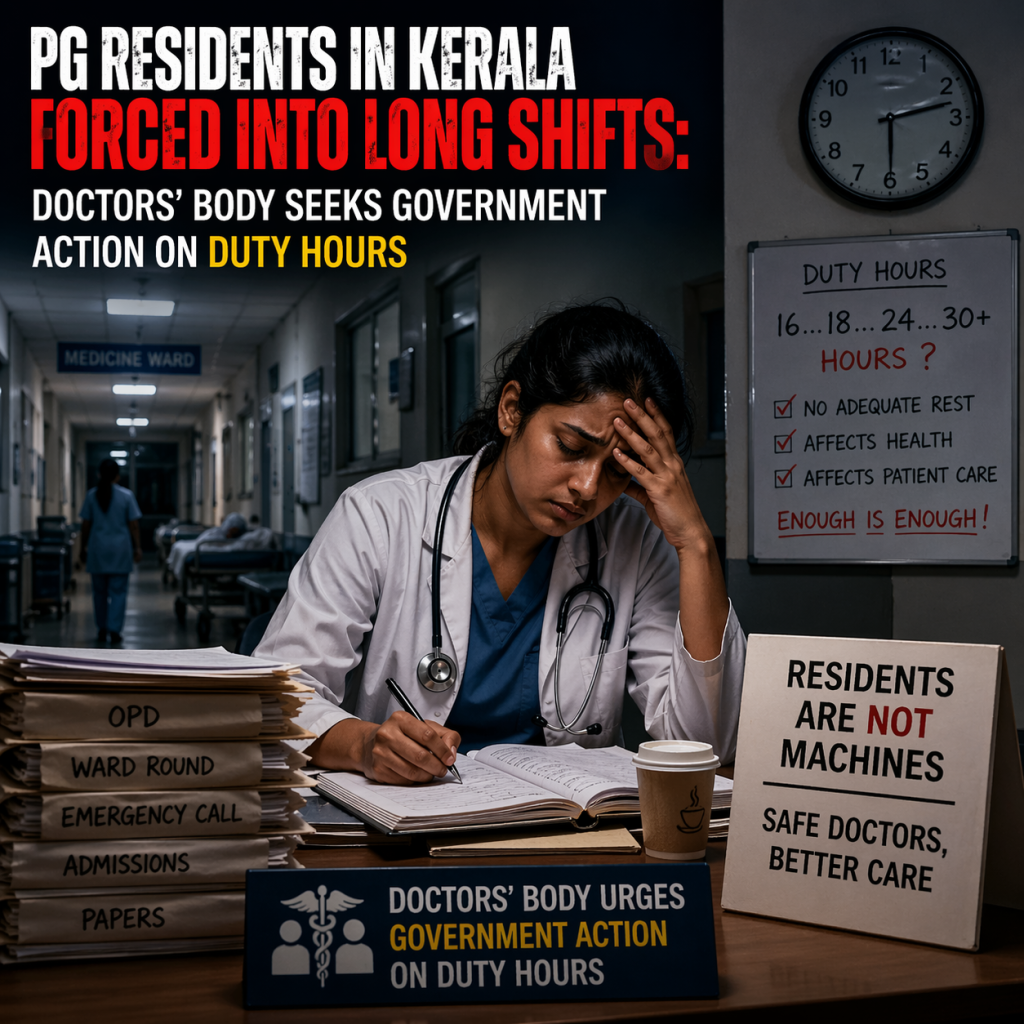
United Doctors Front (UDF) through its chairperson Dr Lakshya Mittal recently wrote to the Principal Secretary of Kerala’s Health and Family Welfare Department. In the letter they highlighted growing worries that postgraduate medical residents in the state’s medical colleges and hospitals are being pushed into shifts that exceed legal limits, they argue, not only harms the young doctors but also raises serious questions about patient care quality.
This isn’t just another complaint, it’s a call backed by established rules and real world consequences with Kerala’s strong public health system already under strain from staff shortages and rising patient loads, the appeal for an independent review could mark an important step toward fixing a long standing problem in medical education.
Understanding PG Medicos and Their Role in Healthcare
Postgraduate medicos or PG residents are doctors who have completed their MBBS and are now specializing in fields like surgery, medicine, pediatrics or gynecology. They form the backbone of teaching hospitals handling everything from emergency duties and ward rounds to assisting in surgeries and managing outpatient clinics.
In many ways their training is hands on and invaluable but the flip side is the intense workload Unlike regular jobs, these residents often live on site or stay on call for extended periods, blending learning with service delivery. In Kerala where government medical colleges serve a large population this system keeps hospitals running but at what cost?
What Rules Actually Say About Duty Hours
Clear guidelines exist to prevent overwork. Uniform Central Residency Scheme from 1992, notified by the Ministry of Health and Family Welfare, sets straightforward limits: no more than 12 hours of continuous duty at a stretch and a maximum of 48 hours per week for resident doctors. These rules apply across government and private institutions and have been reinforced by Supreme Court observations on medical education standards.
More recently, National Medical Commission (NMC) has emphasized “reasonable working hours” and adequate rest in its 2023 Postgraduate Medical Education Regulations. A 2024 NMC Task Force report echoed this pointing out how excessive shifts affect both doctor health and patient outcomes. Several states have begun enforcing these more strictly for instance, Karnataka issued specific instructions in 2024, while institutions like AIIMS have updated rosters, and Maharashtra took steps earlier this year.
Kerala itself has a 2009 government order aimed at implementing the residency program properly. Yet, according to the UDF gaps remain in practice, with some colleges allegedly maintaining altered duty records that don’t reflect reality.
Real World Impact: Burnout, Safety and Sustainability
Long hours take a toll that’s hard to ignore. Imagine a resident finishing a 24 hour shift only to be called back for an emergency case shortly after. Fatigue sets in decision making slows and small errors can creep into high stakes situations.
Studies and reports from across India consistently link extended duty hours to higher rates of burnout, anxiety, depression and even residents opting out of programs altogether. In extreme cases, this has contributed to tragic outcomes, including reports of suicides among young doctors in various states. Patient safety also suffers tired hands are more prone to mistakes during procedures and exhausted minds might overlook critical details in diagnosis or monitoring.
In Kerala, where health department prides itself on accessible care, unchecked overwork could undermine the very system residents are training to strengthen. Dr Mittal noted in his letter that such conditions lead to exhaustion, psychological distress and doctors abandoning their seats, which only worsens staff shortages over time.
United Doctors Front’s Specific Appeal to the Government
UDF’s letter doesn’t stop at raising alarms. It calls for the formation of an independent “Enquiry Team on Duty Hours of PG Students” to check compliance across Kerala’s medical colleges. If violations are confirmed, the group suggests appropriate legal steps under relevant provisions of the Bharatiya Nyaya Sanhita.
This request comes amid a broader national dialogue. Parliamentary Standing Committee on Health recently highlighted faculty and resident vacancies in central institutes, warning of clinical errors from overload. UDF has also approached the Union Health Minister and pursued a Public Interest Litigation in the Supreme Court for nationwide enforcement of the 1992 guidelines.
By focusing on Kerala, association hopes to set a practical example. An enquiry, they believe, would bring transparency and encourage hospitals to create fairer duty rosters without compromising training quality.
Why This Matters Now: Kerala’s Healthcare Landscape
Kerala has long been a model for public health in India, with strong indicators in areas like life expectancy and disease control. However, recent protests by government doctors over pay arrears, outpatient hour extensions and workplace safety show underlying pressures. PG residents who often bridge gaps in staffing, feel these strains most acutely.
Adding more residents or faculty isn’t always quick but better scheduling, proper rest periods and technology for monitoring could make a difference, other states successes prove it’s possible: monitored rosters and one weekly off day have helped reduce attrition elsewhere.
Practical Steps Toward Better Balance
For the government and institutions, intervention could involve:
- Regular audits of duty logs.
- Mandatory rest after long shifts.
- Increasing support staff to share the load.
- Training programs on time management and wellness for residents.
Current or aspiring PG students can take small steps too. Prioritize sleep when possible, document hours accurately and connect with resident associations for collective advocacy. Hospitals could explore shift handovers that include brief debriefs to catch potential oversights.
Ultimately, the goal isn’t less training,it’s smarter training that produces competent, healthy doctors ready for long careers.
FAQ
1. What exactly are “excessive duty hours” for PG medicos?
They refer to shifts longer than 12 continuous hours or weekly totals exceeding 48 hours, as per the 1992 national residency guidelines. Many residents report 24–36 hour stretches far beyond these limits.
2. Who is the United Doctors Front, and why are they involved?
The UDF is a doctors’ advocacy group focused on issues affecting medical professionals. Led by Dr Lakshya Mittal, it has previously filed court petitions on resident working conditions and now targets Kerala specifically for local enforcement.
3. How do long hours affect patient care?
Fatigue reduces focus and increases the chance of errors, such as medication mix ups or delayed responses. Studies show well rested doctors make fewer mistakes, directly improving safety and outcomes.
4. Has the Kerala government responded yet?
As of the latest reports, letter is recent and no official response has been detailed publicly. UDF is pushing for swift formation of an enquiry team.
5. What can the public do to support this issue?
Stay informed, support calls for better healthcare staffing, and advocate for policies that value doctor well being stronger systems benefit everyone when they seek treatment.
Conversation around PG duty hours isn’t new, but the UDF’s targeted push in Kerala gives it fresh momentum. By addressing these concerns head on, state has an opportunity to lead by example, creating a training environment that’s rigorous yet respectful of human limits. For residents, patients and the entire healthcare ecosystem that balance could mean healthier doctors delivering better care for years to come.
If you’re a medical professional, student or someone who values quality healthcare, now’s the time to reflect: sustainable systems start with fair conditions. Share this with your network, follow updates from medical associations or reach out to your local representatives small voices can drive meaningful change.
Disclaimer
This post is for informational and educational purposes only. It does not constitute medical advice, legal opinion or an official investigation. Readers should consult qualified healthcare professionals for personal health concerns. All details are drawn from media reports and outcomes of any official inquiry may provide further clarity.
Link: According to Reporting by Medical Dialogues
https://medicaldialogues.in/amp/news/health/doctors/doctors-body-flags-excessive-duty-hours-of-pg-medicos-in-kerala-seek-govt-intervention-169132