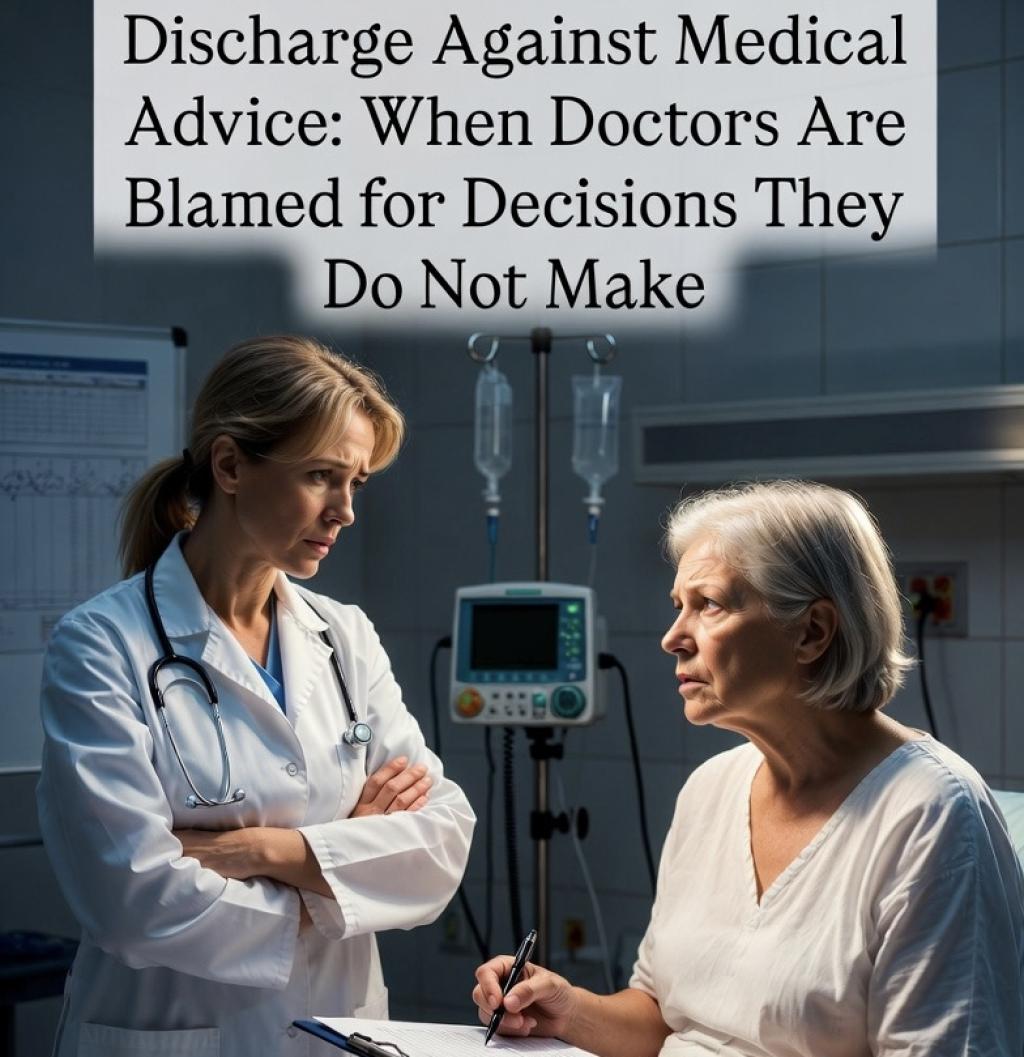
While the intention behind these remarks is to safeguard patient welfare, many doctors argue that the discussion risks misunderstanding what DAMA actually represents in medical practice.Far from being a unilateral decision taken by doctors, DAMA is typically a decision made by patients or their relatives, often against the advice of the treating physician.
In hospital medicine, Discharge Against Medical Advice occurs when a patient chooses to leave the hospital before the treating doctor recommends discharge.The process usually involves explaining the patient’s medical condition, discussing the risks of leaving prematurely, and documenting that the patient or relatives are choosing to discontinue treatment despite medical advice. Only after these steps is the DAMA form signed. In other words, the physician records the decision but does not initiate it.
How Common is DAMA and Why It Happens
Medical literature suggests that DAMA is not a rare occurrence. Studies from hospital systems worldwide show that around 0.1% to 2% of hospital admissions end in discharge against medical advice, though some emergency departments report rates as high as 5% to 20% depending on socioeconomic conditions.
In India, research from tertiary hospitals indicates DAMA rates ranging between 1% and 3% of admissions, with higher numbers in critical care units.The most common reasons cited include financial constraints and high out-of-pocket healthcare costs, desire to shift the patient to another hospital, cultural preference for home care during terminal illness, dissatisfaction or mistrust of the healthcare system, and perceived improvement in symptoms.Financial pressure remains one of the biggest drivers of DAMA in India’s largely self-funded healthcare system.
The Ethical and Legal Dilemma for Doctors
For doctors DAMA represents a difficult ethical dilemma. Medical ethics requires physicians to provide care that is in the best interest of the patient. However, patients also possess the legal right to refuse treatment or leave a hospital.When families insist on leaving, doctors cannot legally detain them. The only option is to document the situation through a DAMA form.Yet paradoxically, doctors often face accusations of negligence if the patient’s condition deteriorates after leaving the hospital.
Medical studies show that patients discharged against medical advice have higher rates of complications, higher hospital readmission rates, and increased mortality risk.This places doctors in a precarious medico-legal position where they may be blamed for outcomes they attempted to prevent.
Clearing Misconceptions: DAMA and Euthanasia
Another misconception that has entered public discourse is the idea that DAMA is used as a substitute for euthanasia in terminal cases.In reality, the two are fundamentally different. Passive euthanasia in India involves a structured legal process with strict safeguards, including consent, medical board review, and adherence to advanced directives.
Discharge against medical advice simply records that the patient or family has chosen to discontinue hospital care against medical advice. It does not involve a physician withdrawing treatment as part of an end-of-life decision.Conflating the two risks misunderstanding both medical ethics and legal frameworks governing end-of-life care.
Why DAMA Reflects Larger Healthcare Challenges
Contrary to popular perception, doctors have very limited control over DAMA decisions. Their responsibilities include explaining the patient’s condition and treatment options, informing relatives about risks of premature discharge, advising continuation of treatment, and documenting that the patient or family chose otherwise.Once the patient leaves, the responsibility for the decision lies with those who insisted on the discharge.
Experts argue that DAMA is often a symptom of deeper structural problems within the healthcare system. India continues to have one of the highest out-of-pocket healthcare expenditures in the world, with many families paying directly for treatment.When prolonged ICU care or expensive therapies become financially impossible, families sometimes opt for discharge against medical advice.Similarly, lack of access to palliative care and counselling services leaves families struggling to navigate emotionally difficult decisions.Thus, what appears to be a medical decision is frequently an economic or social one.
The Way Forward
Instead of viewing discharge against medical advice as a failure of doctors, healthcare experts suggest broader reforms. Strengthening palliative care services, improving health insurance coverage, establishing clear national guidelines on DAMA, encouraging better communication training for doctors, and increasing public awareness about patient rights and responsibilities could help reduce misunderstandings.
The debate triggered by the judiciary’s observations is important and necessary. But it must recognise a simple reality: doctors rarely initiate discharge against medical advice.More often, they are documenting a decision taken by families under emotional, financial, or social pressure.
In a healthcare system already grappling with resource constraints and rising medico-legal scrutiny, misunderstanding this distinction risks unfairly placing responsibility on those who are trying to save lives.Discharge against medical advice is not about doctors abandoning patients. It is about patients choosing to leave despite the doctor asking them to stay.