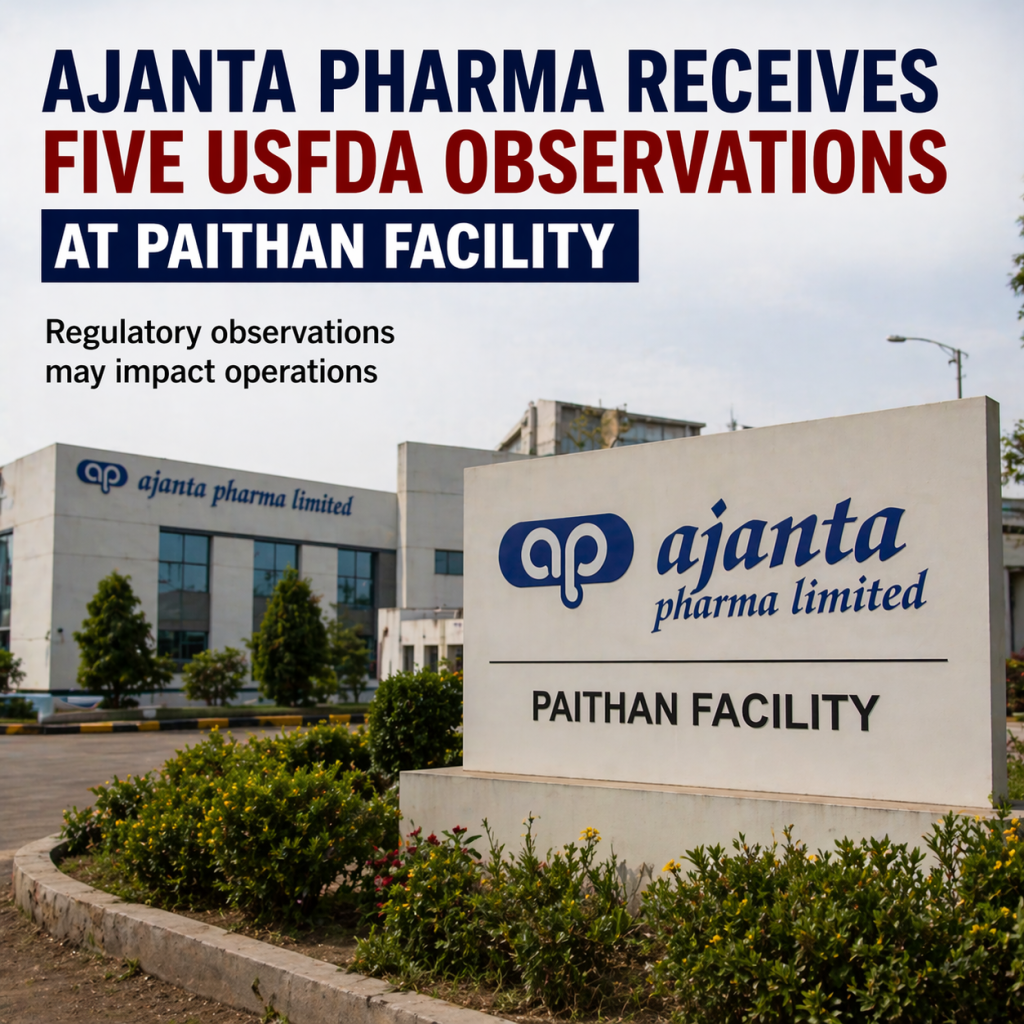
If you follow the Indian pharmaceutical industry, you’ve probably seen headlines like this before. On April 22, 2026 Ajanta Pharma Limited informed the stock exchanges that the U.S. Food and Drug Administration (USFDA) had completed an inspection of its manufacturing facility in Paithan, Maharashtra. The nine day audit which ran from April 13 to April 21 ended with the issuance of a Form 483 listing five observations.
For anyone outside pharma world that might sound alarming but let’s unpack it step by step in plain English. This isn’t a crisis announcement it’s a routine part of how global regulators keep drug manufacturing up to standard and for a company like Ajanta Pharma, which relies heavily on exports, how they handle this will say a lot about their long term commitment to quality.
What Exactly Happened at the Paithan Facility?
According to Ajanta Pharma’s official regulatory filing USFDA team spent just over a week reviewing operations at the Paithan site. At the close of the inspection, inspectors handed over a Form 483 with five specific observations. These are essentially notes pointing out areas where the facility might not be fully aligned with current Good Manufacturing Practice (cGMP) standards.
Ajanta has already stated it will submit a detailed response to the FDA within the required timeframe. That’s standard procedure and a positive signal. The company isn’t ignoring the feedback; it’s treating it as actionable input. No details about the exact nature of the five observations have been made public yet (that’s normal at this stage) and importantly, the issuance of a Form 483 does notmean the facility is shut down, products are being recalled, or approvals are frozen. It’s the first step in a dialogue between the regulator and the manufacturer.
Understanding a USFDA Form 483: No Panic Button Required
Think of a Form 483 like a detailed report card from a thorough inspector. It highlights things that “may” need fixing everything from documentation gaps and equipment calibration records to procedural lapses in the lab or production floor. Common examples across the industry include incomplete investigations of deviations, gaps in cleaning validation, or issues with how data is recorded and reviewed.
Crucially a 483 is nota final enforcement action. It’s not a warning letter, import alert or ban on exports. Most companies receive them from time to time, even the biggest names in pharma. The key is how quickly and thoroughly they respond with a Corrective and Preventive Action (CAPA) plan.
In Ajanta’s case five observations is on the lighter side compared to some inspections that run into double digits. It suggests the issues are manageable rather than systemic red flags. Still market reacted with mild volatility shares dipped slightly on April 22 before stabilizing showing investors are paying attention to regulatory news.
Ajanta Pharma: A Quick Company Snapshot
Ajanta Pharma isn’t a newcomer. Founded in 1973 and headquartered in Mumbai, the company has grown into a specialty focused player with a strong presence in branded generics across India, Africa, Southeast Asia and the Middle East. It also has a growing footprint in the highly regulated U.S. generics market currently offering around 27 products there.
Company operates seven state of the art manufacturing facilities in India. Paithan plant (near Aurangabad in Maharashtra) is one of its flagship sites, approved by the USFDA and WHO. It primarily produces tablets, capsules and oral suspensions dosage forms that are staples in both chronic and acute therapies.
For Ajanta, U.S. market is strategically important. Successful inspections and timely resolutions here help maintain (and expand) their ability to export high quality affordable medicines to American patients. That’s why every FDA visit gets close scrutiny from analysts and investors alike.
Why the Paithan Facility Matters
Paithan isn’t just another factory it’s a key export hub. Its USFDA approval gives Ajanta the green light to ship products made there to the world’s largest pharmaceutical market. Any hiccup in compliance could temporarily slow new product launches or affect supply continuity even if the impact is usually short lived once issues are addressed.
From a patient perspective, these inspections are actually reassuring. They’re the FDA’s way of making sure the medicines we take whether for hypertension, infections or other common conditions meet strict safety and quality standards no matter where they’re made.
Potential Impact on Ajanta Pharma: Short Term vs. Long Term View
Short term? Expect some stock price swings and analyst commentary. Indian pharma stocks often see knee jerk reactions to regulatory news, even when the issues are routine. Ajanta’s shares traded marginally lower on the day of the announcement but nothing dramatic.
Long term? It depends on how effectively the company responds. History shows that well-managed firms use 483 observations as an opportunity to strengthen systems. Many Indian companies have received similar (or more) observations in the past and gone on to secure fresh approvals or even warning letter resolutions within months.
Investors should watch two things closely in the coming weeks:
- The quality and timeliness of Ajanta’s response to the FDA.
- Any follow up communications or re-inspections.
If the CAPA plan is robust and accepted, this story could fade quickly much like similar cases at other reputable firms.
How Pharma Companies Typically Handle Form 483 Observations
Here’s a real world example of what “good handling” looks like. When other Indian pharma players have faced multiple observations, they’ve often formed cross-functional teams within days: quality assurance, manufacturing, engineering, and regulatory affairs all huddle to investigate root causes. They update SOPs (standard operating procedures), retrain staff, validate changes and submit comprehensive evidence to the FDA.
Practical tip for anyone following these
stories: Look for companies that treat observations as a continuous-improvement tool rather than a PR headache. Best ones share high level remediation updates in quarterly calls or investor presentations. That transparency builds trust.
Broader Lessons for the Indian Pharmaceutical Industry
India supplies nearly 40% of the world’s generic medicines, so USFDA inspections are a regular feature of life here. Regulators are increasingly focused on data integrity, risk based inspections and robust quality management systems.
For companies like Ajanta staying ahead means investing in automation, digital record keeping and ongoing training. Patients ultimately benefit when manufacturers view compliance not as a checkbox but as core to delivering safe effective drugs.
FAQ: Your Quick Questions Answered
Q1: Is this bad news for Ajanta Pharma?
Not necessarily. Five observations after a routine inspection is relatively contained. The real test will be the company’s response and any follow up from the FDA.
Q2: Will this affect drug supplies or patient access?
Unlikely in the short term. Existing approvals remain intact while the company works on the observations.
Q3: What should investors do?
Stay informed but avoid overreacting. Review Ajanta’s upcoming quarterly results for any updates on the remediation timeline. Long term investors often see these as buying opportunities if the fundamentals (like revenue growth and R&D pipeline) remain strong.
Q4: How common are Form 483s?
Very common even for top tier companies. The FDA issues hundreds every year. It’s the resolution process that separates strong performers from the rest.
Q5: Where can I track further updates?
Keep an eye on BSE/NSE filings, Ajanta’s investor page, and credible pharma news sources. FDA itself sometimes publishes summaries later but that can take time.
Final Thoughts: Quality Is a Journey, Not a Destination
Ajanta Pharma’s latest USFDA interaction reminds us that even established players face regular scrutiny and that’s exactly how the system is designed to work. Five observations aren’t a showstopper, but they are a prompt to double down on excellence.
For investors this is a chance to assess management’s focus on quality culture. For the thousands of patients who rely on Ajanta’s medicines, it’s reassurance that independent watchdogs are doing their job. And for the broader Indian pharma ecosystem, every resolved 483 reinforces India’s reputation as a reliable global supplier.
If you hold Ajanta shares or simply follow the sector, use this moment to reflect: What does strong regulatory compliance look like in practice? Companies that treat it as a competitive advantage investing in people, processes and technology tend to thrive over the long haul.
Stay tuned for Ajanta’s official response and any updates from the FDA. In the meantime, the takeaway is simple: transparency, speed, and thoroughness in addressing observations will determine how quickly this chapter closes.
What are your thoughts on how Ajanta should handle this? Drop a comment below if you’d like more on reading pharma regulatory filings or spotting red flags in company disclosures. Smart investors ask the right questions and this is one of those moments worth watching closely.
Disclaimer
This post is for informational and educational purposes only. It does not constitute medical advice, legal opinion or an official investigation. Readers should consult qualified healthcare professionals for personal health concerns. All details are drawn from media reports and outcomes of any official inquiry may provide further clarity.
link: According to media reports from The Economic Times
https://m.economictimes.com/industry/healthcare/biotech/pharmaceuticals/ajanta-pharma-faces-usfda-inspection-blow-5-critical-observations-issued-at-paithan-manufacturing-facility/amp_articleshow/130433855.cms