If you live in areas like Rajajinagar, Vijayanagar, Yeshwanthpur or surrounding neighbourhoods in western Bengaluru, you probably know the frustration. A sudden chest pain or breathing difficulty often means a long, stressful ambulance ride across the city to the main Jayadeva Institute in Jayanagar. Traffic, distance and time can turn a medical emergency into something far more complicated.
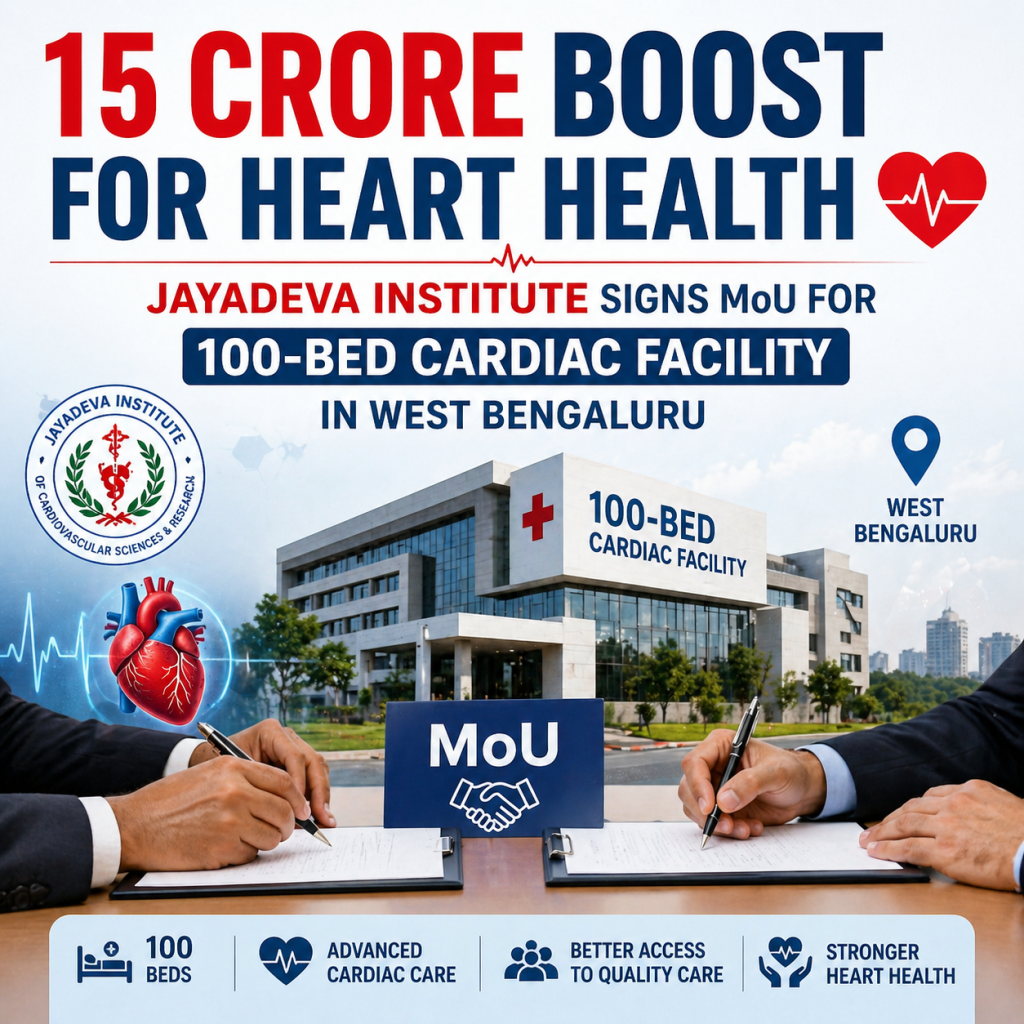
That is exactly why the announcement made earlier this week feels like a practical step forward. The Sri Jayadeva Institute of Cardiovascular Sciences and Research has entered into a formal agreement with the Greater Bengaluru Authority to establish a dedicated 100 bed cardiac satellite unit right in Govindarajnagara, West Bengaluru. The Karnataka government has already released an initial ₹15 crore to get the project moving.
This is not just another hospital announcement. It is a deliberate attempt to shift specialised cardiac care from one central location to where people actually live and work. In the sections below, we explain what the partnership involves, what services the new unit is likely to offer, how it could change daily realities for thousands of families, and what you can do right now to protect your own heart health.
Partnership: Who Signed What and Why It Matters
On 24 April 2026, Dr B. Dinesh, Director of the Sri Jayadeva Institute, and N. Maheshwar Rao, Chief Commissioner of the Greater Bengaluru Authority, signed the memorandum of understanding. The ceremony was attended by Medical Education and Skill Development Minister Sharan Prakash Patil, Govindarajnagara MLA Priya Krishna and several senior officials from both organisations. The core idea is simple: the main Jayadeva hospital in Jayanagar already handles a very high volume of complex heart cases. By creating a satellite unit in the west, the institute can manage routine and intermediate level cardiac problems closer to patients while still referring the most complicated surgeries back to the main centre. This kind of “hub and spoke” model is used successfully in many large cities worldwide and helps reduce pressure on the primary facility.
Officials present at the signing stressed that the goal is not to duplicate the main hospital but to create a reliable first-response and follow-up centre that works in close coordination with it. Patients who need advanced procedures such as open heart surgery or specialised interventions can still be transferred smoothly when required.
Where Exactly Will the New Unit Be Located?
The facility will come up at Govindarajnagara in West Bengaluru, inside premises managed by the Greater Bengaluru Authority. This location is strategic. It sits in the heart of a densely populated residential and commercial belt that includes many middle class families, working professionals and senior citizens who currently spend 45 minutes to over an hour reaching Jayanagar during peak hours.
For someone living in Vijayanagar or Rajajinagar, the new unit could cut travel time by more than half. In cardiac emergencies, every minute counts. Shorter ambulance journeys often translate directly into better survival rates and fewer complications.
Funding and How the Project Will Take Shape
The state government’s immediate allocation of ₹15 crore will cover the initial phase setting up infrastructure, basic equipment, staffing and training. While the full project cost and detailed timeline have not been released yet, officials have indicated that construction and equipping work will begin soon.
A 100 bed unit of this kind typically includes:
- A well equipped emergency and casualty section
- Cardiac intensive care beds
- Operation theatres for angioplasty and other catheter based procedures
- Non-invasive diagnostic facilities such as ECG, echocardiography and treadmill testing
- Outpatient consultation rooms
- Support services like pharmacy, blood bank linkage and ambulance coordination
The unit is expected to function as an extension of the main Jayadeva Institute, sharing protocols, training programmes and specialist oversight. This ensures consistent quality of care even though it is located several kilometres away.
How This Changes Things for Real People
Consider a typical scenario. A 58 year old accountant from Govindarajnagara wakes up at 3 a.m. with severe chest discomfort and sweating. In the past, his family would call an ambulance and brace for a long, anxious ride through dimly lit roads and heavy night traffic. By the time he reached Jayanagar, precious time would have been lost.
With the new unit operational, the same patient could reach advanced cardiac care within 15–20 minutes. Doctors on site could stabilise him, perform an ECG and if needed, carry out an emergency angioplasty without waiting for transfer. Families would spend less time worrying about logistics and more time focusing on recovery.
For routine follow ups too, difference is significant. Elderly patients on blood thinners or those recovering from stents often need frequent check ups. Travelling long distances every month becomes exhausting. A local unit means shorter trips, less fatigue and higher likelihood that patients actually complete their follow up schedule.
Cardiac Care Challenges in a Growing City Like Bengaluru
Bengaluru’s rapid expansion has brought many lifestyle related health issues. Long working hours, irregular meals, high stress, air pollution and limited physical activity have contributed to a steady rise in heart disease across all age groups. The main Jayadeva Institute has done remarkable work but its central location means many residents in the western and northern parts of the city face barriers to timely care.
Decentralisation addresses one of the biggest practical problems: access. When specialised care moves closer to where people live, early detection improves, emergency response becomes faster and overall outcomes tend to get better. This is not just theory similar satellite models in other Indian cities have shown measurable reductions in treatment delays.
What Services Can Patients Expect?
While the exact list of procedures will be finalised during the planning phase, a 100 bed cardiac satellite unit of this scale usually offers:
- 24×7 emergency cardiac care
- Coronary angiography and angioplasty
- Management of heart failure and arrhythmias
- Pacemaker implantation
- Non-invasive tests and preventive cardiology consultations
- Cardiac rehabilitation programmes
Complex cases such as paediatric heart surgeries, heart transplants or highly specialised valve replacements will continue to be handled at the main Jayadeva campus, with smooth referral pathways in place.
Simple Steps You Can Take for Better Heart Health Today
While the new facility is being built, there is plenty you can do to reduce your own risk. Heart disease is largely preventable through consistent habits:
- Walk for at least 30 minutes most days. Even brisk walking in your neighbourhood park helps control blood pressure and improves circulation.
- Watch what you eat. Reduce fried snacks, sugary drinks and excessive salt. Include more fruits, vegetables, whole grains and nuts.
- Get basic checks done. Blood pressure, blood sugar and cholesterol levels should be monitored at least once a year after age 35, or earlier if there is family history.
- Manage stress. Short breathing exercises or a 10-minute meditation break during the workday can make a noticeable difference.
- Quit tobacco completely. Even occasional smoking significantly raises heart attack risk.
- Know the warning signs. Chest pain or discomfort, sudden shortness of breath, pain radiating to the arm or jaw, and unexplained sweating are red flags. Do not wait reach the nearest medical facility immediately.
If you live in West Bengaluru and have risk factors such as diabetes, high blood pressure or a family history of heart disease, consider booking a preventive consultation at the main Jayadeva Institute or a nearby clinic in the coming weeks. Early action often prevents bigger problems later.
What Happens Next?
The MoU marks the beginning of the process rather than the end. Detailed project reports, architectural plans, equipment procurement and staff recruitment will follow. The institute and the Greater Bengaluru Authority are expected to release regular updates as milestones are achieved. Residents can keep an eye on official announcements from both organisations for the latest information on timelines and how to register for services once the unit opens.
Frequently Asked Questions
When will the 100 bed cardiac unit actually open?
The exact opening date has not been announced yet. Initial funding has been released and planning is underway. Most such projects take 12–18 months from signing to full operation, but updates will be shared as construction progresses.
Will treatment at the new unit be free or paid?
As a government-supported satellite of a premier institute, services are expected to follow the existing pricing structure of Jayadeva Institute, which is already among the more affordable options for advanced cardiac care in the country. Exact tariffs will be notified closer to launch.
What kind of heart problems will the unit handle?
It will manage most common cardiac emergencies and procedures including angioplasty, pacemaker implantation, heart failure management and routine diagnostics. Very complex surgeries will still be referred to the main Jayadeva campus.
How will the new unit coordinate with the main hospital?
The two facilities will operate as a single network. Medical records, specialist opinions and patient transfers will be streamlined through shared protocols and possibly telemedicine links.
Who should consider using the new facility once it opens?
Anyone in West Bengaluru needing cardiac consultation, emergency care or follow-up treatment can benefit. Priority will naturally go to residents of the surrounding areas but the unit is open to all.
A Practical Step Forward for Bengaluru’s Heart Health
This partnership between Jayadeva Institute and the Greater Bengaluru Authority represents a thoughtful response to a very real problem the gap between where people live and where specialised care is available. By bringing 100 dedicated cardiac beds and supporting infrastructure to Govindarajnagara, initiative has the potential to save precious minutes in emergencies and make routine heart care far more convenient for thousands of families.
Healthcare improvements work best when they are paired with personal responsibility. While the new unit takes shape, use this moment to reflect on your own habits. Schedule that overdue check up. Take the evening walk you have been postponing. Talk to your family about warning signs and emergency plans. Small, consistent actions today can prevent major health events tomorrow.
Stay informed about developments in your neighbourhood’s healthcare facilities. Share accurate information with neighbours and relatives who might benefit. And most importantly, treat your heart with the care it deserves it works for you every single day. The new cardiac satellite unit is one more reason to feel hopeful about accessible, high quality healthcare in Bengaluru. Make sure you are ready to benefit from it when it opens.
Disclaimer
This post is for informational and educational purposes only. It does not constitute medical advice, legal opinion or an official investigation. Readers should consult qualified healthcare professionals for personal health concerns. All details are drawn from media reports and outcomes of any official inquiry may provide further clarity.
Link: According to The Hindu reports
https://www.thehindu.com/news/national/karnataka/jayadeva-institute-signs-mou-with-gba-to-set-up-100-bed-cardiac-hub-in-west-bengaluru/article70901326.ece/amp/