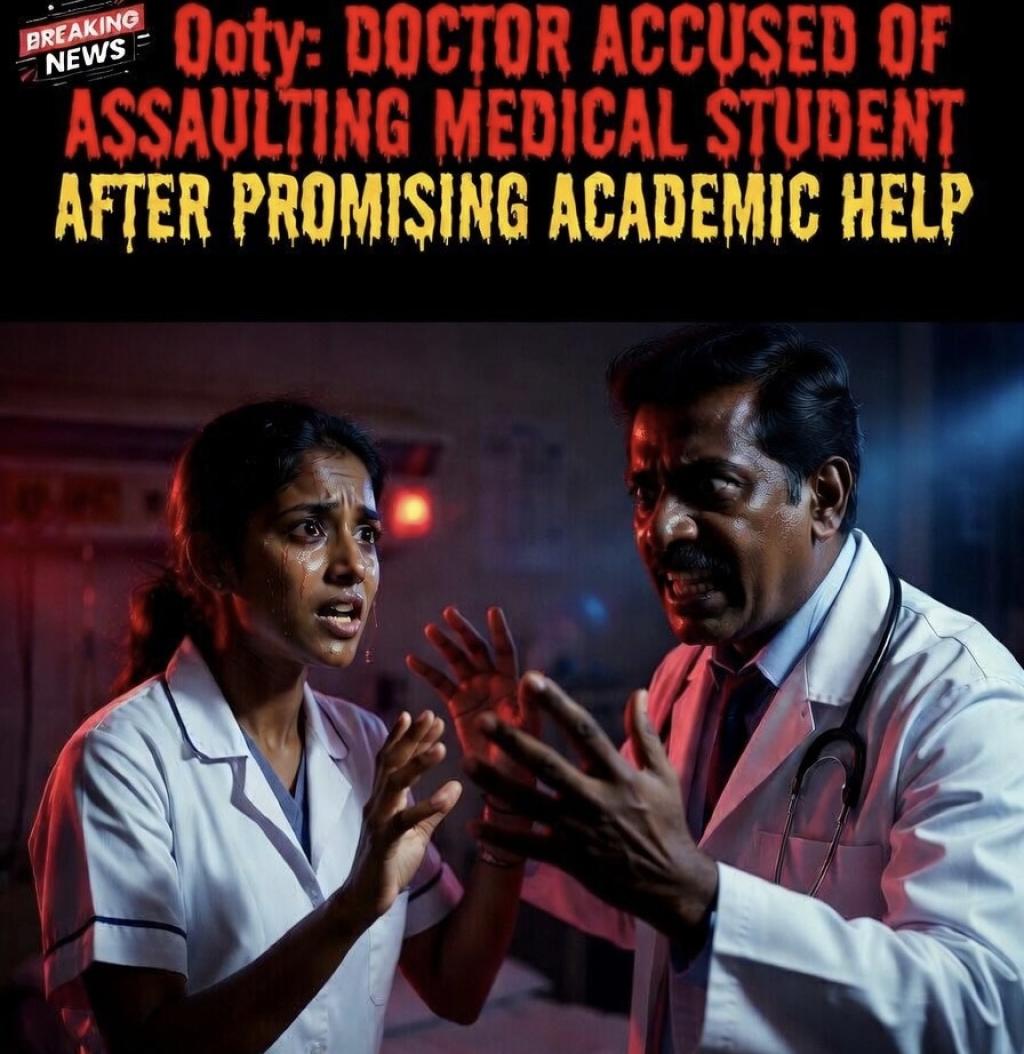
The disturbing news from Ooty has once again brought attention to the persistent issues of power abuse, exploitation and safety failures within India’s medical education system.
What Allegedly Happened
According to reports:
- Accused is 44-year old doctor , allegedly approached the student who hails from a northern Indian state by promising to use his influence with university authorities to help her secure passing marks in her examinations.
- He allegedly lured her to a private hotel in Ooty under the pretext of discussing academic matters.
- Reports indicate that he may have intoxicated her with alcohol before sexually assaulting her.
- The student later filed a complaint, leading to his swift arrest. He was produced before the Additional Mahila Court in Ooty and remanded to judicial custody.
The case falls under serious provisions of the Bharatiya Naya Sanita(BNS) including charges related to rape and abuse of authority.
Why This Case Is So Disturbing
This is not just another isolated incident it represents a profound betrayal of trust in one of society’s most respected professions. Doctors are expected to heal, protect, and guide. Instead:
- A position of authority (as a doctor and someone claiming academic influence) was allegedly used to exploit vulnerability.
- The victim is a medical student already under immense pressure, facing long hours, high-stakes examinations, and fear of failure in a highly competitive environment.
- The case reflects a broader pattern of misconduct in medical institutions, where power imbalances between faculty or staff and students often go unchecked.
India has witnessed widespread outrage over similar cases in recent years. The 2024 RG Kar Medical College rape-murder in Kolkata, for instance, triggered nationwide protests and strikes by doctors demanding safer workplaces. Yet incidents like this continue to emerge.
The Bigger Picture: Systemic Failures
1. Lack of Safeguards in Medical Education
Mentorship and academic guidance often extend into informal interactions without proper oversight. Students, especially those from outside states, may feel pressured to accept “help” to navigate the system.
2. Power Imbalance
Faculty members and hospital staff hold significant control over grades, internships, recommendations and career progression. Promises of academic assistance can easily be misused.
3. Underreporting and Fear
Many victims remain silent due to stigma, fear of retaliation, or lack of confidence in the justice system. In this case, the survivor’s decision to come forward deserves recognition, as does the prompt action taken by the all-women police team.
4. Institutional Accountability
This incident raises serious questions about institutional responsibility. Has the college taken disciplinary action? Are there effective mechanisms such as POSH (Prevention of Sexual Harassment) committees, anonymous reporting channels and strict guidelines governing faculty-student interactions?
A Call for Change
Reacting to such incidents is not enough systemic prevention is essential. The following measures must be prioritized:
- Strict anti-harassment policies in every medical college, enforced by independent committees.
- Mandatory ethics training and background verification for faculty and staff.
- Safe and confidential reporting systems, along with strong protection for complainants.
- Regular sensitization programs on consent, professional boundaries, and abuse of power.
- Faster investigations and visible consequences to deter future misconduct.
Final Thoughts
To the survivor: your courage in speaking out matters.You are not alone, and your voice is an important step toward accountability.
To the medical community: incidents like this undermine public trust. It is essential to demand higher standards not only to protect students but also to preserve the integrity of the profession.
Sources: The Times of India (March 16, 2026), DT Next, Medical Dialogues, Manorama Online, and other regional reports.This article is based on publicly available information as of March 17, 2026.