The Brutal Reality Behind the White Coat
Junior residents (post graduate trainees) are the backbone of India’s public healthcare system. They handle everything from emergency night duties to OPDs, ward rounds, surgeries and paperwork often with minimal senior supervision.
According to the investigation:
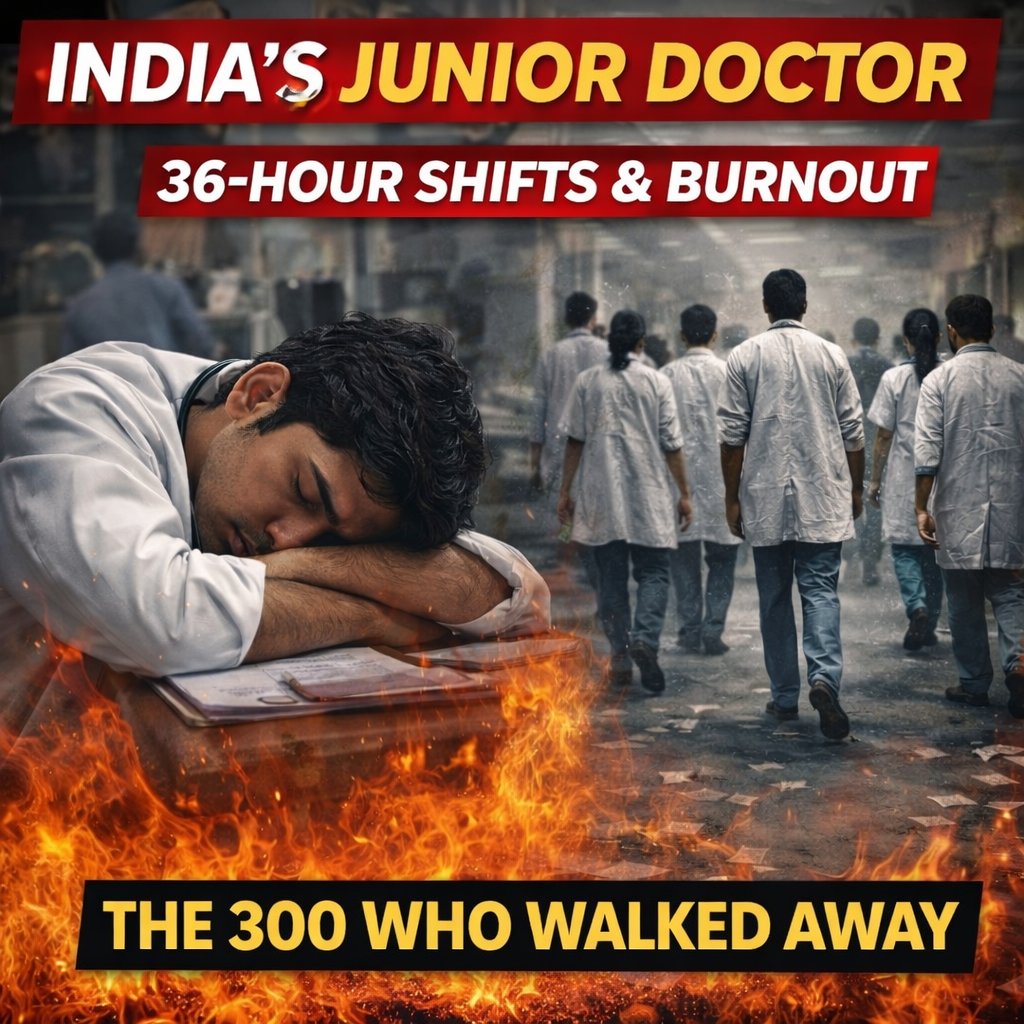
- Many residents routinely work 36 hours straight without proper rest.
- Maharashtra has approximately 13,000 junior and senior residents across government medical colleges and the same pattern of overwork is reported “everywhere.”
- Sleep deprivation has become so normal that doctors are collapsing on duty or catching a few minutes of rest on hospital benches between cases.
The official rulebook talks about limiting duty to 7–8 hours a day in certain contexts, yet ground reality is completely different. Hospitals are understaffed, patient loads are sky high and the fear of “missing learning opportunities” keeps residents from speaking up until they can’t take it anymore.
Why 300 Doctors Quit and 25 Paid the Ultimate Price
Quitting a PG seat is not a small decision. These doctors have already spent years preparing for NEET PG, taken huge education loans and uprooted their lives. Yet 300 of them in one state alone chose to walk away rather than continue.
The reasons are painfully clear:
- Chronic sleep deprivation leading to anxiety, depression, and physical exhaustion.
- No support system — no proper duty rosters, no mental health counselling, and no one to talk to when the pressure hits.
- Fear of making mistakes — when you haven’t slept for 30+ hours, even simple decisions become dangerous.
- Family pressure — many residents hide their struggles because society expects them to “tough it out.”
Report also mentions 2,300 complaints related to fatigue affecting patient care. When doctors are running on empty, patients suffer too. Delayed diagnoses, medication errors, and reduced empathy are the natural outcomes of a broken system.
What the Law Actually Says (and Why It’s Ignored)
India’s National Medical Commission (NMC) and various state guidelines have tried to fix this. There are recommendations for:
- Maximum 8–12 hour shifts
- Mandatory weekly off days
- Proper rest rooms and duty rosters
- Mental health support cells in medical colleges
Yet implementation remains weak. Hospital administrators cite “patient care requirements” and “shortage of hands” as reasons to push residents beyond limits. The result? A vicious cycle where burnt out doctors either quit or continue with declining performance.
Practical Solutions That Can Save Lives
The good news? This crisis is fixable if we act now. Here are realistic, proven steps that experts and resident associations have been demanding:
- Strict Shift Caps – Enforce maximum 12 hour shifts with mandatory 8 hour rest periods between duties. Many countries have done this successfully.
- Increase Residency Seats & Hiring – More hands mean less individual burden. The government should fastrack new medical college expansions and hire more faculty.
- Mental Health First – Every medical college must have a dedicated, confidential counselling cell with 24/7 access. Regular wellness workshops should be compulsory.
- Technology to Reduce Workload – Digital record-keeping,AI assisted triage and better nurse to patient ratios can free doctors from repetitive tasks.
- Transparent Duty Rosters – Residents should be able to report violations without fear of retaliation. Anonymous feedback systems work wonders.
- Incentives for Retention – Better stipends, accommodation and family support can make the residency years more bearable.
Some states have already started small experiments with shift reforms. The rest of India needs to follow urgently.
A Call to Everyone Who Cares
The young doctors wearing white coats in our government hospitals are not machines. They are sons, daughters, husbands, wives and future parents who chose this profession to save lives not to lose their own.
If you are a patient or family member: treat doctors with respect. A kind word can go a long way when someone has been awake for 30 hours.Dainik Bhaskar report of 29 March 2026 is a wake up call. Let’s not wait for the next headline that counts even more lives lost.