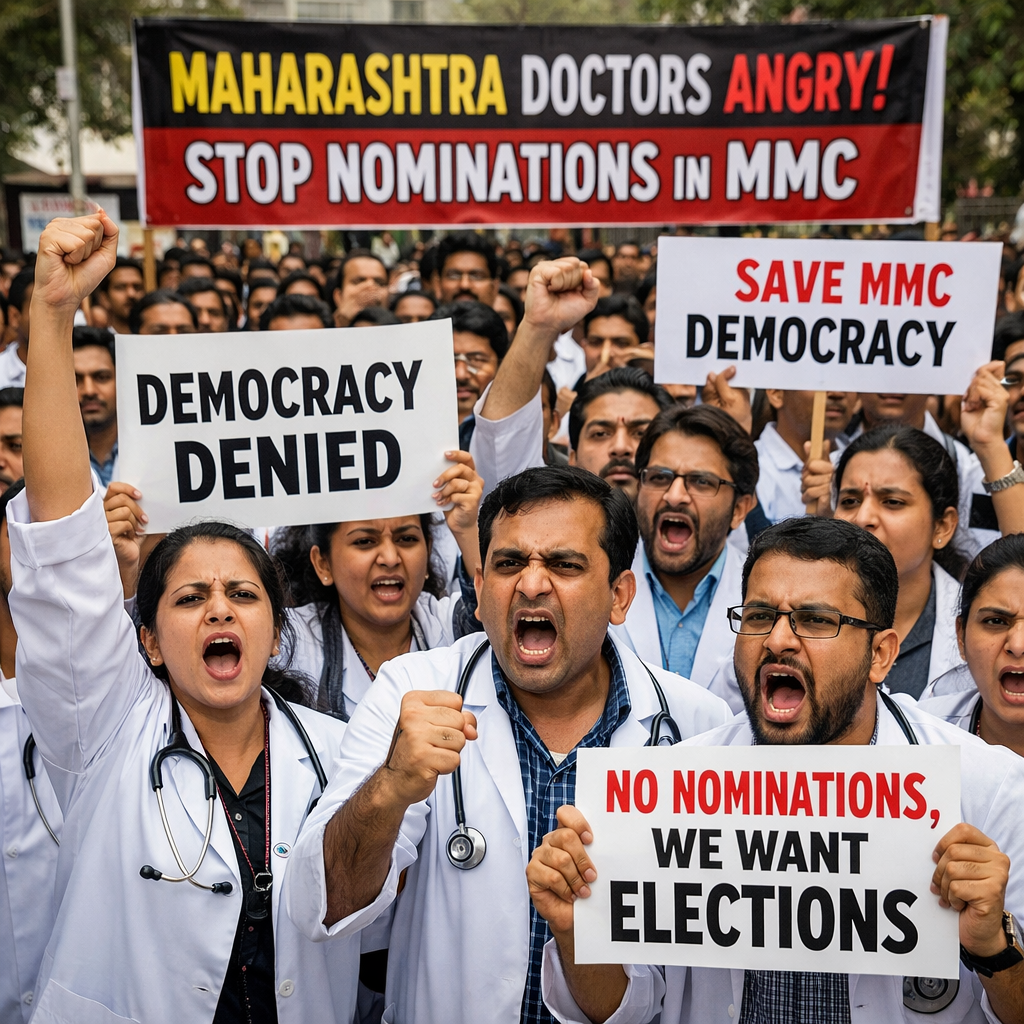
state government plans to introduce a nomination based system, bringing the MMC in line with the structure of the National Medical Commission (NMC).
The move, reported widely on April 14, 2026, has ignited strong reactions within the medical community. While the government calls it a step toward efficiency and modernisation, many doctors view it as an attack on professional autonomy. Here’s a complete, balanced look at what this change means, why it’s happening and what could come next.
Understanding the Maharashtra Medical Council (MMC)
The MMC is Maharashtra’s apex regulatory body for doctors. Established under the Maharashtra Medical Council Act, 1965 it is responsible for:
- Registering and licensing medical practitioners
- Maintaining ethical standards
- Overseeing medical education quality
- Handling complaints against doctors
For decades, MMC’s executive body was elected directly by registered doctors across the state. This democratic process gave physicians a direct say in who regulates their profession. However, elections have been irregular. The last full polls were held in 2016 and the council has been functioning under an administrator since 2022.
In March 2026, Supreme Court directed fresh elections to be held by April 26, 2026. That deadline now appears unlikely to be met.
What the Cabinet Has Decided
According to the latest reports, Maharashtra Cabinet has cleared amendments to the 1965 Act. Key changes include:
- Replacing elections with a nomination system for MMC members
- Increasing the total strength of the council to 23 members
- Aligning the structure more closely with the National Medical Commission model at the central level
Government argues that nominations will reduce delays, eliminate political interference in elections, and allow for selection of experts based on merit rather than popularity.
Why the Government Is Making This Move
Officials cite several practical reasons:
- Long delays in elections — MMC has remained without elected representatives for nearly a decade.
- Alignment with national policy — The NMC, which replaced the Medical Council of India in 2019 already follows a nomination model.
- Efficiency and accountability — A nominated body can be reconstituted faster and is expected to focus more on regulation than electoral politics.
- Recent controversies — Allegations of voter-list manipulations (including removal of over 72,000 doctors ahead of the planned polls) had already raised questions about the fairness of the electoral process.
The state believes the new system will make the MMC more responsive to modern healthcare challenges, including rapid advancements in medical technology and the need for stricter oversight.
Doctors Strong Opposition: “End of Democracy in Medicine”
The medical fraternity has reacted sharply. Senior doctors and former MMC presidents have called the decision “undemocratic” and a “government takeover” of the medical profession.
Prominent voices include:
- Dr. Shiv Kumar Utture, who described the move as an attempt to “control the medical fraternity” rather than empower it.
- Several past MMC office-bearers who argue that nominations will reduce accountability to the wider doctor community.
Doctors’ associations fear that:
- Nominated members may favour government interests over professional ones
- The independent voice of the medical community will be weakened
- Future policy decisions on fees, ethics, and working conditions could become more political
Many physicians see this as part of a larger trend of central and state governments tightening control over regulatory bodies that were once more autonomous.
What This Means for Doctors and Patients in Maharashtra
For Doctors:
- Loss of voting rights in MMC elections
- Potentially greater government influence on licensing, disciplinary actions and policy
- Uncertainty about how the transition will be managed
For Patients:
- Hope for faster reforms in medical education and ethics enforcement
- Possible concerns about reduced checks and balances if the regulator becomes less independent
The real test will be whether the new nominated MMC can deliver better regulation without losing the trust of the 1.5 lakh+ registered doctors in Maharashtra.
How Does This Compare with the National Medical Commission?
The NMC at the national level already operates through nominations. Supporters of the Maharashtra move point out that the NMC has brought uniformity in medical entrance exams (NEET), improved transparency in college inspections and introduced new ethics guidelines.
Critics, however argue that the NMC has faced its own share of controversies regarding autonomy and representation of state medical councils. Maharashtra’s decision essentially extends this centralised model to the state level.
What Happens Next?
The amendments still need to be formally notified. Government is expected to issue an ordinance soon to bypass immediate legislative delays. Once implemented:
- The current administrator led council will continue until the new nominated body is formed.
- Existing elected members’ terms (if any) will likely end.
- Fresh guidelines for nomination criteria will be released.
Medical organisations have already begun mobilising. Petitions, representations to the state health minister and possible legal challenges are expected in the coming weeks.
Final Thoughts: Reform or Control?
The Maharashtra Cabinet’s decision to scrap MMC elections reflects a broader national shift toward nominated regulatory bodies in the healthcare sector. Whether this leads to more efficient governance or reduces the medical profession’s independence remains to be seen.
One thing is clear: the coming months will be crucial. Doctors, patients and policymakers will all be watching closely to see how the new system performs.
What do you think?
Should medical regulatory bodies be elected by doctors or nominated by the government? Share your views in the comments below. If you’re a doctor practising in Maharashtra, we’d especially love to hear your perspective on how this change might affect you.
Stay updated with the latest health policy news, medical regulations and doctor community updates. Subscribe to our newsletter for weekly insights.