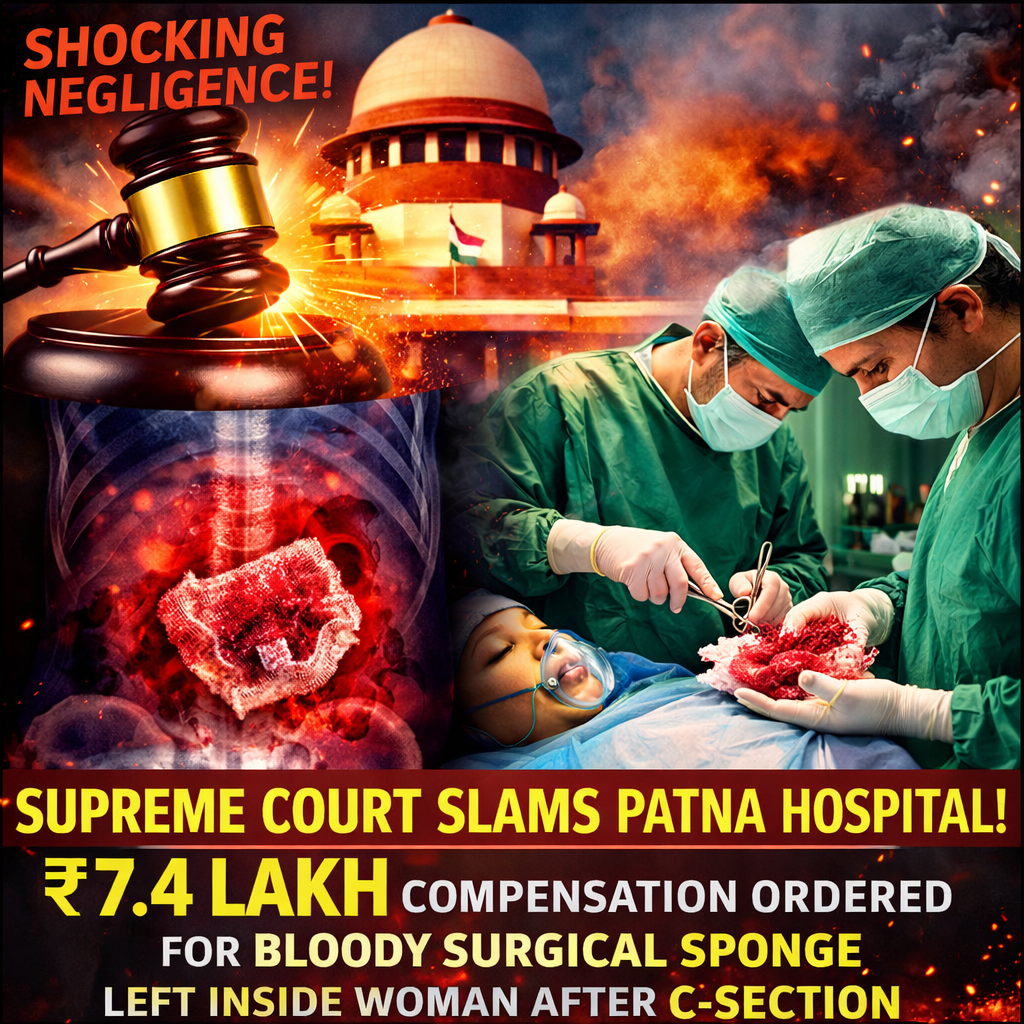
Imagine walking out of the hospital after giving birth thinking hardest part is over only to spend years battling unexplained pain, infections and a second surgery because something was left inside you. Sounds like a horror story? For Binita Singh from Bihar, it became reality after a routine C-section in 2005. Fast forward two decades and the Supreme Court of India just stepped in, ordering her hospital to pay over ₹7.4 lakh in compensation. This isn’t just one woman’s fight it’s a stark reminder that even “routine” surgeries can go wrong in ways we rarely talk about.
In this article, I’m breaking down exactly what happened in Binita’s case, why retained surgical items like sponges still happen, the real human cost and most importantly practical steps you (or your loved ones) can take to stay safe. Whether you’re scheduled for surgery, supporting a family member or just want to be an informed patient, you’ll walk away with clear, actionable insights. No jargon, no fluff just straight talk on protecting yourself in India’s healthcare system.
Case That Brought the Issue Into the Spotlight
Back on August 24, 2005 Binita Singh underwent a Caesarean section at Kurjee Holy Family Hospital in Patna. Everything seemed fine at first but during the procedure, a tetra sponge a small absorbent pad used to control bleeding was accidentally left inside her abdomen. It stayed there undetected for years, triggering serious complications, infections and eventually forcing her to undergo a second surgery to remove it.
Physical agony was bad enough but the mental trauma lingered too. Binita fought the case through consumer forums for years. Lower courts had awarded what Supreme Court later called a “meagre” amount. In its recent order (delivered by Justices M.M. Sundresh and N. Kotiswar Singh), top court called it a “clear” case of negligence and “grave error.” hospital had accepted the lapse but still dragged its feet on fair compensation. Bench noted that even the amount Binita originally sought wasn’t excessive given prolonged suffering she endured.
This ruling isn’t isolated. Similar cases pop up across India sponges, gauze or instruments left behind after abdominal or gynaecological surgeries. One older National Consumer Disputes Redressal Commission decision awarded ₹5 lakh for an infected sponge after a C-section. What makes Binita’s case stand out? Supreme Court’s strong message: hospitals can’t get away with minimal payouts when patients suffer real harm.
What Exactly Is a Retained Surgical Sponge?
Doctors call it a “gossypiboma” a retained foreign body, usually a surgical sponge. These sponges are meant to soak up blood during operations, especially in the abdomen where bleeding can be heavy. They’re small, soft and can hide easily once the cavity is closed.
Why sponges specifically? They’re used more than any other item and can mimic body tissue on scans if not spotted early. Studies show they account for around 70% of all retained surgical items. Incidence is tough to pin down because many cases go unreported but estimates for abdominal surgeries range from 1 in 1,000 to 1 in 6,000 procedures. In India, gynaecological and C-section cases are among the most common.
A retained sponge doesn’t always cause immediate trouble. Some patients feel fine for months or years until infection, pain, bowel obstruction or abscesses hit. In Binita’s situation, it triggered “serious complications” that only a second surgery could fix.
The Real Life Toll: More Than Just Physical Pain
Let’s be honest most of us trust the white coats and sterile operating rooms but when something goes wrong, fallout is brutal. Physically, a sponge can cause chronic infections, fever, swelling and digestive issues. Mentally, it’s exhausting: repeated hospital visits, uncertainty and the fear that “something’s still not right.” Financially add lost wages, extra surgeries, medicines, and travel. For a middle class family in a place like Patna or even smaller towns, this can wipe out savings.
I’ve followed enough patient stories to see the pattern. One woman in Delhi dealt with an infected sponge for weeks post C-section before doctors finally found it. Another family spent lakhs on scans and treatments before realising the root cause. These aren’t rare horror tales,they’re preventable mistakes that erode trust in healthcare.
Why Do These “Never Events” Still Happen?
Hospitals call retained items “never events” because they should never occur with proper protocols. Yet they do. Common culprits?
- Human error in counting: Sponges are tallied before and after surgery but studies show “falsely correct” counts happen in over 70% of cases fatigue, emergency rush or distractions play a role.
- Poor team communication: Surgeon, nurses and technicians must sync perfectly. Shift changes or high pressure ORs can break that chain.
- Lack of technology: Many smaller hospitals still rely only on manual counts instead of radio-opaque sponges (which show up on X-rays) or RFID tracking systems.
- High volume surgeries: In busy government or private setups, corners get cut.
Supreme Court has repeatedly said that leaving a foreign body inside is res ipsa loquitur “thing speaks for itself.” You don’t always need complex expert proof; mistake is obvious.
Your Rights as a Patient in India: You’re Not Powerless
Good news: Indian law has your back. Under the Consumer Protection Act, 2019, medical services count as “services,” and patients are “consumers.” If there’s deficiency due to negligence, you can file in consumer forums at district, state, or national level faster and cheaper than civil courts.
Compensation can cover medical costs, pain and suffering, lost earnings and more. Supreme Court in Binita’s case emphasised that even the amount sought wasn’t “very high” given the mental and physical agony. Other laws like the Indian Penal Code can apply in extreme cases but most patients go the consumer route.
Key tip: Keep all records discharge summaries, bills, prescriptions, and follow up notes. Time limit is usually two years from when you discover the issue, but courts can be flexible in medical cases.
What Hospitals and Surgeons Should Be Doing (And How You Can Spot the Good Ones)
Top facilities now use barcoding, RFID tagged sponges, and X-ray checks in high risk cases. Team briefings and standardised checklists reduce errors dramatically. If your hospital talks openly about safety protocols instead of dodging questions that’s a green flag.
Lessons We Can All Take Away
Supreme Court’s message in Binita Singh’s case was crystal clear: negligence causing prolonged suffering deserves real accountability, not token compensation. It’s not about punishing doctors it’s about fixing systems so no one else goes through the same nightmare.
As patients, we deserve better. This ruling is a win not just for Binita but for anyone who might face surgery tomorrow. It pushes hospitals to invest in prevention and reminds us all to speak up.
FAQ
1. How common is a sponge being left inside after surgery?
It’s rare but more frequent than we admit especially in abdominal or C-section procedures. Exact numbers are underreported but it’s considered a preventable “never event.”
2. What should I do if I suspect something was left inside me?
See your surgeon immediately. Request imaging (X-ray or CT with contrast if needed). Document symptoms and get a second opinion. If confirmed, consult a consumer lawyer or forum.
3. Can I claim compensation even years later?
Often yes, limitation starts from when you discover the issue, not the surgery date. Courts have been sympathetic in retained-item cases.
4. Are all hospitals equally liable?
Yes, both private and government ones. Consumer forums handle most claims efficiently.
5. How can I check if a hospital is safe?
Look for NABH accreditation, ask about their surgical safety checklist, and read recent patient feedback on forums or Google.
Final Thoughts: Be Your Own Best Advocate
Binita Singh waited 20 years for justice, but her story is now helping others. Medical miracles happen every day in India, yet simple lapses still cause avoidable pain. The fix starts with awareness you asking questions, hospitals owning protocols and all of us demanding better standards.
Next time you or a loved one heads into surgery, remember this case. Print the checklist, have the conversation, and keep records. Your vigilance could prevent a lifetime of regret. Healthcare is a partnership, not blind trust. Stay informed, stay safe and never hesitate to speak up. Your health is worth it.
Link: According to pressReader
https://www.pressreader.com/india/hindustan-times-ranchi/20260415/281505052791481?srsltid=AfmBOorjl4v7NlDjYZfF6ysqnMwBtKeylnmxO7yPVQs0-cMO6wP3IGDI
Disclaimer
This post is for informational and educational purposes only. It does not constitute medical advice, legal opinion or an official investigation. Readers should consult qualified healthcare professionals for personal health concerns. All details are drawn from media reports and outcomes of any official inquiry may provide further clarity.