What Exactly Happened at BHU Trauma Centre
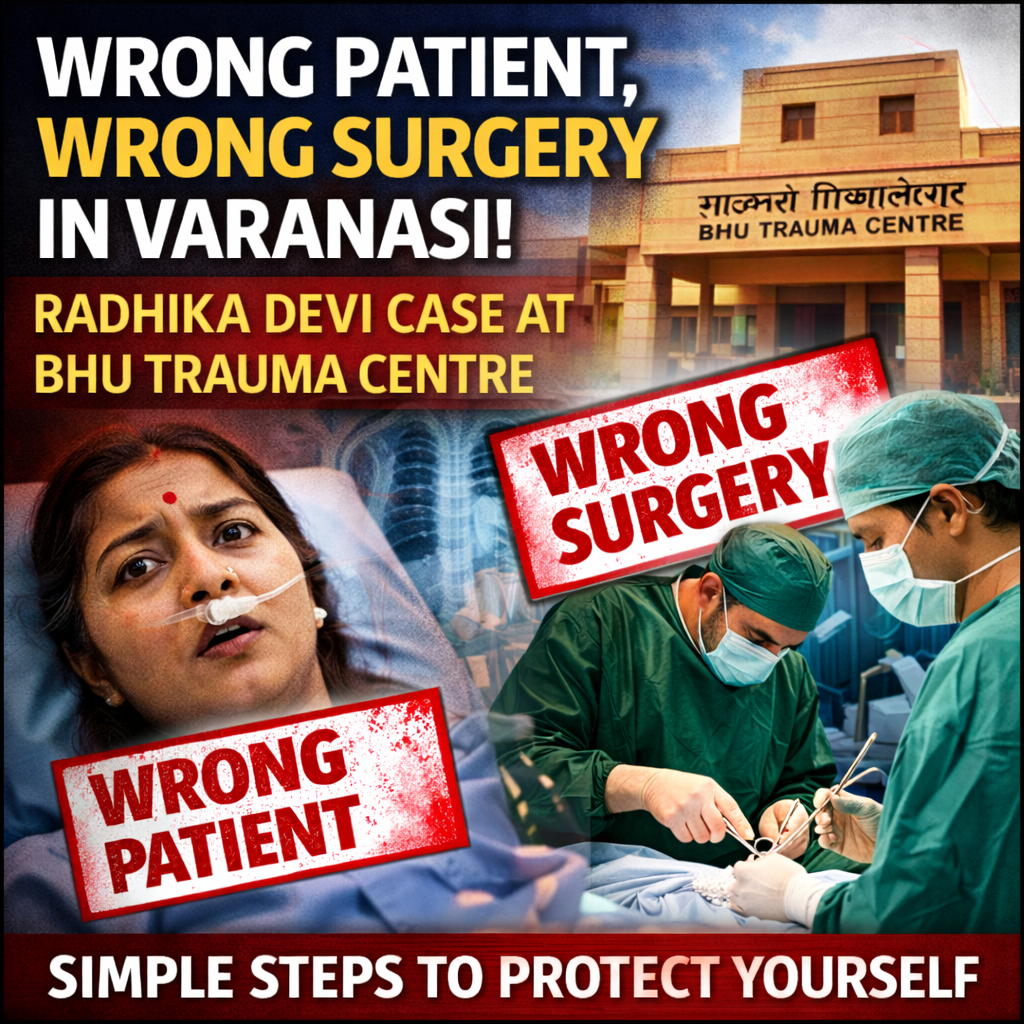
On 25 February 2026, 71 year old Radhika Devi from Ballia was admitted to the neurosurgery department at the Institute of Medical Sciences (IMS) BHU Trauma Centre. She had a spinal cord tumour causing severe pain and needed specialised surgery.
At the same time, another elderly woman also named Radhika, around 82 years old was admitted in the orthopaedics department for a hip fracture and planned leg surgery. Both patients had very similar names and both were elderly women from nearby areas. According to reports, on 7 March orthopaedics team took Radhika Devi (the tumour patient) into the operation theatre by mistake. They began the procedure on her leg, looking for fracture that wasn’t there. Once they realised the error midway, they stopped, closed the incision and sent her back. The correct spinal surgery finally happened on 18 March, but complications followed. Sadly, Radhika Devi passed away around 27-28 March.
Her grandson Mrityunjay Pal, filed a formal complaint. Hospital director formed a four member fact finding committee and case is still under review. Family says they weren’t properly informed at every step, which added to their pain. This wasn’t some rare sci-fi error. It was a classic “wrong patient” mix up something that the World Health Organization has been warning hospitals about for years.
Why Do These Medical Mix Ups Keep Happening?
Indian government hospitals like BHU see hundreds of patients every single day. Beds are full, corridors are crowded and doctors and nurses are stretched thin. In such high pressure environments, a few small cracks can lead to big problems:
- Similar names are surprisingly common.In North India especially, names like Radhika, Sita, Ram or Mohammed repeat a lot. Without strong double check systems, confusion creeps in.
- Paper based records and rushed handovers.Many departments still rely on handwritten files or basic digital systems that don’t flag potential name clashes.
- No universal patient ID at every step.A wristband with just a name and age can easily be misread when two patients share the same first name.
- Communication gaps between departments.Neurosurgery and orthopaedics are in the same campus but operate somewhat separately. A tired resident or nurse might not catch the mismatch.
- Fatigue and high volume.When teams are handling back to back cases, the small but critical “time out” moment before cutting can get skipped.
These aren’t excuses, they’re realities. The good news? Most of them are fixable with simple proven protocols.
Human Cost Beyond the Headlines
For family, this isn’t just a “medical error” statistic. It’s a grandmother who came for treatment and never went home. It’s sleepless nights wondering “what if we had asked more questions?” It’s lost trust in a system many of us rely on when we have no other choice.
Nationwide, medical errors contribute to a huge burden. Studies estimate millions of preventable injuries every year in India. Wrong patient or wrong site surgeries are rare (thankfully) but when they happen they hit hard physically, emotionally and financially. Families often face extra hospital bills, lost wages and years of legal battles.
Gold Standard Every Hospital Should Follow
The World Health Organization’s Surgical Safety Checklist is just three pages long but has cut surgery related deaths and complications by over 30% wherever it’s used properly. It has three simple pauses:
- Sign In(before anaesthesia): Confirm patient identity, procedure, allergies, and consent.
- Time Out(before incision): Whole team verbally confirms the right patient, right site, right procedure. Surgeon, anaesthetist and nurses all introduce themselves.
- Sign Out(before leaving the OT): Count instruments, discuss recovery plan.
Many NABH accredited hospitals in India already use it. question is whether every team follows it every single time, especially in high volume government centres.
7 Practical Things You Can Do Right Now to Stay Safe
You don’t need to be a doctor to protect your loved one. Here’s a straightforward checklist I wish every family used:
- Bring an advocate.One calm family member should stay with the patient from admission to discharge. They can speak up when the patient is anxious or sedated.
- Double-check identity every time.Ask to see the wristband. Make sure the full name, age, and a second identifier (father’s/husband’s name or UHID number) match. If something looks off, speak immediately.
- Insist on site marking.Before any surgery, the surgeon should mark the exact spot with a pen in front of you while you watch.
- Ask the “time out” question yourself.Politely say, “Doctor, can we do the final confirmation together? This is for spinal tumour surgery, right?” Good teams will appreciate the reminder.
- Read the consent form slowly.Don’t sign until you understand the exact procedure, risks, and who will perform it. Ask for a copy.
- Keep your own records.Take photos (with permission) of the admission slip, wristband, and consent form. Note names of doctors and nurses you meet.
- For common names, add extra details.If your name is common, request the hospital to use full name + address or Aadhaar last four digits on all tags.
These small actions take minutes but can save lives.
What Needs to Change System Wide
Hospitals must invest in better electronic record systems that flag similar names automatically. Staff training on the WHO checklist should be mandatory, not optional and families deserve clear updates at every stage not silence when things go wrong.
The BHU case has already sparked conversations. If enough of us demand accountability and better protocols, real change can follow.
FAQ
1. How common are wrong patient surgeries in India?
They are rare compared to total surgeries performed, but even one case is too many. Most errors are caught before any harm, but the ones that reach the news like this Varanasi incident show gaps that still exist.
2. What should I do if I suspect something went wrong during treatment?
Document everything, inform the hospital administration in writing, and approach the State Medical Council or consumer court if needed. Keep copies of all reports and bills.
3. Are hospitals legally responsible in cases like Radhika Devi’s?
Yes. Under Indian law, medical negligence can lead to compensation through civil courts or the Consumer Protection Act. Criminal cases are possible in extreme negligence.
4. Can these errors be completely prevented?
Not 100%, but following WHO checklist, using unique patient IDs, and having a family advocate reduces the risk dramatically.
5. Should I avoid government hospitals altogether?
Not at all. Many excellent doctors work in places like BHU. The key is being an active, informed participant rather than a passive patient.
Final Thoughts: Your Voice Matters More Than You Think
Radhika Devi’s story is tragic but it doesn’t have to be repeated. Every time we walk into a hospital with our eyes open, ask respectful but firm questions, and insist on basic safety steps, we make the system a little safer for everyone.
Next time someone in your family needs surgery whether in Varanasi, Lucknow, Delhi or any small town print out that simple checklist above or save it on your phone. Talk to the doctor like a partner, not just an authority figure and if you see something that doesn’t feel right, speak up immediately.
Healthcare is a shared responsibility. Doctors and nurses do their part every day under tough conditions. Our part is to stay vigilant, informed, and respectful. That small shift in mindset could be the difference between a successful operation and a preventable tragedy.
If this article helped you feel a bit more prepared, share it with your family and friends. And if you’ve had a hospital experience good or bad feel free to share your own tips in the comments. More we talk openly, safer we all become. Stay safe, stay informed and take care of each other.
Link: According to Amar Ujala news https://www.amarujala.com/uttar-pradesh/varanasi/case-of-botched-surgery-bhu-two-surgeries-in-12-days-two-inquiry-committees-formed-action-awaited-2026-04-16
According to WHO Surgery Rules
https://apps.who.int/iris/bitstream/handle/10665/44185/9789241598552_eng.pdf
Disclaimer
This post is for informational and educational purposes only. It does not constitute medical advice, legal opinion or an official investigation. Readers should consult qualified healthcare professionals for personal health concerns. All details are drawn from media reports and outcomes of any official inquiry may provide further clarity.