A Remarkable Stride in Public Health
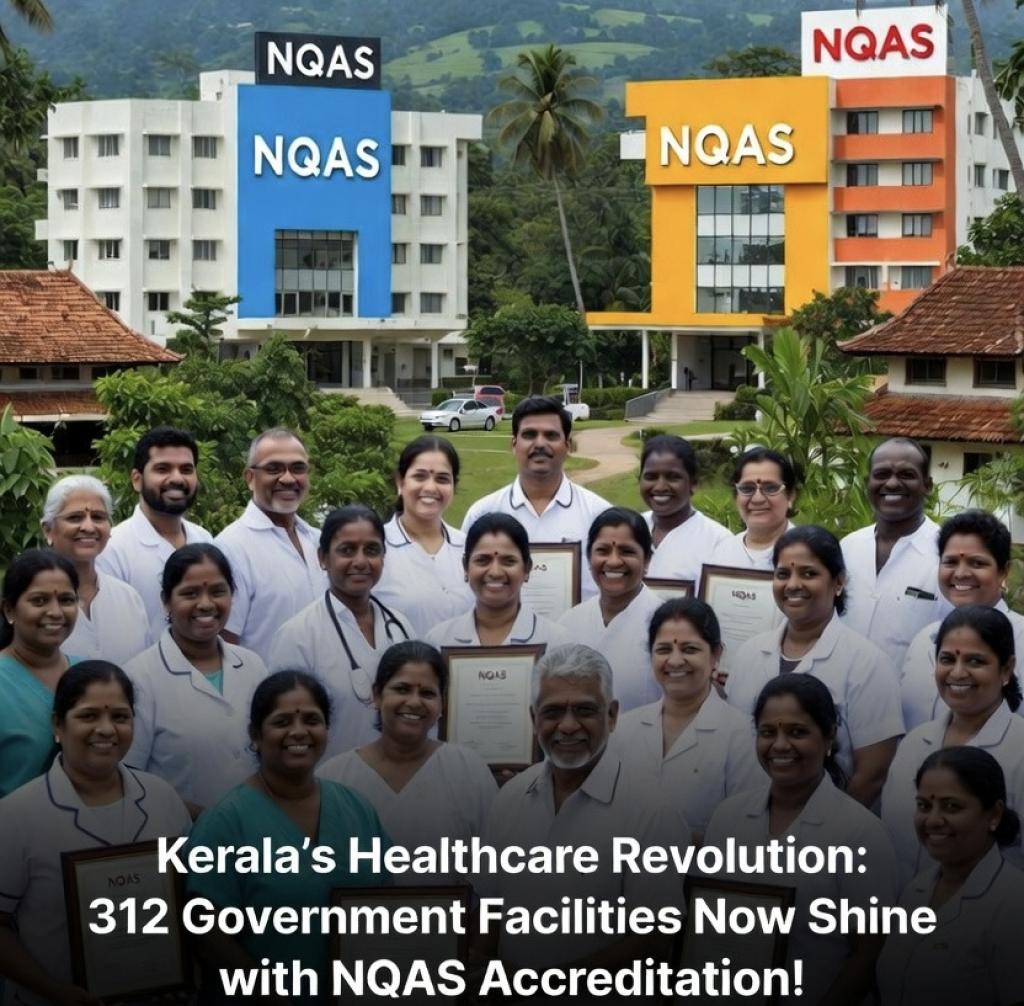
In a remarkable achievement for public healthcare in India, the state of Kerala has once again demonstrated its strong commitment to quality medical services. On March 13, 2026 Kerala Health Minister Veena George announced that four more healthcare facilities have earned the prestigious National Quality Assurance Standards (NQAS) accreditation. With this addition, the total number of accredited government health institutions in the state has reached an impressive 312.
This milestone highlights Kerala’s leadership in strengthening standards in government run healthcare and sets a benchmark for other Indian states.
Understanding NQAS: A Seal of Quality
The National Quality Assurance Standards (NQAS) is a certification program introduced by the Ministry of Health and Family Welfare to improve the quality of public healthcare facilities across the country.
Under this program, government health institutions are evaluated through a comprehensive assessment process that measures:
- Patient care quality
- Infrastructure and facility management
- Infection control practices
- Service delivery standards
- Patient safety and satisfaction
To receive accreditation, a facility must score at least 70% in the evaluation. Once awarded, the accreditation remains valid for three years. During this period, facilities undergo annual state-level inspections and periodic national reviews to ensure that quality standards are consistently maintained.
Incentives for Excellence
The NQAS accreditation is not merely a recognition it also serves as a powerful incentive for improvement.
Accredited healthcare institutions receive financial support aimed at strengthening services and infrastructure:
- Family Health Centres and Urban Primary Health Centres: ₹2 lakh per year
- Community Health Centres: ₹18,000 per service package
- Larger hospitals: ₹10,000 per bed annually
These incentives motivate healthcare workers and administrators to maintain high standards and continuously improve patient care.
The Latest Achievements
The announcement was made by Health Minister Veena George in Kannur. She highlighted the newly accredited facilities, which include public health centres located in Charal and Ambayathodu in Kannur district, and K Puram in Malappuram district.
In addition, the Family Health Centre at Mattool achieved re-accreditation with an exceptional 96% score, reflecting its continued commitment to high-quality healthcare services.
“With this, a total of 312 health centres in the state have received NQAS accreditation,” the minister stated, acknowledging the collective effort of healthcare professionals and administrators across the state.
Breakdown of Accredited Facilities
The 312 accredited institutions represent progress across different levels of Kerala’s public healthcare system:
- 9 District Hospitals
- 8 Taluk Hospitals
- 14 Community Health Centres
- 51 Urban Family Health Centres
- 177 Family Health Centres
- 53 Public Health Centres
This wide distribution demonstrates Kerala’s systematic effort to improve healthcare quality from large hospitals to primary-level facilities.
Building on Previous Progress
This achievement builds upon earlier efforts by the state government. Only a few months ago, the number of NQAS-accredited facilities in Kerala stood at approximately 275. The rapid increase reflects the state’s focused and consistent investment in healthcare quality improvement.
Why This Matters for India
Kerala’s healthcare model offers an inspiring example for the rest of the country. In a nation where public healthcare services often face challenges related to infrastructure, staffing, and consistency, initiatives like NQAS accreditation help ensure that even primary and rural healthcare centres meet national standards.
Improved quality standards lead to:
- Better patient safety
- Reduced infection risks
- Improved service efficiency
- Higher patient satisfaction
- Increased public trust in government healthcare systems
Lessons for Other States
Kerala’s success also provides valuable lessons for other Indian states. By prioritizing quality assurance, continuous monitoring, and incentive-based improvements, states can strengthen their public healthcare networks.
Regions with large and complex healthcare demands such as Maharashtra can particularly benefit from adopting similar strategies to bridge gaps in healthcare accessibility and service quality.
Conclusion
Kerala’s achievement of 312 NQAS-accredited government healthcare institutions represents more than just an impressive statistic. It reflects a sustained commitment to improving the quality, reliability, and accessibility of public healthcare services.
Congratulations to Health Minister Veena George and the entire Kerala health department for this significant accomplishment. Their efforts demonstrate how strong governance and clear quality standards can positively impact millions of lives.As India continues to strengthen its healthcare infrastructure, Kerala’s example may serve as a model for building a more efficient, patient-A Remarkable Stride in Public Health
In a remarkable achievement for public healthcare in India, the state of Kerala has once again demonstrated its strong commitment to quality medical services. On March 13, 2026, Health Minister Veena George announced that four more healthcare facilities have earned the prestigious National Quality Assurance Standards (NQAS) accreditation. With this addition, the total number of accredited government health institutions in the state has reached an impressive 312.
This milestone highlights Kerala’s leadership in strengthening standards in government-run healthcare and sets a benchmark for other Indian states.
Understanding NQAS: A Seal of Quality
The National Quality Assurance Standards (NQAS) is a certification program introduced by the Ministry of Health and Family Welfare to improve the quality of public healthcare facilities across the country.
Under this program, government health institutions are evaluated through a comprehensive assessment process that measures:
- Patient care quality
- Infrastructure and facility management
- Infection control practices
- Service delivery standards
- Patient safety and satisfaction
To receive accreditation, a facility must score at least 70% in the evaluation. Once awarded, the accreditation remains valid for three years. During this period, facilities undergo annual state-level inspections and periodic national reviews to ensure that quality standards are consistently maintained.
Incentives for Excellence
The NQAS accreditation is not merely a recognition it also serves as a powerful incentive for improvement.
Accredited healthcare institutions receive financial support aimed at strengthening services and infrastructure:
- Family Health Centres and Urban Primary Health Centres: ₹2 lakh per year
- Community Health Centres: ₹18,000 per service package
- Larger hospitals: ₹10,000 per bed annually
These incentives motivate healthcare workers and administrators to maintain high standards and continuously improve patient care.
The Latest Achievements
The announcement was made by Health Minister Veena George in Kannur. She highlighted the newly accredited facilities, which include public health centres located in Charal and Ambayathodu in Kannur district, and K Puram in Malappuram district.
In addition, the Family Health Centre at Mattool achieved re-accreditation with an exceptional 96% score, reflecting its continued commitment to high-quality healthcare services.
“With this, a total of 312 health centres in the state have received NQAS accreditation,” the minister stated, acknowledging the collective effort of healthcare professionals and administrators across the state.
Breakdown of Accredited Facilities
The 312 accredited institutions represent progress across different levels of Kerala’s public healthcare system:
- 9 District Hospitals
- 8 Taluk Hospitals
- 14 Community Health Centres
- 51 Urban Family Health Centres
- 177 Family Health Centres
- 53 Public Health Centres
This wide distribution demonstrates Kerala’s systematic effort to improve healthcare quality from large hospitals to primary-level facilities.
Building on Previous Progress
This achievement builds upon earlier efforts by the state government. Only a few months ago, the number of NQAS-accredited facilities in Kerala stood at approximately 275. The rapid increase reflects the state’s focused and consistent investment in healthcare quality improvement.
Why This Matters for India
Kerala’s healthcare model offers an inspiring example for the rest of the country. In a nation where public healthcare services often face challenges related to infrastructure, staffing, and consistency, initiatives like NQAS accreditation help ensure that even primary and rural healthcare centres meet national standards.
Improved quality standards lead to:
- Better patient safety
- Reduced infection risks
- Improved service efficiency
- Higher patient satisfaction
- Increased public trust in government healthcare systems
Lessons for Other States
Kerala’s success also provides valuable lessons for other Indian states. By prioritizing quality assurance, continuous monitoring, and incentive-based improvements, states can strengthen their public healthcare networks.
Regions with large and complex healthcare demands such as Maharashtra can particularly benefit from adopting similar strategies to bridge gaps in healthcare accessibility and service quality.
Conclusion
Kerala’s achievement of 312 NQAS-accredited government healthcare institutions represents more than just an impressive statistic. It reflects a sustained commitment to improving the quality, reliability, and accessibility of public healthcare services.
Congratulations to Health Minister Veena George and the entire Kerala health department for this significant accomplishment. Their efforts demonstrate how strong governance and clear quality standards can positively impact millions of lives.As India continues to strengthen its healthcare infrastructure, Kerala’s example may serve as a model for building a more efficient, patient centered public health system across the nation.