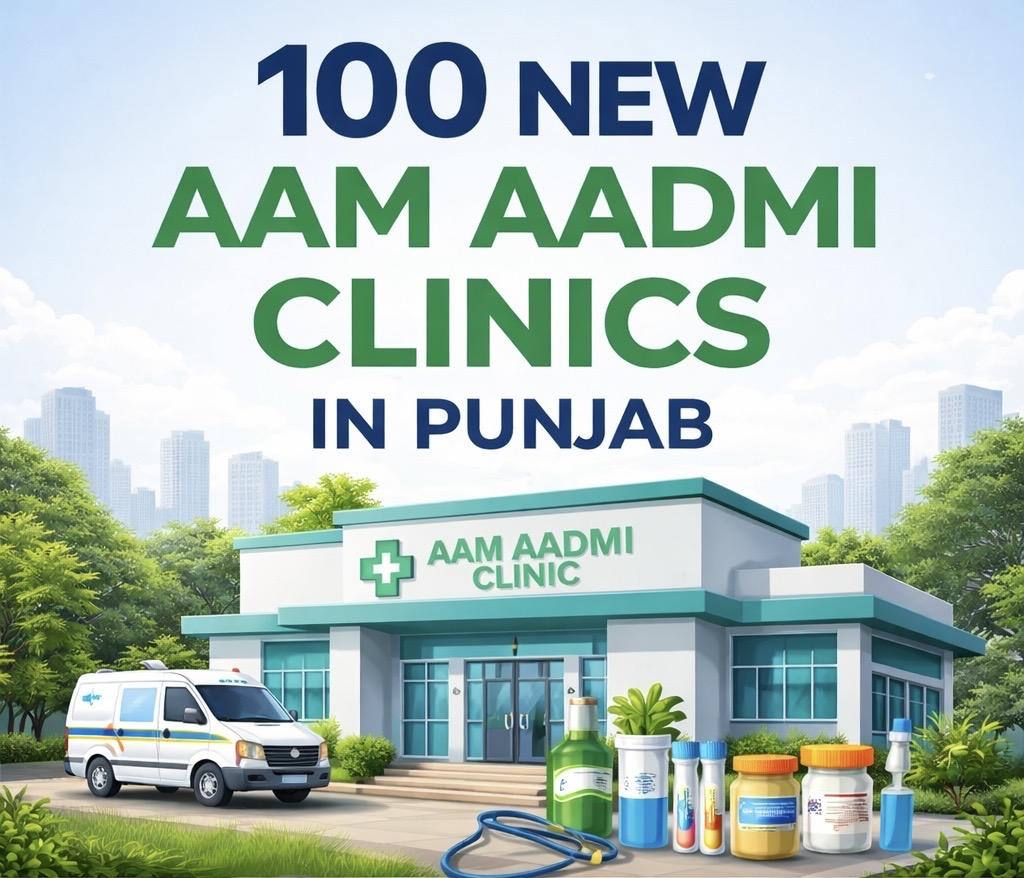
In a significant boost to primary healthcare access, Punjab Chief Minister Bhagwant Mannannounced on March 20, 2026 that 100 Aam Aadmi Clinics will become operational this month. Many of these clinics are expected to be inaugurated around March 28. Furthermore, an additional 400 clinics are already in the planning and construction stages, marking a major expansion of this widely appreciated initiative.
What Are Aam Aadmi Clinics?
Inspired by Arvind Kejriwal’s successful Mohalla Clinics model in Delhi, Aam Aadmi Clinics are neighborhood level healthcare centers designed to deliver free, high quality primary care. Their primary aim is to reduce the burden on government hospitals by addressing routine medical needs at the grassroots level.
Currently, 883 clinicsare fully operational across Punjab. These facilities provide:
•Free consultations with general and specialist doctors
•Up to 47 types of diagnostic tests (including blood tests, ECGs, ultrasounds, etc.)
•More than 107 essential medicines at no cost
•A reported patient satisfaction rate of approximately 94%
Since their rollout, these clinics have recorded over 5 crore outpatient (OPD) visits, serving millions of patients and building strong public trust in the government’s healthcare delivery system.
The Latest Announcement in Context
Speaking at a press conference in Chandigarh, CM Bhagwant Mann highlighted key achievements in the health sector over the past four years under the Aam Aadmi Party(AAP) government. Some of the major highlights include:
•Massive recruitment:948 general physicians and 627 specialists have been added to the healthcare workforce.
•Expanded coverage:The Mukh Mantri Sehat Yojana offers cashless treatment of up to ₹10 lakh per family in empanelled hospitals, positioning Punjab as a leader in universal health coverage.
•Innovative initiatives:Introduction of AI enabled cancer screening programs and significant infrastructure upgrades.
Mann emphasized that the Aam Aadmi Clinics model has proven highly effective in making healthcare accessible, especially in rural and underserved areas. With the planned expansion, Punjab is steadily moving toward an ambitious goal of establishing over 1,400 clinicsin the future.
Why This Matters
In a country where out of pocket healthcare expenses remain a significant burden for millions, initiatives like these represent a crucial shift toward preventive and primary care.
By bringing free consultations, diagnostic tests, and medicines closer to people’s homes, Punjab is:
•Reducing unnecessary hospital visits
•Enabling early detection of health issues
•Minimizing financial stress on families
The AAP government’s focus on strengthening public healthcare infrastructure also addresses long standing criticisms of neglect in the sector. The model draws comparisons with Delhi’s success while being adapted to meet Punjab’s unique needs.
Looking Ahead
The rollout of 100 new clinics this month is just the beginning. With 400 more in the pipeline, Punjab is on track to develop one of the most extensive primary healthcare networks in India.Additionally, brochures for the Mukh Mantri Sehat Yojana will soon be available at these clinics, ensuring that more families can access comprehensive healthcare coverage.
This expansion is not just about increasing numbers it reflects a broader vision of delivering “health for all”in a practical, accessible and people centric manner.
Final Thoughts
Punjab’s Aam Aadmi Clinics initiative represents a bold step toward transforming public healthcare delivery in India. If implemented effectively and sustained over time, it could set a new benchmark for state level healthcare systems across the country.
What do you think?Is Punjab setting a new standard for accessible healthcare in India? Share your thoughts in the comments!