A Quiet Night Turns Into a Nightmare
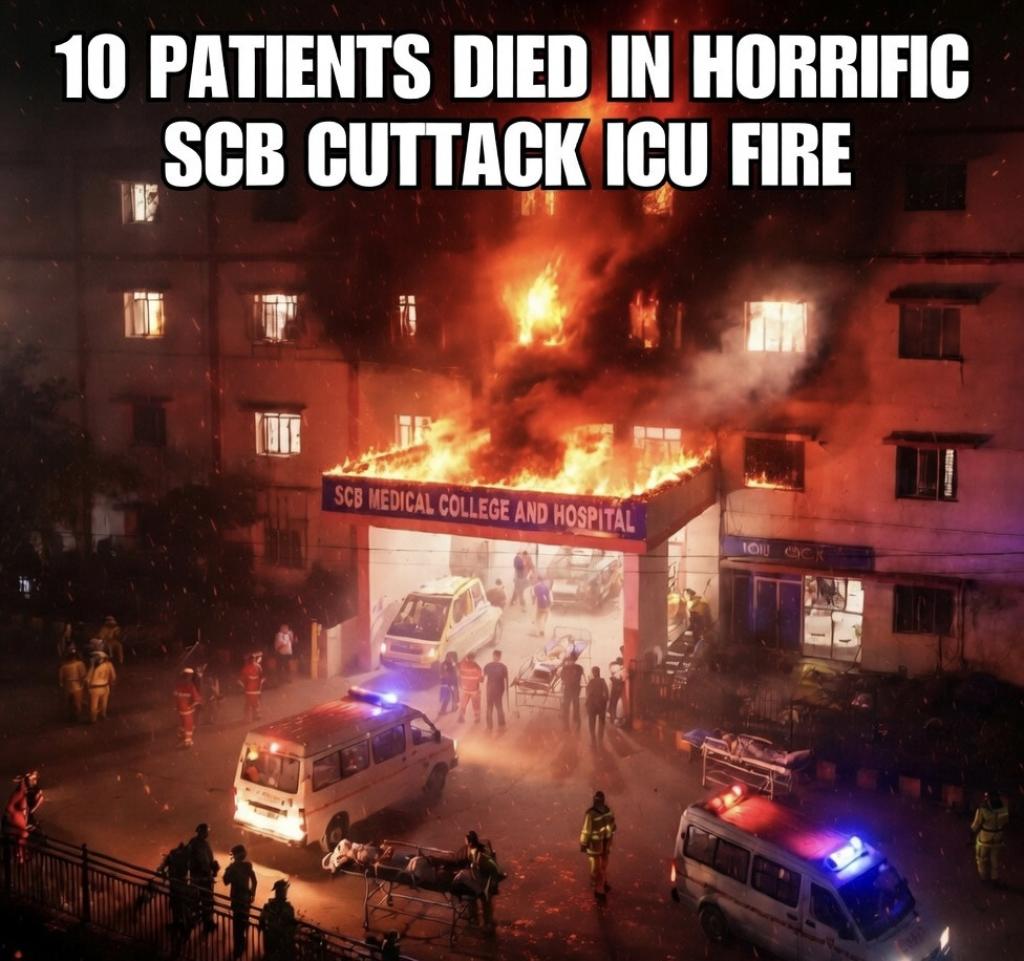
Imagine lying helpless in an ICU bed, surrounded by the steady beeping of machines that keep you alive. Tubes and monitors become your lifeline, and every breath depends on the care around you. Then in the stillness of the night around 2:30 AM on March 16, 2026 that fragile calm suddenly turns into terror. Flames erupt, thick smoke fills the air, and desperate screams pierce the silence.
This nightmare became a brutal reality at the Trauma Care ICU of SCB Medical College and Hospital in Cuttack, Odisha where 23 critically ill patients were battling for their lives. By the end of the night, ten precious lives had been lost.
Lives Lost in the Chaos
Seven patients died during the frantic evacuation as chaos and smoke overwhelmed the ward. Three others later succumbed to severe burns and suffocation. These were not just numbers in a report—they were sons, daughters, parents, and loved ones who had come to the hospital seeking treatment and hope.
Their lives ended in the very place where they expected to find healing and safety.
Courage in the Face of Fire
Amid the chaos, acts of extraordinary courage emerged. Eleven hospital staff members rushed into the smoke-filled ICU to rescue patients, risking their own lives. Many of them suffered burns while pulling people out of the flames.
One relative, driven by desperation and courage, reportedly entered the ward and helped rescue seven patients. In those terrifying moments, ordinary people became heroes, risking everything to save others.
What Caused the Fire?
Preliminary reports suggest that the fire may have been triggered by an electrical short circuit, possibly from an air-conditioning unit or other medical equipment. Tragically, critical safety systems either failed or were insufficient.
Sprinklers did not activate quickly enough, alarms did not provide adequate warning, and emergency preparedness appeared inadequate for a disaster of this scale.
Grief, Anger, and Demands for Justice
Outside the hospital, grief quickly turned into anguish and anger. Families cried out in disbelief, struggling to process the loss of their loved ones. Some demanded accountability and stronger action, arguing that financial compensation alone can never replace a life.
Many questioned how such a tragedy could occur in a place meant to save lives.
Government Response
Odisha Chief Minister Mohan Charan Majhi visited the hospital soon after the incident. Walking through the charred corridors and meeting injured patients and staff, he announced a judicial probe into the tragedy.
The state government declared ₹25 lakh in compensation for the families of those who died. Prime Minister Narendra Modi also expressed condolences and announced an additional ₹2 lakh ex-gratia assistance for the affected families.
Yet no amount of money can fill the empty beds or heal the grief of families who lost their loved ones.
A Repeated Warning India Cannot Ignore
Sadly, this tragedy echoes a painful pattern in India’s healthcare system. Hospital fires have claimed lives before, including the devastating incident at Kolkata’s AMRI Hospital in 2011 and several other cases across the country.
Despite repeated warnings and past disasters, problems such as faulty wiring, overcrowded wards, and inadequate fire safety systems continue to threaten vulnerable patients.
Hospitals are meant to be sanctuaries of healing and safety. When safety systems fail, the consequences are devastating.
The Need for Real Change
For the families left behind, the pain is immeasurable. For the doctors, nurses, and staff who risked their lives during the rescue, the scars both physical and emotional will remain for years to come.
This tragedy must become more than another headline. It must serve as a turning point.
India urgently needs strict fire safety audits, modern infrastructure upgrades, and regular emergency preparedness drills in every hospital. Accountability must be clear, and negligence must carry real consequences.
Remembering the Lives Lost
As the smoke slowly fades over Cuttack, the memory of those ten lives lost must not fade with it. Their deaths should serve as a powerful reminder that patient safety is not optional it is a responsibility that cannot be ignored.
May their souls rest in peace. And may their memory push us toward the change that every patient in this country deserves.