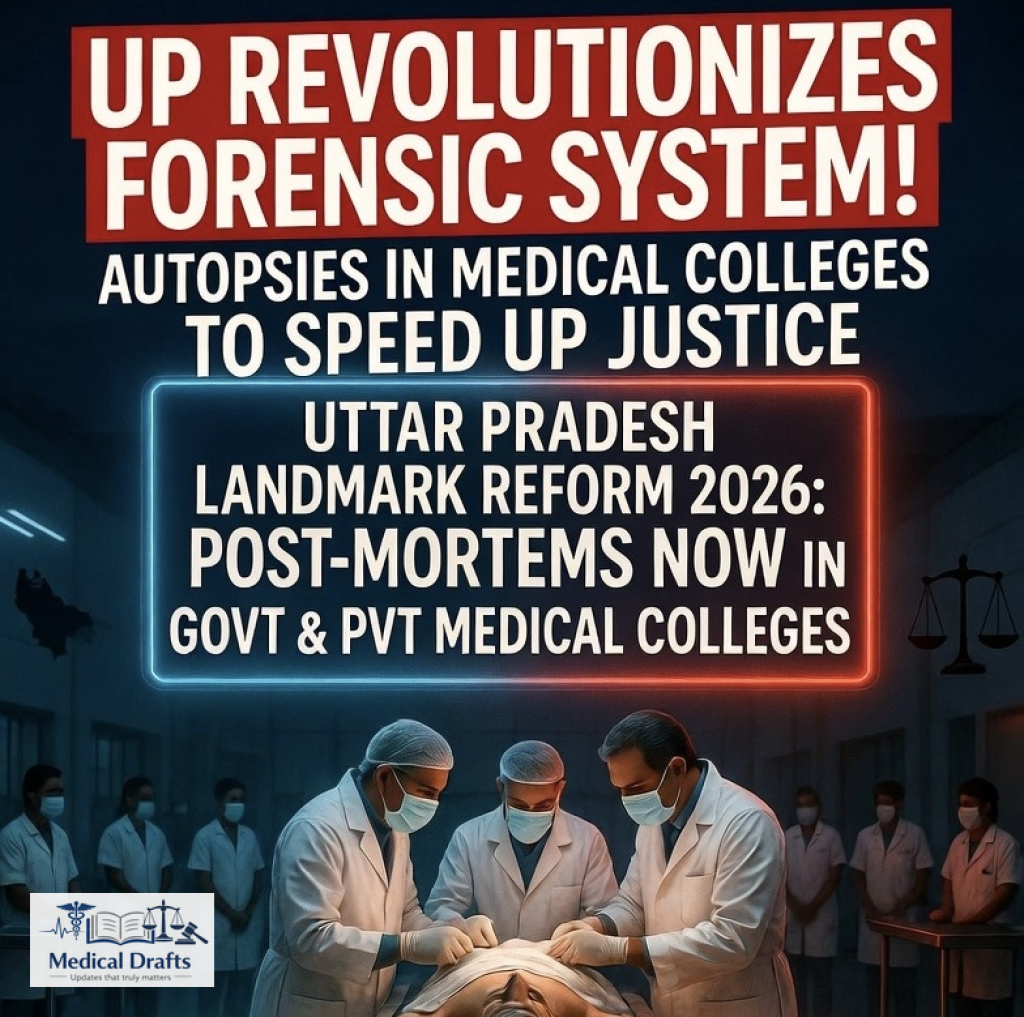
In a significant overhaul of Uttar Pradesh’s medico legal system,state government has announced that post mortem examinations (autopsies) can now be conducted in both government and qualified private medical colleges. This move spearheaded by Deputy Chief Minister and Health Minister Brajesh Pathak aims to ease the burden on traditional mortuaries, enhance forensic medicine training and bring greater transparency to sensitive cases.
If you’ve ever wondered how India’s vast healthcare and justice systems handle unexplained deaths, accidents or suspicious cases, this development is a game changer.
What Exactly Is the New Policy?
According to recent guidelines issued by the Uttar Pradesh government, medical colleges across the state both public and private can now perform post mortems, provided they meet strict standards.
- Eligibility Criteria: Only institutions with a fully functional forensic medicine department, qualified faculty (including regular teachers), resident doctors and modern post mortem houses equipped with adequate infrastructure will be allowed to participate.
- Key Locations Already Covered: This includes prominent state institutes like Ram Manohar Lohia Institute, as well as forensic departments in medical colleges in Gorakhpur, Raebareli, and others.
- Private Colleges Included: Yes, select private medical colleges can join too but only after government approval and under the direct supervision of the district’s Chief Medical Officer (CMO).
- Oversight and Standards: All procedures must follow national and international protocols, including those from the National Medical Commission (NMC). A district-level committee headed by the District Magistrate will oversee implementation, ensuring fair allocation of cases and full compliance.
Policy emphasizes that post mortems will continue to happen in dedicated mortuaries for routine cases, but medical colleges will now handle a share especially where advanced facilities exist. This isn’t about replacing the old system; it’s about expanding and upgrading it.
Why Was This Change Needed? The Current Challenges in UP’s Post Mortem System
Uttar Pradesh handles thousands of medico legal cases every year from road accidents and natural deaths to crimes requiring forensic investigation.Traditionally, these autopsies were limited to government post mortem houses or district hospitals.
But the old setup faced several issues:
- Overloaded facilities leading to delays.
- Limited hands-on training opportunities for medical students and resident doctors in forensic medicine.
- Questions around transparency and the quality of reports in high stakes judicial matters.
By bringing medical colleges into the fold, the government is addressing these pain points head on. Deputy CM Brajesh Pathak has repeatedly stressed that such reforms will not only speed up processes but also improve the overall credibility of forensic evidence in courts.
This reform comes on the heels of other recent updates, like mandating post mortems within four hours and digitizing reports for faster family handovers showing a clear push toward efficiency and empathy for grieving families.
How Will This Work on the Ground?
Here’s a step by step look at the practical side:
- Case Allocation: Police or authorities will refer suitable cases to approved medical college mortuaries.
- Team Involvement: Forensic faculty and postgraduate (resident) doctors will actively participate, turning every procedure into a supervised learning opportunity.
- Modern Standards: All autopsies must occur in well lit, equipped facilities with provisions for videography in sensitive cases. Reports will follow standardized formats for consistency.
- 24x7 Availability: Where possible, colleges will ensure round-the-clock services, reducing wait times that often add to families distress.
- Quality Control: Strict adherence to rules means no shortcuts everything from infrastructure to documentation will be audited regularly.
This structured approach ensures safety, legality and educational value without compromising on ethics or sensitivity.
Major Benefits: From Classrooms to Courtrooms
1. Boost for Medical Students and Forensic Training
Medical education in India has long suffered from a gap between theory and practice, especially in forensic medicine. Now, MBBS students and PG residents will get real world exposure under expert supervision. This hands on training could produce better prepared forensic experts, ultimately raising the bar for the entire profession.
2. Reduced Burden on Government Mortuaries
With over 70 medical colleges in Uttar Pradesh (and more coming up), decentralizing post mortems will ease congestion in traditional facilities. Faster turnaround times mean quicker body handovers to families and swifter police investigations.
3. Enhanced Transparency and Justice Delivery
Involving academic institutions adds an extra layer of accountability. Faculty oversight, standardized procedures and modern infrastructure can minimize errors or disputes over autopsy reports critical in India’s overburdened courts.
4. Better Public Health Insights
More systematic post mortems could reveal patterns in diseases, accidents or public health issues helping policymakers make data driven decisions.
5. Support for Private Sector Growth
Qualified private colleges get a chance to contribute meaningfully while maintaining high standards. This could encourage investment in forensic infrastructure across the state.
The Bigger Picture: Reforming Healthcare in Uttar Pradesh
This isn’t an isolated announcement. Under the leadership of CM Yogi Adityanath and Deputy CM Brajesh Pathak, Uttar Pradesh has been rolling out health sector upgrades from expanding medical seats to digitizing services and improving emergency care.
Allowing post mortems in medical colleges fits perfectly into this vision: modernizing a critical but often overlooked area of healthcare. It shows how blending education, administration and technology can create a more responsive system.
For ordinary citizens this means less red tape during difficult times. For aspiring doctors, it’s a chance to learn from real cases and for the justice system, it’s a step toward more reliable evidence.
What Should We Expect Next?
As implementation begins watch for:
- Updated lists of approved medical colleges.
- Training workshops for faculty and staff.
- Public dashboards or online portals for tracking report timelines (building on recent digitization efforts).
If successful this model could inspire similar reforms nationwide, especially in states with growing numbers of private medical institutions.
Final Thoughts: A Progressive Step Forward
Uttar Pradesh’s decision to permit post mortems in medical colleges is more than a procedural tweak it’s a forward thinking reform that prioritizes education, efficiency, and empathy. By expanding access while enforcing strict rules, the state is setting a benchmark for balanced healthcare innovation.
Note: This post is based on official government guidelines and reports from reliable sources like Navbharat Times and The Times of India. Also read: https://timesofindia.indiatimes.com/city/lucknow/up-govt-allows-autopsies-in-govt-pvt-med-colleges-faculty-students-to-join/amp_articleshow/129854109.cms