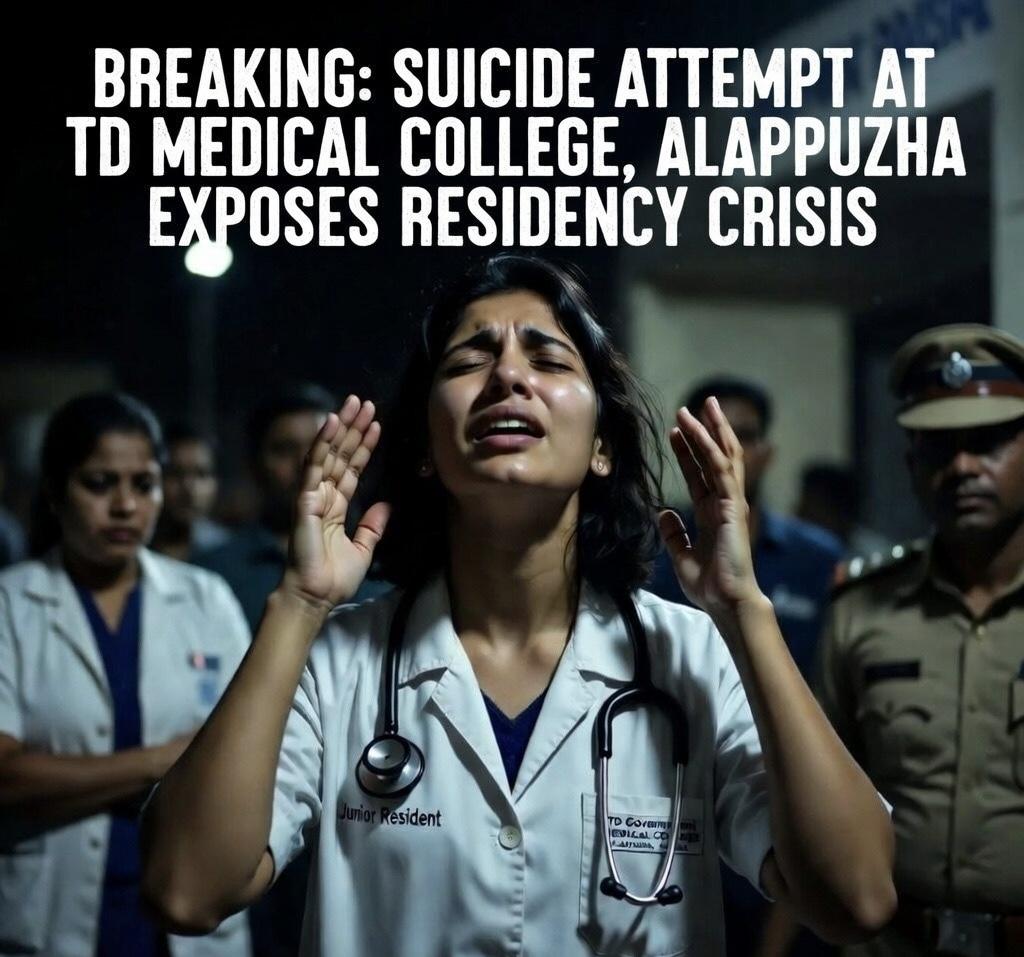
The recent incident at TD Government Medical College in Alappuzha, Kerala, where a first-year junior resident (JR) in the Paediatrics department allegedly attempted suicide, has once again brought the harsh realities of medical residency in India into sharp focus. The young doctor reportedly tried to hang herself around midnight on March 6 due to overwhelming stress from excessive duty hours. She was fortunately rescued in time by local police, hospital staff, and her parents, and is now said to be in deep emotional distress.
The Disturbing Aftermath
What makes this case particularly disturbing is the alleged response from the department’s Head (HoD). According to reports, the HoD visited her home afterward and reportedly told her that if she couldn’t cope with the long hours, she could leave her PG seat but only by paying a staggering ₹50 lakh penalty. This kind of ultimatum, if true, adds insult to injury and highlights a punitive rather than supportive approach to resident well-being.
Not an Isolated Case
This isn’t an isolated tragedy. Similar stories have emerged repeatedly across India: overworked residents in high-pressure departments like Paediatrics, Surgery, or Obstetrics facing 36–48+ hour shifts with minimal rest, no guaranteed weekly offs, verbal abuse, and little mental health support. The National Medical Commission (NMC) has guidelines limiting duty hours and mandating breaks, but enforcement remains inconsistent, especially in government colleges where staffing shortages force residents to shoulder impossible workloads.
Why This Keeps Happening
Medical PG training in India is grueling by design rooted in the old apprenticeship model but the system has failed to evolve with modern understandings of burnout, fatigue, and mental health. Residents often:
- Work continuous shifts that impair judgment (comparable to driving drunk after 24 hours awake).
- Miss meals, sleep, family time, and basic self-care.
- Face hierarchical toxicity where questioning excessive demands can lead to harassment or career threats.
- Have limited access to counseling, with stigma around seeking help.
The Devastating Results
The result? Rising burnout, depression, and, tragically, suicides or attempts among young doctors who entered the profession to heal others.
A Call for Urgent Change
It’s time for real reform:
- Strict enforcement of NMC duty-hour rules: No more than 12–14 hours per shift, mandatory weekly offs, and no punishment for prioritizing health.
- Mental health infrastructure in every medical college: Dedicated counselors, anonymous helplines, and zero-tolerance for stigma or retaliation.
- Penalty clauses reviewed: Bond amounts should not be weaponized to trap distressed residents; exit options must be humane.
- Systemic fixes: Increase faculty and support staff to reduce resident burden, especially in government setups.
- Accountability: Departments and institutions must face scrutiny when patterns of toxicity emerge.
A Message to Residents
The young doctor in Alappuzha survived her attempt thankfully but the system that pushed her to that edge is still very much intact. Her story, and countless others, demands more than outrage; it requires action from medical councils, college administrations, state health departments, and the central government.
To every resident reading this: Your life and well-being matter more than any duty roster. Reach out to peers, family, helplines (like the IMA or state mental health lines), or even online communities. You’re not alone, and speaking up is strength, not weakness.
A Message to Educators
To educators and administrators: Treat your juniors as humans in training, not machines. The future of Indian healthcare depends on healthy, supported doctors.
Hope for Meaningful Change
If this incident sparks meaningful dialogue and policy changes, it won’t have been in vain. Until then, let’s keep amplifying these voices because no one should feel that ending their life is the only escape from residency.