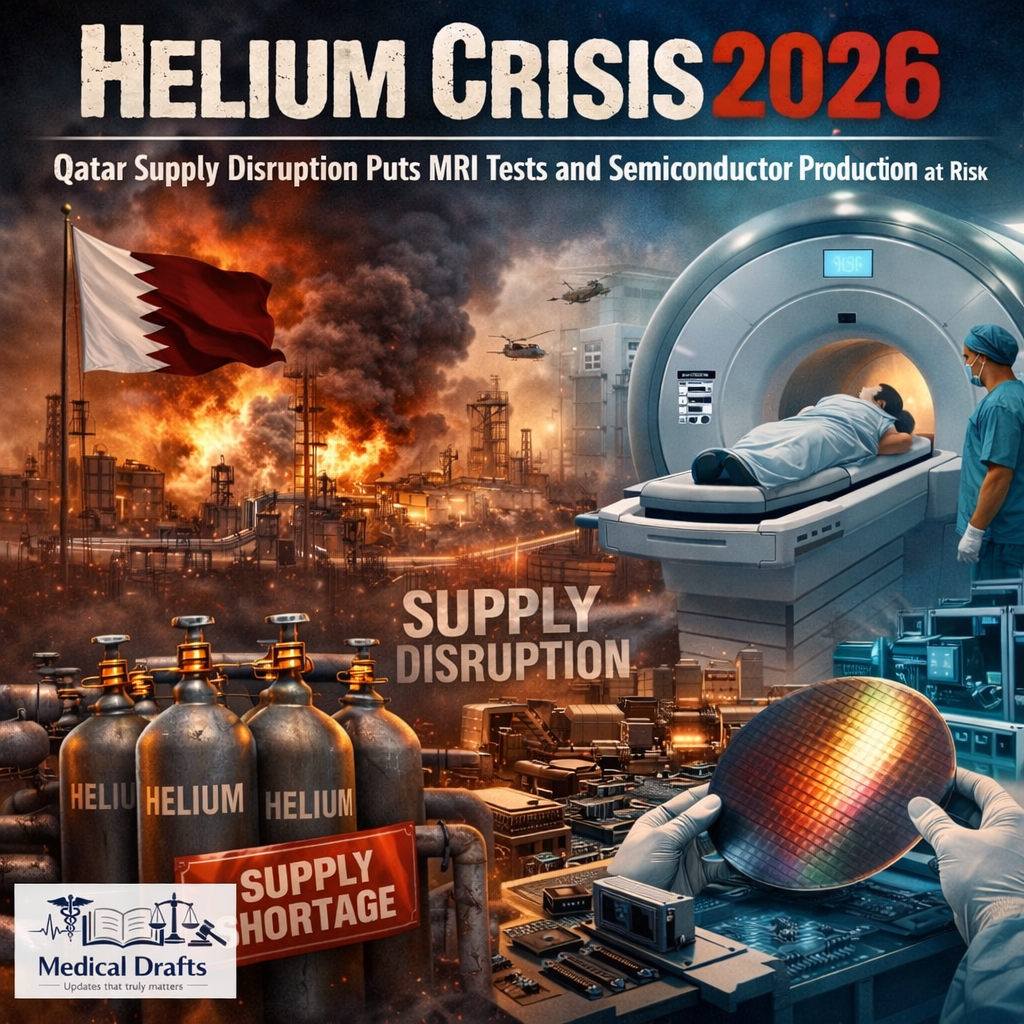
In March 2026, headlines across India and the globe are screaming about something most of us have never worried about before: helium. Yes, the same gas that fills party balloons is suddenly at the center of a serious global shortage and the cause is a raging conflict in West Asia.
A major Indian newspaper, Patrikarecently ran a front page story warning that nearly one third of the world’s helium supply has been disrupted. Qatar which produced around 63 million cubic meters of helium in 2025 (making it the second largest producer after the US) has seen its output grind to a halt after strikes hit key energy facilities at Ras Laffan. Shipping routes are blocked, production has stopped and prices are skyrocketing.What does this mean for ordinary people? Higher costs for life saving MRI scans and potentially more expensive smartphones, laptops, electric vehicles and AI gadgets. In this post, we’ll explain the crisis in simple terms
What Exactly Is Helium and Why Can’t We Just Make More?
Helium is a rare, lightweight, non flammable noble gas. It boils at an incredibly low temperature around -269°C. That makes liquid helium the perfect coolant for superconducting magnets and ultra-precise manufacturing processes.
Unlike oil or steel, helium cannot be manufactured synthetically in large volumes. It is extracted almost entirely as a byproduct when natural gas is processed. Once it escapes into the atmosphere, it floats away into spacegone forever. That’s why every drop (or cubic meter) is precious.
The Two Big Industries Hit Hardest
1.Healthcare: MRI Machines at Risk
MRI scanners rely on liquid helium to keep their powerful magnets at superconducting temperatures. Without enough helium magnets can’t work and the machine becomes useless.
Hospitals and diagnostic centers are already feeling the pinch:
- MRI scan costs could rise sharply in the coming months.
- Non-emergency scans may face longer waiting lists.
- Maintenance and refilling expenses will climb.
In India where most advanced medical imaging equipment depends on imported helium, patients needing scans for cancer detection, brain disorders or spinal injuries could see real delays and higher bills. The Patrikareport rightly points out that modern healthcare as we know it is at stake if the shortage drags on.
2. Technology: Semiconductors and the AI Boom
The semiconductor (chip) industry has quietly become the biggest user of helium. From smartphones to laptops, cars to data centers, every modern gadget needs chips and those chips are made in ultra clean, ultra cold environments that require helium.
Key processes that use helium:
- Cooling silicon wafers during production
- Creating stable atmospheres for lithography (the step that “prints” circuits)
- Leak detection and purging
Major chip making nations South Korea, Taiwan, Japan and China source a huge chunk of their helium from Qatar. Any prolonged shortage could:
- Slow down chip production
- Push up prices of consumer electronics
- Delay new AI hardware, 5G/6G rollout and electric vehicle batteries
- In short helium crisis isn’t just a medical story it’s a tech story that will eventually hit your wallet.
Why India Should Be Paying Attention
India imports almost all of its helium. We are a massive market for both MRI machines (healthcare is growing rapidly) and semiconductors (electronics manufacturing is a national priority under “Make in India”). A sustained shortage could:
- Increase healthcare costs for millions of middle class families
- Raise input costs for Indian electronics and auto companies
- Slow down the country’s ambition to become a global chip hub
Final Thoughts: A Wake Up Call for Supply Chain Resilience
The 2026 helium crisis is a perfect example of how fragile our global supply chains really are. A gas we once thought was only for balloons and blimps is now proving to be as critical as oil for 21st century medicine and technology.
As the situation develops rapidly, staying informed is the first step. Hospitals, chipmakers and governments are already scrambling the rest of us can support innovation by choosing brands that invest in sustainable, helium efficient technology.