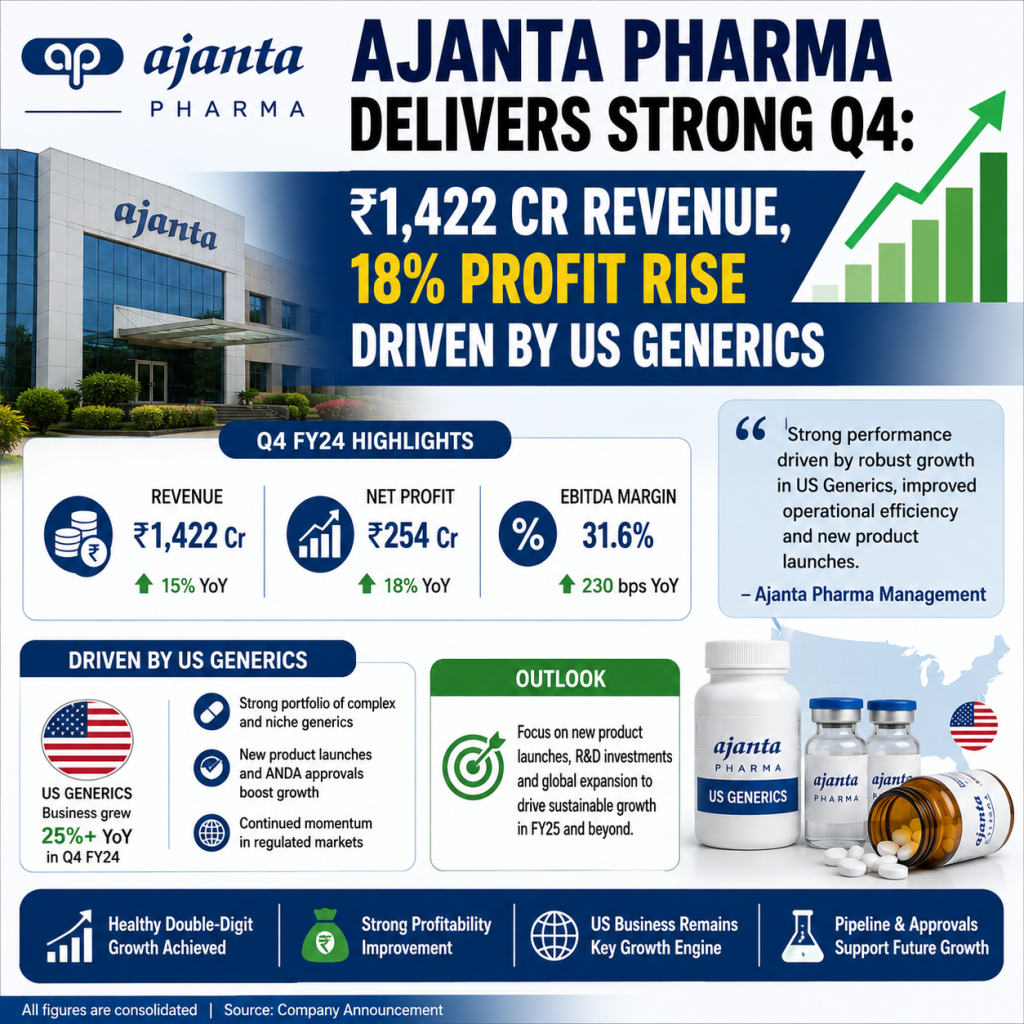
If you’ve been tracking Indian pharmaceutical companies, Ajanta Pharma’s latest quarterly update offers a clear window into how mid sized players are navigating global opportunities and domestic demand. On May 5, 2026 company announced its results for the fourth quarter and full year ended March 31, 2026. Revenue from operations hit ₹1,422 crore while consolidated net profit stood at ₹267 crore an 18% increase over the same period last year.
These figures didn’t appear out of nowhere. They reflect steady execution across key markets, especially the United States where demand for complex generics continues to grow. For anyone interested in how India’s pharma sector supports both economic growth and everyday healthcare, numbers tell a practical story.
Numbers in Simple Terms
Here’s what stands out at first glance:
- Q4 Revenue: ₹1,422 crore up roughly 21% from ₹1,170 crore a year earlier.
- Q4 Net Profit: ₹267 crore up 18% from ₹225 crore.
- Full Year FY26: Revenue reached about ₹5,453 crore (17% growth) with net profit at ₹1,056 crore (15% growth).
One notable detail is that the company faced a ₹42 crore foreign exchange loss during the quarter, yet still delivered profit growth. When analysts adjust for such one time currency impacts, underlying operational performance looks even stronger with EBITDA margins holding in a healthy range.
Think of revenue as the total money coming in from selling medicines and related products. Profit shows what remains after all costs raw materials, research, staff, marketing and taxes. When profit rises alongside revenue, it usually signals better efficiency or stronger pricing power in key segments.
What Drove the Growth This Quarter?
Ajanta Pharma’s performance was led by its US generics business, which saw a sharp jump of around 49% in the quarter. The United States remains one of the most demanding markets for generic medicines because of strict quality standards and high competition. Success here often comes from developing difficult to make formulations eye drops, skin treatments and certain heart medications that larger players sometimes overlook.
At the same time, company maintained solid momentum in India and emerging markets such as Africa. Ajanta has long focused on branded generics medicines sold under its own trusted names rather than just plain generics. This approach helps build doctor loyalty and patient confidence especially in therapeutic areas like ophthalmology (eye care), dermatology (skin) and cardiology.
A real world example: In smaller cities and towns across Uttar Pradesh or Maharashtra many patients rely on affordable yet quality assured eye medications for conditions like glaucoma or infections. When companies like Ajanta scale production and exports, they help keep shelves stocked without sudden price spikes. That steady supply chain matters more to families than headline numbers ever show.
Cost discipline also played a role. Even with currency swings affecting imported raw materials,company managed to protect margins. This balance growing top line sales while keeping expenses in check is what investors watch closely in quarterly reports.
Why These Results Matter to Everyday Readers
You don’t need to be a stock market expert to find value here. Strong quarterly numbers from pharma companies often translate into broader benefits:
- For patients and doctors: Consistent revenue growth usually means continued investment in new product launches and quality improvements. Better availability of trusted brands can reduce the need to switch between different manufacturers.
- For the economy: Pharma exports bring in foreign exchange and support thousands of jobs in manufacturing, research, and distribution. Ajanta’s US success adds to India’s reputation as a reliable global supplier of medicines.
- For investors: A single quarter doesn’t decide everything, but it offers clues about management’s ability to execute plans. Revenue growth above 20% with profit growth close behind suggests the business model is working across cycles.
A practical tip if you follow stocks: Always look at segment-wise revenue (US vs India vs others) and compare year on year growth. Also check whether profit growth is coming from higher sales or just cost cuts. In Ajanta’s case, US generics surge points to genuine demand rather than temporary savings.
Understanding Ajanta Pharma’s Approach
Ajanta operates differently from pure-play generic giants. It focuses on specialty areas where formulation expertise and brand trust matter. Many of its products require precise manufacturing sterile eye drops or complex dermatology creams that command better pricing and face fewer competitors.
This strategy has helped the company build a presence in over 30 countries. In India, its branded portfolio gives it pricing flexibility compared to companies selling only unbranded generics. Internationally, US market rewards companies that can consistently meet FDA standards for complex products.
Here’s a simple way to think about it: Imagine two bakeries. One sells plain bread at the lowest price (high volume, thin margins). The other bakes specialty cakes with unique recipes and loyal customers (better margins, steadier demand). Ajanta leans toward the specialty side in several categories, which helps explain why profit growth stayed healthy even after currency losses.
Practical Takeaways for Investors and Observers
If you’re considering or already hold pharma stocks, here are a few straightforward steps to make sense of such announcements:
- Read the full regulatory filing on BSE or NSE websites, it contains segment data and management commentary.
- Listen to or read the earnings call transcript (usually available within a day or two). Management often shares future expectations.
- Compare the current quarter with the same quarter last year not just the previous quarter to avoid seasonal distortions.
- Watch for guidance. In this update, the company indicated expectations of high teens revenue growth and around 27% EBITDA margins for the coming year, after accounting for planned investments.
A quick scenario: Suppose you invested ₹50,000 in Ajanta shares two years ago. Strong results like these can support share price stability or gradual appreciation over time, especially if the company continues delivering consistent growth. Of course all investments carry risk and past performance never guarantees future results. It’s always wise to diversify and consult a certified advisor.
For non investors, bigger picture is reassuring: India’s pharma sector continues to mature, with companies moving up the value chain from simple generics to more sophisticated products. This evolution ultimately benefits patients through better quality and wider access.
Challenges That Remain and the Path Forward
No company operates in a vacuum. Currency fluctuations (like the ₹42 crore loss mentioned) can swing reported profits. Regulatory changes in the US or India, rising input costs and intense competition in the generics space are ongoing realities. Yet overall tone from management appears measured and forward-looking. Plans to expand capacity and launch new products in high demand areas suggest confidence in sustained demand. For FY27, focus seems to be on balanced growth across geographies while maintaining healthy profitability.
This kind of steady progress matters in a sector where innovation cycles are long and patient trust takes years to build.
Frequently Asked Questions
What does “Q4” actually mean?
Q4 stands for the fourth quarter of the financial year. For most Indian companies, the financial year runs from April 1 to March 31. So Q4 covers January to March, and companies release results within 45–60 days after quarter-end.
How significant is 21% revenue growth versus 18% profit growth?
Revenue growth shows how much more the company sold. Profit growth shows how much more it kept after expenses. When both move in the same direction at similar rates, it usually indicates healthy operations rather than one-time gains.
Does one strong quarter mean Ajanta Pharma is now a “must-buy” stock?
No single quarter tells the full story. Look at trends over 4–8 quarters, debt levels, cash flow, and future guidance. Pharma stocks can be volatile due to regulatory or currency factors.
Will these results affect medicine prices for patients?
Not directly in the short term. Strong company performance often supports continued investment in quality and new launches, which can help stabilize supply and, over time, keep prices competitive in branded generic categories.
Where can I read the complete results myself?
Visit BSE or NSE website and search for “Ajanta Pharma” under corporate announcements. The full press release, financial statements and investor presentation are usually uploaded on the same day as the announcement.
Final Thoughts
Ajanta Pharma’s Q4 performance shows how focused execution in competitive markets can deliver meaningful results. Whether you’re an investor tracking portfolio health, a healthcare professional following supply trends, or simply someone who values a robust domestic pharma industry, these updates offer useful signals.
The real story isn’t just the ₹1,422 crore or the 18% profit rise, it’s the reminder that consistent, transparent reporting helps everyone make better decisions. Stay curious, read the primary sources when possible, and remember that understanding these numbers equips you to follow India’s healthcare and economic journey with greater clarity.
If you found this breakdown helpful, consider bookmarking reliable financial news sources or setting up alerts for company filings. Knowledge like this turns headline numbers into actionable understanding.
Disclaimer
This post is for informational and educational purposes only. It does not constitute medical advice, legal opinion or an official investigation. Readers should consult qualified healthcare professionals for personal health concerns. All details are drawn from media reports and outcomes of any official inquiry may provide further clarity.
Link:According to news report from Business Standard
https://www.business-standard.com/amp/companies/quarterly-results/ajanta-pharma-q4-net-profit-rises-18-4-pc-at-rs-266-7-cr-126050500884_1.html