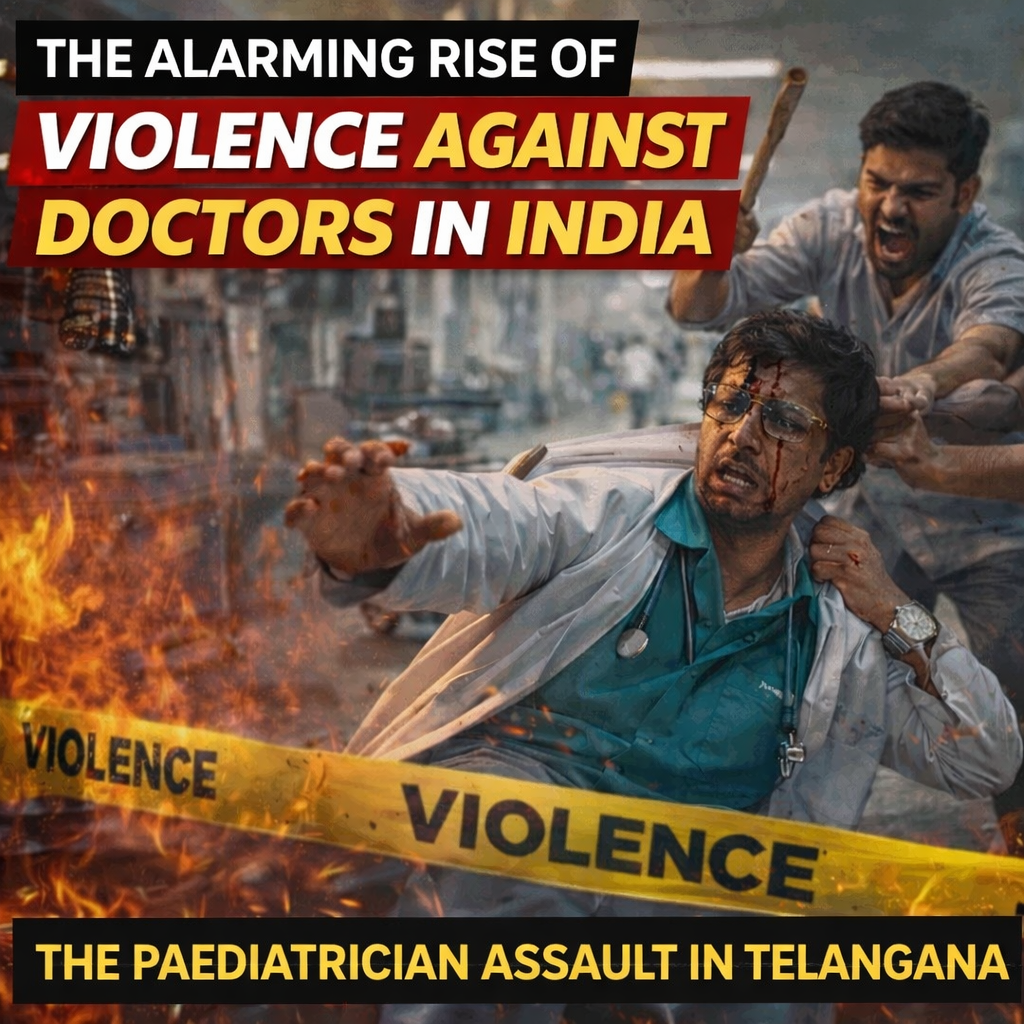
This is not an isolated case. It highlights a deeper, systemic issue that threatens the very foundation of India’s healthcare system.
Understanding the Nirmal Incident: Facts Over Rumours
According to reports from multiple medical associations and news outlets, the assault occurred late on Thursday night following the discharge of a patient. The attendant reportedly disagreed with the billing details and turned aggressive toward hospital staff. The situation spiralled when the relative allegedly attacked Dr. Raj leading to injuries and intimidation of other personnel.
Doctors from private hospitals and nursing homes in Nirmal and nearby areas including Adilabad, staged protests in response. Medical bodies such as the Indian Medical Association (IMA) Telangana, Telangana Senior Residents Doctors Association (T-SRDA), Telangana Public Health Doctors Association (TPHDA) and the IMA Mancherial chapter strongly condemned the attack.
In press statements, these groups emphasized that doctors operate in emotionally charged environments, often dealing with critically ill patients and stressed families. They called for the immediate arrest of those responsible and stricter legal safeguards to deter future incidents. Telangana government and local authorities have been urged to act swiftly with demands for a thorough investigation and exemplary punishment.
Why Violence Against Doctors Is on the Rise in India
Unfortunately, attacks on doctors are not new. Studies and surveys by the Indian Medical Association and other organizations reveal alarming statistics:
- Approximately 75% of doctors in India have faced some form of violence during their careers.
- Emergency departments, ICUs, and paediatric wards are particularly vulnerable due to high patient anxiety and expectations.
- Common triggers include billing disputes, perceived delays in treatment, unfavourable outcomes, and misinformation spread via social media.
In a country with a massive population and strained healthcare infrastructure, frustrations can boil over quickly. Patients and families sometimes feel helpless, leading to misplaced anger toward the very people trying to help. However, violence is never a solution and it endangers not just individual doctors but the entire system.
When doctors fear for their safety, it affects their ability to provide unbiased, high quality care. Some private practitioners are even considering installing security measures or limiting high risk procedures, which ultimately hurts patients.
The Human Cost: Beyond the Headlines
Imagine being a doctor who has just saved a child’s life, only to face physical assault from the family over costs or picture a young resident working night shifts already exhausted, now worrying about personal safety.
This culture of fear contributes to:
- Burnout and mental health issuesamong healthcare workers.
- Shortages in rural and high-pressure areas, as professionals seek safer careers or migrate abroad.
- Eroded trustbetween doctors and patients, which is essential for effective treatment.
On the patient side, genuine grievances (like unclear billing or communication gaps) must be addressed through better transparency and grievance redressal systems. Hospitals can play a bigger role by explaining costs upfront and offering counselling during stressful situations.
What Doctors Are Demanding: Tougher Laws and Real Change
Following the Nirmal incident, medical associations are not just protesting they’re pushing for concrete reforms. Key demands include:
- Stringent legal provisions: Treating assaults on doctors as non bailable offences with harsher penalties, similar to protections for other essential services.
- Fast track courtsfor cases involving violence against healthcare workers.
- Hospital security protocols: Mandatory CCTV, security personnel in sensitive areas and panic buttons for staff.
- Public awareness campaigns: Educating citizens on the pressures doctors face and promoting respectful dialogue.
- Better doctor patient communication trainingin medical colleges.
Several states already have laws against doctor assaults but enforcement remains weak. A nationwide, uniform policy with strong implementation could make a real difference.
Final Thoughts: Time for Action, Not Just Outrage
The assault on Dr. Santosh Raj is a wake up call. Telangana’s doctors have shown unity through protests and statements but real change requires action from governments, hospitals and society at large.Violence against doctors isn’t just their problem it’s a public health crisis that affects every Indian who may need medical care someday. By protecting our healers, we protect ourselves.