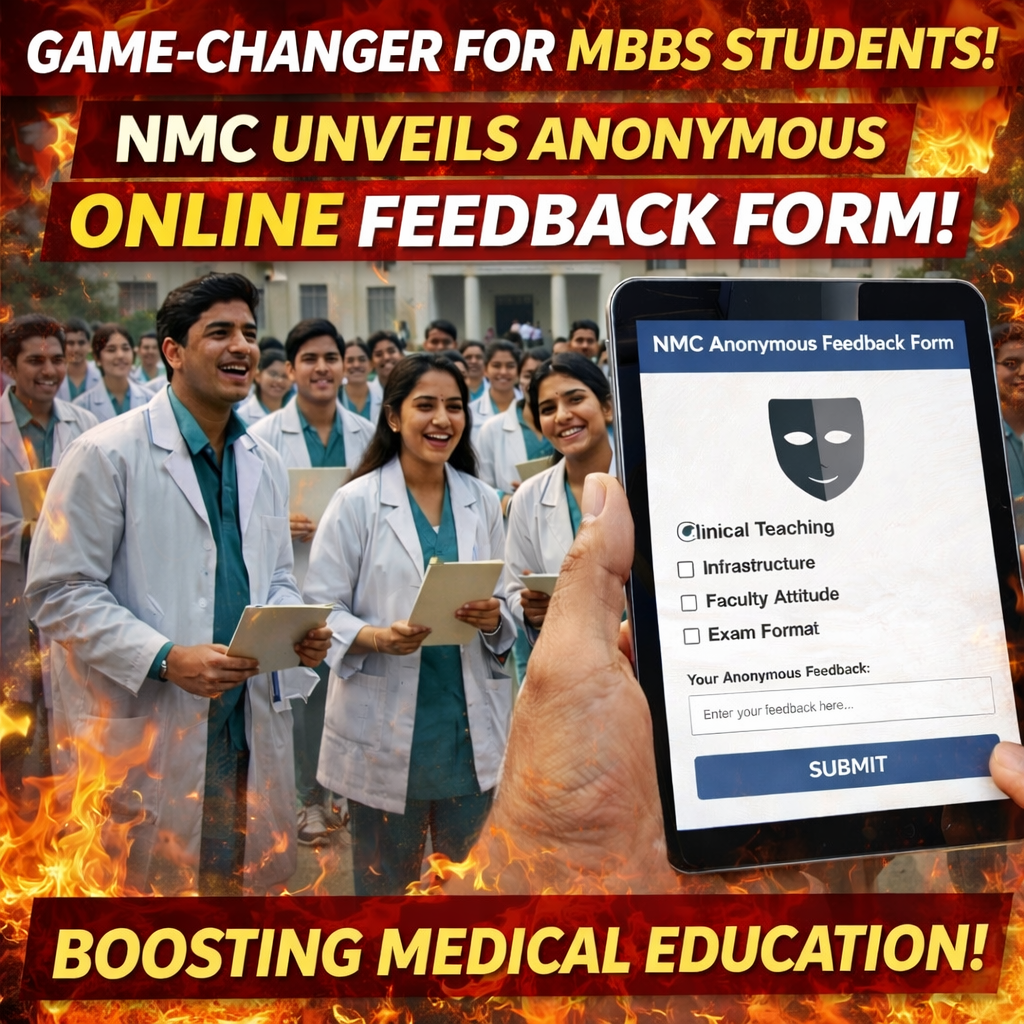
For the first time, every MBBS student in India has a direct safe channel to tell the apex regulatory body what’s working and what urgently needs fixing in their medical colleges.
Why This NMC Student Feedback Form Matters
Medical education in India has long faced challenges: overcrowded lecture halls, inconsistent faculty presence, limited patient exposure, outdated labs and sometimes even serious issues like ragging or inadequate mental health support. Until now, student voices often got lost in bureaucracy.
The new NMC Student Feedback Form changes that. It’s not just another survey it’s a powerful tool designed to:
- Collect honest, anonymous feedback from thousands of MBBS students nationwide.
- Help NMC assess the actual quality of medical education in real time.
- Identify colleges that are excelling and those that need urgent improvement.
- Drive data-backed reforms in curriculum, infrastructure, and student welfare.
Dr. Raghav Langer, Secretary of the NMC, officially announced the form urging all undergraduate students to participate wholeheartedly feedback will directly influence academic assessments and future policy decisions.
What Exactly Does the Feedback Form Cover?
According to the official NMC notice, form is comprehensive and student centric. It asks for your input on key areas that define the quality of your MBBS journey:
- Quality of Teaching & Lectures – Are classes engaging? Is the curriculum up to date?
- Faculty Availability & Adequacy – Are enough qualified teachers present or are there “ghost faculty” issues?
- Clinical Training & Patient Exposure – How much hands on experience are you actually getting in OPDs, wards and OT?
- Labs, Dissection Halls & Practical Training – Are facilities modern, well maintained and sufficient?
- Community Medicine & Rural Training – Is field exposure meaningful and well organized?
- Campus Culture & Student Welfare – Safety, hostel facilities, library access and overall environment.
- Ragging, Mental Health Support & Anti Harassment Measures – Critical issues that many students hesitate to raise openly.
- Infrastructure & Administration – From canteen hygiene to administrative responsiveness.
The best part? Your responses are completely anonymous. No names, no roll numbers, no fear of repercussions. NMC has made it crystal clear that the goal is genuine feedback, not identification.
How to Access and Fill the NMC Student Feedback Form (Step-by-Step)
Accessing the form is super simple and takes just a few minutes:
- Visit the official NMC website: https://www.nmc.org.in
- Look for the “Student Feedback Form” link on the homepage (it’s prominently displayed).
- Or go directly to the form: https://application.nmc.org.in/student-feedback
- Log in with your basic details (only to verify you’re a genuine UG medical student no personal info is stored for identification).
- Answer the questions honestly most are multiple choice with space for optional comments.
- Submit. Done!
The form is mobile friendly, so you can fill it on your phone during a break between classes or postings.
Who Should Fill It? Every Single MBBS Student!
Whether you’re in your first year struggling with anatomy or a final year student dealing with internship pressures your feedback counts. Even if your college is excellent, positive inputs help NMC recognize and replicate best practices.
NMC has already sent official communications to all state medical education departments, deans and principals urging them to spread the word. Social media is buzzing too medical students and educators are actively sharing the link.
What Students Are Saying (Early Reactions)
Since the launch, MBBS students across forums and WhatsApp groups are calling it a “game changer.” Many have already filled the form and reported feeling empowered. One student from a government medical college in North India shared anonymously:
“Finally, someone is listening. We’ve been complaining about missing faculty and poor clinical exposure for years. Now our feedback will actually reach the top.”
Another from a private college added:
“The mental health and ragging sections are a big relief. No more suffering in silence.”
How This Initiative Will Improve Medical Education Long Term
This isn’t a one off exercise. NMC plans to use the aggregated data for:
- Ranking and monitoring medical colleges more effectively.
- Releasing targeted guidelines for weak areas (like faculty shortages or lab upgrades).
- Strengthening the National Medical Commission’s oversight role.
- Creating a more student-friendly, transparent education ecosystem.
In simple words: Your honest feedback today can make better doctors tomorrow.