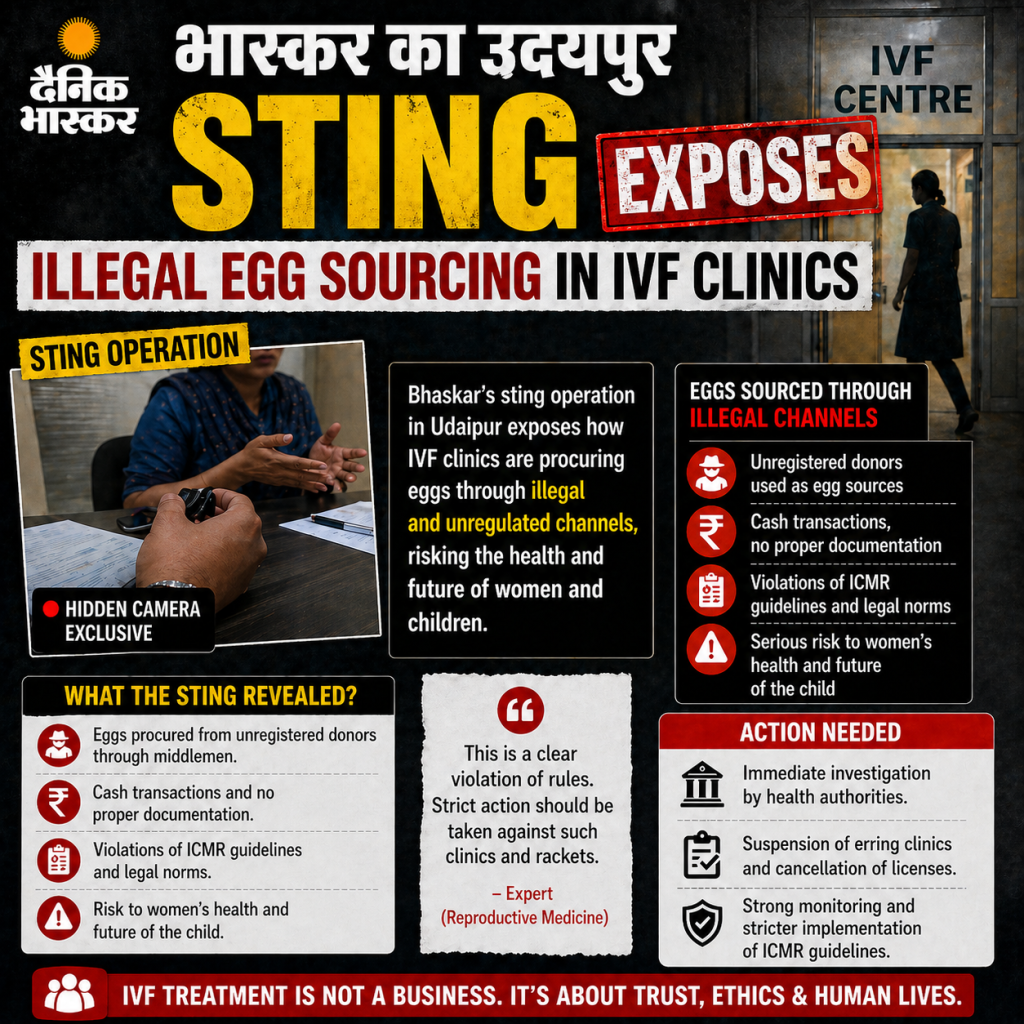
In the quiet lanes of Udaipur, what began as a standard consultation for a couple struggling with infertility quickly turned into something far more troubling. According to a detailed report published by Bhaskar English earlier today, a journalist and his wife visited a local doctor under the guise of seeking IVF treatment. What they uncovered pointed to a troubling pattern: the alleged involvement of brokers offering eggs sourced from underage girls for as little as ₹25,000, all while operating under the respectable banner of assisted reproductive technology.
This isn’t just another sensational headline. It’s a wake up call for anyone navigating India’s booming fertility industry. With thousands of couples turning to IVF every year, the demand for donor eggs is real and growing. Yet when shortcuts appear, they put vulnerable people at risk and undermine the trust that legitimate clinics work hard to build.
Let’s unpack what this investigation actually reveals, why these issues surface and most importantly, what you can do to make informed, safe choices if you’re exploring fertility treatments.
Sting That Sparked the Conversation
Reporter Vijay Pal Dudil didn’t set out to make headlines. He and his wife walked into a clinic posing as prospective parents. What they encountered, as described in the Bhaskar English piece, suggested a well oiled system where middlemen promised “fresh” eggs at unusually low prices with little transparency about the donor’s age or consent process.
Report doesn’t name every clinic or individual it focuses on the pattern. It highlights how some operators exploit gaps in oversight, particularly in smaller cities where regulation can lag behind demand.₹25,000 figure is striking because legitimate egg donation compensation in regulated settings is typically higher and comes with strict medical and legal protocols. This kind of exposure matters. Media investigations like this one act as an early warning system. They don’t just expose problems; they push regulators, clinics, and patients to ask harder questions.
Why India’s Fertility Sector Is Growing So Fast
India has become a major destination for IVF both for domestic couples and medical tourists. Lower costs compared to Western countries, skilled doctors, and improving technology have fueled this expansion. Official estimates suggest the industry handles tens of thousands of cycles annually, with donor eggs playing a significant role when a woman’s own ovarian reserve is low.
Economics are straight forward: many couples face infertility due to age, medical conditions or lifestyle factors. When natural conception isn’t possible, donor eggs offer hope. At the same time, poverty and lack of awareness in certain communities can create situations where young women are approached by brokers promising quick money.
The result? A supply and demand imbalance that bad actors try to exploit. Most clinics follow the rules but a few cutting corners can tarnish the entire field and more critically, harm real people.
Legal Guardrails You Should Know About
India isn’t without protections. Assisted Reproductive Technology (Regulation) Act, 2021 and subsequent rules set clear boundaries:
- Egg donors must be between 21 and 35 years old.
- Donation must be voluntary with proper informed consent and medical screening.
- Commercial trading of eggs outside regulated channels is prohibited.
- Clinics must register with the appropriate authority and maintain detailed records.
- Minors are strictly off limits any involvement of girls under 18 is illegal and criminal.
These rules exist for good reason. They protect donors from coercion, ensure recipients receive screened, healthy gametes and maintain ethical standards. When clinics bypass them, they break the law and expose everyone to health risks, legal complications, and emotional fallout. Bhaskar report serves as a reminder that laws on paper need enforcement on the ground. It also shows why patients have a role to play: by choosing only compliant clinics, you help starve unethical operators of business.
How to Spot Red Flags and Choose a Safe Clinic
Here’s the practical part most couples need. Whether you’re just starting your journey or already consulting doctors, use this checklist before committing time or money.
1. Verify registration and accreditation
Ask to see the clinic’s registration certificate under the ART Act. Look for additional quality marks like NABH accreditation. Legitimate centers display these proudly. If a clinic hesitates or offers vague answers, walk away.
2. Insist on full transparency about donors
A reputable clinic will explain the donor screening process in detail age verification, medical tests, genetic screening, and psychological evaluation. They should never pressure you to accept “whatever is available today.” You have the right to know the donor meets all legal criteria.
3. Watch the pricing
Extremely low package deals that seem too good to be true often are. Ethical egg donation involves medical costs, compensation to the donor (within legal limits), and clinic overhead. If a broker or clinic quotes ₹25,000–40,000 for the entire egg portion with no paperwork, treat it as a serious warning sign.
4. Meet the team and ask direct questions
Schedule a consultation where you can speak with the embryologist and counselor, not just the marketing person. Good questions include:
- How do you confirm donor age and voluntary consent?
- What happens if the donor changes her mind?
- Can I see anonymized donor profiles and test results?
- Are you affiliated with any national registry?
5. Get a second (and third) opinion
Fertility treatment is deeply personal and expensive. Visiting two or three centers is standard practice. Compare their answers. Consistent, confident responses from multiple sources build trust.
Real life scenario:
Priya and Rahul, a 34 year old couple from Jaipur, spent six months researching before choosing a clinic. They visited three centers, asked for registration proofs, and spoke with previous patients through support groups. When one clinic offered a “special discount” involving an external broker, they declined. Six months later, they welcomed their daughter through a fully documented, ethical process at a registered center. Their story isn’t unique it’s what happens when couples treat due diligence as part of the treatment itself.
Human Side: Why Ethics Matter Beyond the Law
Behind every statistic is a story. For recipient couples,dream is a healthy child. For donors, it’s often financial support for education or family needs. When brokers cut corners, young women can face health complications from repeated or poorly managed donations while couples risk receiving unscreened material that could carry undetected conditions.
Broader cost is trust. When one clinic operates unethically, it makes every legitimate doctor’s job harder. Patients become more skeptical, regulations tighten, and access to care can suffer for everyone. That’s why reports like the one from Bhaskar English are valuable. They don’t just criticize; they highlight where the system needs strengthening better monitoring in tier-2 and tier-3 cities, faster grievance redressal for patients and public awareness campaigns about legal rights.
What You Can Do Right Now
If you’re considering IVF or know someone who is:
- Start your research with the National Registry of ART Clinics (available through government health portals).
- Join verified patient forums where people share recent experiences not for medical advice but for clinic reputation.
- If something feels off during a consultation, trust your instinct and document everything.
- Suspect illegal activity? You can report it confidentially to your state health department or the ART regulatory authority. Media investigations often begin with tips from concerned citizens.
Knowledge is your best protection.
Frequently Asked Questions
Is egg donation completely legal in India?
Yes but only under strict regulations. It must be altruistic or compensated within legal limits, with full consent and medical oversight. Any commercial trading or involvement of minors is illegal.
How can I confirm a clinic is following the rules?
Check for ART registrationbask for donor documentation processesband verify accreditation. Reputable clinics welcome these questions.
What are the biggest warning signs of unethical practices?
Unusually low prices pressure to decide quickly, reluctance to show paperwork, use of external brokers, and inability to explain donor screening clearly.
Does this mean I should avoid all smaller clinics?
Not at all. Many smaller registered centers provide excellent, ethical care. The key is verification, not location.
What should I do if I already started treatment and have doubts?
Speak openly with your doctor first. If concerns remain, seek a second opinion at a different registered facility and consider consulting a patient advocate or lawyer familiar with ART laws.
Moving Forward with Eyes Open
Udaipur investigation is a reminder that progress in medicine must walk hand in hand with ethics. India’s fertility sector has helped countless families realize their dreams, and it will continue to do so when patients, doctors and regulators work together.
If you’re on this journey, take the time to choose wisely. Ask the hard questions. Demand transparency. Support clinics that treat every donor and every patient with dignity. And if you come across something that doesn’t feel right, speak up whether to the authorities or through responsible journalism.
Fertility treatment is deeply personal, but safety and ethics are everyone’s responsibility. The more informed we all become, the harder it becomes for shady practices to survive. Your future family deserves nothing less than care built on trust, legality and genuine compassion. Start there and the rest becomes a little clearer.
Disclaimer
This post is for informational and educational purposes only. It does not constitute medical advice, legal opinion or an official investigation. Readers should consult qualified healthcare professionals for personal health concerns. All details are drawn from media reports and outcomes of any official inquiry may provide further clarity.
Link: According to news report from Bhaskar English
https://www.bhaskarenglish.in/amp/local/rajasthan/udaipur/news/bhaskar-reporter-doctor-wife-sting-trafficking-racket-ivf-cover-137812564.html