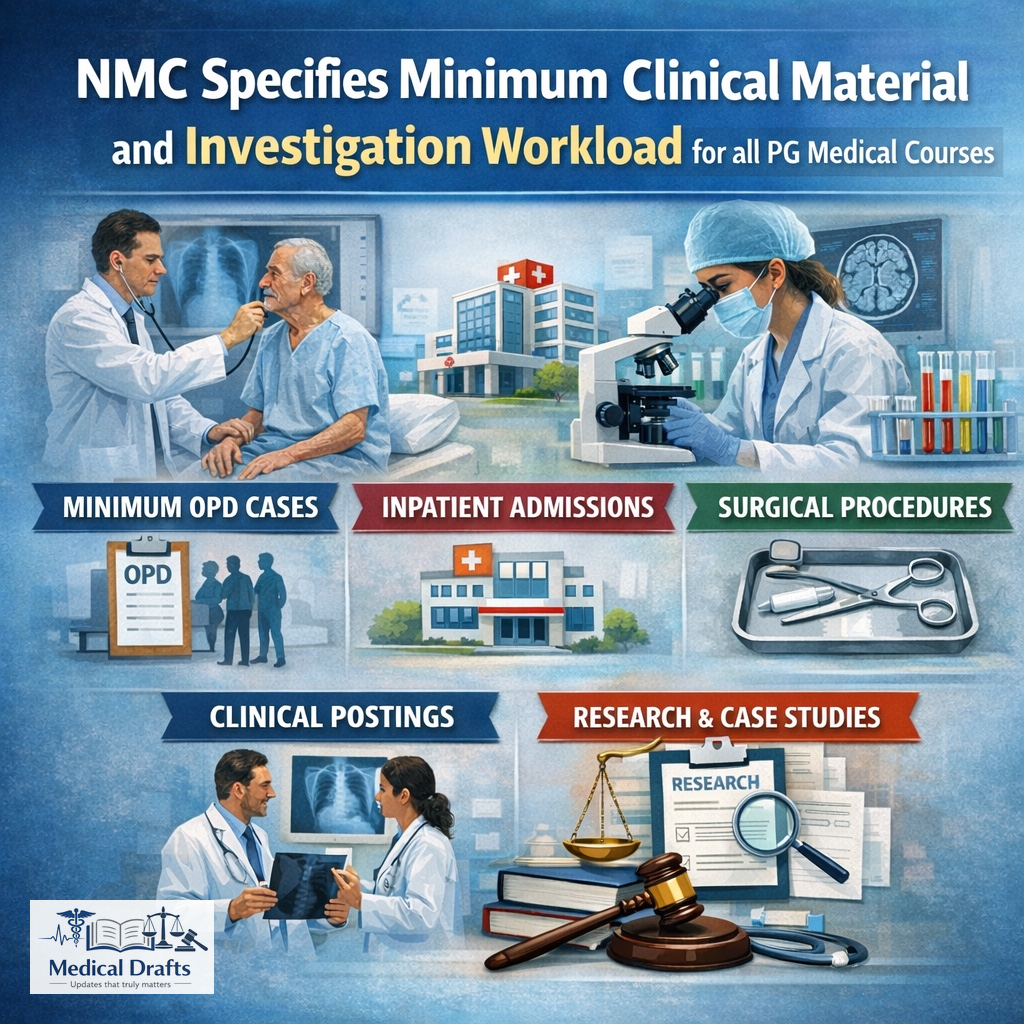
These rules are not just another bureaucratic update they directly impact the quality of postgraduate training, approval of new PG seats and how medical colleges prepare students for real world practice. If you’re preparing for NEET-PG, planning to join an MD/MS/DM/MCh program or running a medical institution, this guide breaks everything down in simple, actionable terms.
Why the NMC Introduced These Workload Norms
Postgraduate medical education in India has long faced criticism for uneven clinical exposure. Some colleges had impressive infrastructure but lacked enough real patients or diagnostic cases for trainees to gain practical skills.
The latest amendment to PGMSR-2023 (effective immediately from February 20, 2026) fixes this by quantifying the minimum patient load, surgeries, deliveries and diagnostic procedures every college must maintain. The goal? Ensure every PG student gets enough hands-on experience before they become independent specialists.
These norms apply when colleges apply for:
- Starting new PG courses
- Increasing seats in existing programs
- Maintaining recognition for ongoing courses
Key Clinical Material Requirements for PG Courses
According to the updated PGMSR-2023, medical colleges must meet department specific minimums for average daily Out Patient Department (OPD) attendance and other clinical indicators. Here’s what the guidelines say:
- Minimum OPD Attendance: At least 60 patients per day in major clinical departments (e.g., Medicine, Surgery, Obstetrics & Gynaecology, Paediatrics, etc.) as the base requirement for starting a PG course.
- Additional Seats: Add 12 extra OPD patients per day for every additional PG seat beyond the initial intake.
- In-Patient Department (IPD) & Bed Occupancy: Hospitals must maintain high bed occupancy (typically around 80% year-round) with sufficient major and minor cases.
- Obstetrics & Gynaecology Specific: Minimum 25 deliveries per week for OBG PG programs.
- Surgical Exposure: Adequate number of major and minor surgeries per week, verified through hospital records.
Other corroborative clinical indicators include:
- Number of critically ill patients on invasive ventilators
- Haemodialysis sessions performed
- Total births and deaths in the hospital
- Blood and component consumption
- Overall major surgeries done in the department and hospital
These numbers are tracked via Hospital Management Information Systems (HMIS), AEBAS attendance, live video feeds and surprise inspections.
Investigation & Diagnostic Workload Standards
PG training isn’t complete without strong exposure to diagnostics. The NMC has now set clear minimums for laboratory and radiology workloads so students learn to interpret real reports, not just theory. Typical benchmarks include:
- Radiology Workload (examples from amended norms):
- X-rays: Minimum 60 per day (base)
- Ultrasonography (USG): Minimum 30 per day
- CT scans: Minimum 10 per day
- MRI and other advanced imaging as per speciality curriculum
- Pathology & Laboratory Workload:
- Histopathology samples linked to at least 20% of major surgeries
- Microbiology and biochemistry tests scaled to OPD/IPD volume
- Full in house lab facilities with digital record-keeping mandatory
Colleges must maintain these workloads separately for each department and display the data transparently on their official website (along with faculty details, PG seats and clinical statistics).
Who Needs to Comply and What Happens If They Don’t?
- Standalone PG Institutes: Must have at least 220 beds and mandatory functional departments (Biochemistry, Pathology, Microbiology, Radio-Diagnosis).
- Existing Medical Colleges: Already running UG/PG courses must meet both UGMSR-2023 and PGMSR-2023 requirements simultaneously.
- Fake Patient Crackdown: The NMC has warned colleges against admitting “ghost” or unnecessary patients just to inflate numbers. Violations can lead to heavy penalties under the Establishment of New Medical Institutions Regulations, 2023.
Failure to meet these standards can result in:
- Rejection of new course applications
- Seat reduction or de-recognition
- Financial penalties
How These Changes Benefit PG Aspirants and the Healthcare System
For students, this is excellent news. You will now train in environments with real patient volume, diverse cases and modern diagnostics exactly what you need to become a competent specialist.
For colleges, it means investing in genuine infrastructure and patient care rather than shortcuts. Ultimately, this strengthens India’s doctor workforce and improves patient safety across the country.
How to Check the Official Guidelines
The full amended PGMSR-2023 document (as on 20.02.2026) is available on the NMC website. Medical colleges are required to follow it immediately for the 2026-27 academic session.
Pro Tip for Aspirants: When choosing a PG college, don’t just look at NEET rank or fees. Ask about their latest OPD/IPD numbers, surgery statistics, and lab workload data it’s now publicly available on every recognised institution’s website!
Final Thoughts
The NMC’s move to quantify clinical material and investigation workload is a bold step toward quality over quantity in postgraduate medical education. Whether you’re a future MD/MS resident or part of a medical college management team, these norms set a new benchmark for excellence.