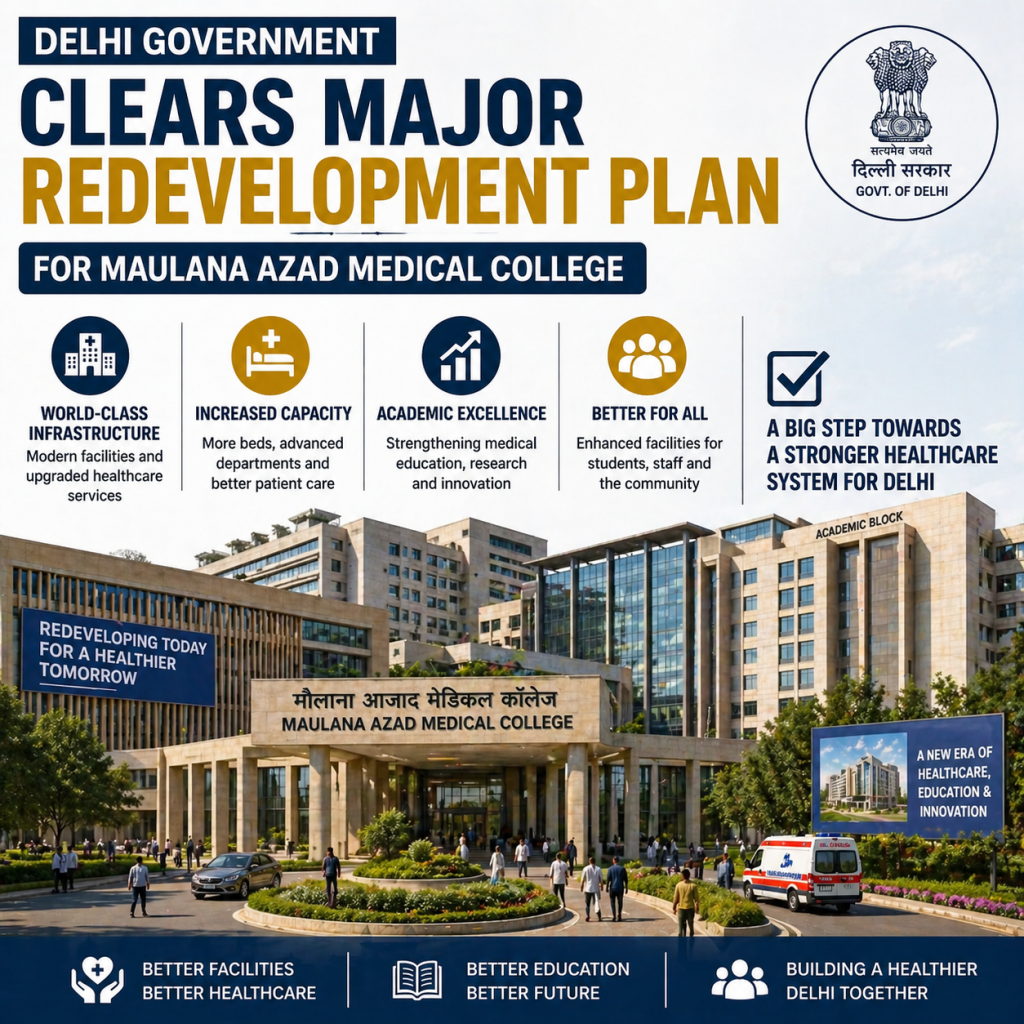
On 27 April 2026, Delhi government gave formal approval to a long awaited amaster plan for redeveloping Maulana Azad Medical College, one of the city’s oldest and most respected medical institutions. The decision sets the stage for a complete transformation of the campus, which has served generations of students and patients since its establishment in the late 1950s. For many Delhi residents, MAMC is more than just a college it is a familiar landmark in the heart of the city, attached to Lok Nayak Hospital and several other facilities. The redevelopment plan aims to modernise ageing infrastructure while preserving the institution’s core identity and accessibility. Officials describe the move as a necessary step to meet rising demands for quality medical training and efficient healthcare services in a growing metropolis.
Why This Redevelopment Matters Now
Delhi’s population has grown steadily and so has the pressure on public healthcare and medical education. Existing buildings at MAMC, some dating back decades, face limitations in space, technology and energy efficiency. The approved master plan addresses these issues through careful, phased upgrades rather than a complete overhaul that could disrupt daily operations.
The timing is significant. Post pandemic healthcare needs have highlighted gaps in infrastructure across many government institutions. By investing in MAMC, Government is signalling a broader commitment to strengthening public medical colleges so they can train more doctors and deliver better care closer to where people live.
What the Master Plan Actually Includes
Plan is not just about new buildings. It takes a holistic view of the entire campus. Key elements include:
- Expanded academic blocks with modern lecture theatres, simulation labs, and digital learning studios.
- Upgraded hospital wings focused on super specialty services such as advanced cardiology, oncology and neurology.
- New hostel facilities designed for better student well being, including more natural light, recreational areas and improved safety features.
- A dedicated research and innovation centre to encourage faculty and student projects in areas like public health and medical technology.
- Green and open spaces that reduce the urban heat effect and create a calmer environment for patients and staff.
- Better internal roads, parking, and connectivity to nearby metro stations to ease daily commuting.
Everything is being planned with long-term sustainability in mind solar panels, rainwater harvesting and energy efficient systems are part of the blueprint.
How Students and Future
Doctors Stand to Benefit
Medical students often spend six to seven years on campus. The quality of their learning environment directly affects their skills and confidence when they graduate. The redevelopment is expected to introduce:
- Hands on training in state of the art simulation labs before students enter real wards.
- Dedicated spaces for small group discussions and research, reducing overcrowding in existing libraries and labs.
- Improved hostel living conditions, which can reduce stress and improve focus during demanding study years.
For parents and aspiring doctors, this could mean MAMC becomes an even stronger choice during counselling. A campus with modern facilities often attracts better faculty, which in turn raises the overall standard of teaching.
What Patients and Families Can Expect
Many people in Delhi and neighbouring states rely on MAMC’s outpatient and emergency services because they are affordable and centrally located. The master plan aims to make visits less stressful:
- More consultation rooms and digital registration systems should shorten waiting times.
- Separate zones for different specialties can reduce confusion for first time visitors.
- Better signage, seating and sanitation facilities will improve the overall experience, especially for elderly patients and those with mobility challenges.
Construction will be phased so that critical services continue without major interruption. Temporary arrangements such as modular clinics are being considered to maintain smooth operations during the transition.
Timeline and Next Steps
According to government sources, detailed project reports and tendering processes are expected to begin within the next few months. The entire redevelopment is likely to unfold over five to seven years in carefully planned stages. Early phases will focus on academic infrastructure and student facilities, while hospital upgrades will follow in later stages to minimise disruption to patient care.
Regular progress updates are expected to be shared on the official Delhi government health department website and through MAMC’s own channels. Citizens and stakeholders can also attend public consultations once the detailed plans are released.
Real Life Scenarios: What This Could Look Like
Imagine a second year MBBS student in 2028 walking into a new simulation lab where she can practise complex procedures on high-fidelity mannequins before ever touching a real patient. Or picture a family from outer Delhi bringing an elderly relative for a cardiology check up and finding clear digital directions, comfortable waiting areas, and quicker consultations. These are the kinds of everyday improvements the master plan targets. They may seem small individually, but together they can make a meaningful difference in how thousands of people experience medical education and healthcare each year.
Addressing Common Concerns
Any large scale redevelopment raises questions. Will classes be affected? How will funding work? Will the character of the historic campus be lost? Officials have emphasised that academic calendars will be protected and that heritage elements of the original architecture will be retained where possible. Funding is expected to come from a combination of state budget allocations and central government schemes focused on medical education infrastructure. Temporary facilities and careful sequencing are designed to keep disruption to a minimum.
Frequently Asked Questions
When will actual construction work start?
Detailed planning and tender processes are scheduled to begin soon after the April 2026 approval. Physical work on the first phase is likely to commence within 12–18 months, subject to clearances.
Will the college stop functioning during redevelopment?
No, plan uses a phased approach so that teaching, clinical services, and emergency care continue. Temporary arrangements will be put in place wherever needed.
Will the number of MBBS seats increase?
While the master plan creates space for potential future expansion, any increase in seats will depend on approvals from the National Medical Commission and will be announced separately.
How can I stay updated on progress?
Official updates will appear on the Delhi government health portal and MAMC’s website. Following these channels is the most reliable way to track milestones and any public engagement opportunities.
What happens to the existing buildings?
Some older structures may be renovated, while others could be repurposed or, in certain cases, replaced. Final design will balance preservation with modern requirements.
Looking Ahead: Why This Matters Beyond One Campus
Redeveloping a landmark institution like MAMC is more than an infrastructure project. It reflects a wider understanding that strong public medical colleges are essential for a healthy city. Better trained doctors, improved patient experiences and a campus that supports both learning and healing can have ripple effects across Delhi’s entire healthcare system.
For anyone who has ever walked through MAMC’s gates whether as a student, a patient, a parent or a visitor this redevelopment represent a quiet but important promise: that the institutions serving the public will continue to evolve with the times.
If you are a medical aspirant, a healthcare professional, or simply someone who cares about Delhi’s future, this is a development worth following. Keep an eye on official announcements share reliable information with others, and remember that every step toward better infrastructure ultimately serves the people who need it most, story of MAMC’s transformation is just beginning. Staying informed and engaged is the best way to be part of it.
Disclaimer
This post is for informational and educational purposes only. It does not constitute medical advice, legal opinion or an official investigation. Readers should consult qualified healthcare professionals for personal health concerns. All details are drawn from media reports and outcomes of any official inquiry may provide further clarity.
Link: According to reports from The Times Of Indiahttps://timesofindia.indiatimes.com/city/delhi/delhi-govt-clears-comprehensive-redevelopment-plan-for-mamc-campus/amp_articleshow/130521093.cms