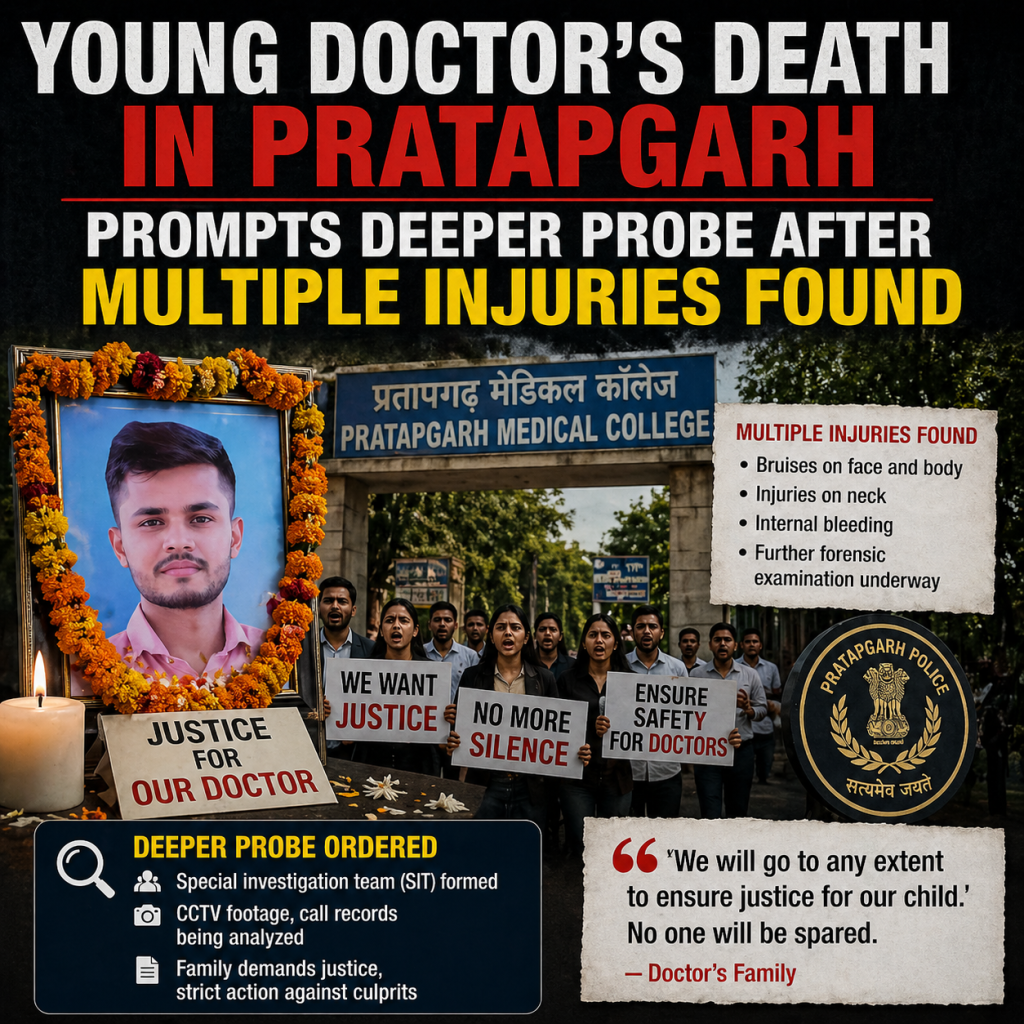
When news of a young doctor’s death in Pratapgarh first surfaced, it was already unsettling but the latest update from the post mortem examination has shifted the entire conversation. According to reports published on Medical Dialogues on 28 April 2026, autopsy uncovered multiple injuries on the body. What was initially treated as a possible natural or accidental death is now being handled as a case with clear signs pointing toward foul play. Police have confirmed that the probe is gaining momentum with forensic teams and senior officers taking a closer look at every detail. This development in the Pratapgarh doctor death case is not just another headline. It raises important questions about the safety of healthcare workers, the role of thorough medical examinations, and how families can navigate such difficult situations. In this article, we break down what we know so far, what the findings actually tell us, and what practical lessons everyone especially those in the medical field can take away.
What We Know So Far About the Pratapgarh Doctor Death Case
The young doctor was based in Pratapgarh, a district in Uttar Pradesh known for its mix of rural and semi urban healthcare setups. Colleagues described him as dedicated and well liked, someone who had recently started his practice and was building a reputation for being approachable with patients. His death came as a shock to the local medical community and his family.
Initial reports suggested the death might have been sudden but the post mortem changed that narrative. Examination, conducted by government forensic experts found multiple injuries that could not be explained by natural causes or a simple accident. Sources close to the investigation told Medical Dialogues that these findings have led the police to treat the matter with greater urgency. Teams are now revisiting the scene, speaking to neighbours, colleagues, and family members again and collecting additional forensic evidence. In cases like this, shift from “unexplained death” to “suspicious death” usually happens when the post mortem report highlights inconsistencies. Here presence of multiple injuries has made that shift clear. Investigation is no longer routine it has become a priority case.
Understanding What “Multiple Injuries” Means in a Post Mortem Report
Many readers wonder exactly what these findings indicate. A post mortem is not just a simple check up of the body. Forensic doctors look at every organ, bone and tissue sample under controlled conditions. When they report “multiple injuries,” it generally means they have documented wounds or trauma in more than one area sometimes on the head, torso or limbs that do not match a single event like a fall or a medical condition.
In the Pratapgarh doctor death case report has apparently ruled out common natural causes such as heart attack or stroke as the primary reason. Instead injuries suggest external force was involved. This does not automatically mean murder but it does mean investigators must rule out every possibility including homicide before closing the file. For families this stage is often the hardest. Waiting period between the post mortem and the final report can stretch for days or even weeks. During this time, police may ask for additional tests including toxicology reports to check for any substances in the system. These steps are standard procedure and actually help build a stronger case if foul play is confirmed.
Why Thorough Investigations Matter for Everyone
You might be reading this and thinking, “This is tragic, but how does it affect me?” The truth is, cases like the Pratapgarh doctor death case highlight bigger issues that touch ordinary people too.
Healthcare workers, especially young doctors posted in smaller towns, often work long hours in settings with limited security. When something goes wrong, families are left not only grieving but also fighting for answers. A proper post-mortem and a transparent police probe give them that chance. It also sends a message to the community that every life regardless of profession deserves full justice.
In recent years, India has seen growing discussion around violence against doctors. While most patients and families are respectful, isolated incidents of aggression do happen, particularly in high pressure emergency situations. The current case in Pratapgarh serves as a reminder that safety protocols in hospitals and clinics need constant review. Simple measures better lighting in parking areas, CCTV at entry points, and quick response teams can make a real difference.
Practical Steps Families Can Take If They Suspect Foul Play
If you or someone you know ever faces a similar situation, here are clear actionable steps that can help:
- Request a full post-mortem immediately. Do not settle for a surface level examination. Ask for a complete forensic autopsy conducted by a government appointed doctor. You have the legal right to this under Indian law.
- Document everything. Keep records of all conversations with police, hospital staff, and witnesses. Note dates, times and names. Photographs of the body (if permitted) and the scene can be useful later.
- Stay in touch with the investigating officer. Regular, polite follow ups keep the case active. Many families find it helpful to appoint one spokesperson so information flows clearly.
- Seek legal guidance early. A local lawyer familiar with criminal cases can explain your rights and help file applications for further investigation if needed.
- Take care of mental health. The stress of waiting for answers can be overwhelming. Many district hospitals now have counsellor services use them. Support groups for families of victims can also provide comfort.
These steps are not about creating conflict. They are about ensuring the truth comes out and that the deceased receives the dignity they deserve.
What Young Doctors and Medical Students Can Learn from This Case
For those still training or just starting their careers, the Pratapgarh doctor death case carries quiet but important lessons.
First, personal safety should never be an afterthought. Many young doctors work in remote postings where backup is limited. Simple habits informing a colleague or family member about your schedule, avoiding isolated areas after dark, and using hospital transport when available can reduce risk.
Second, building good relationships with local communities helps. Doctors who take time to explain treatments and listen to concerns often face fewer misunderstandings. In tense situations, a calm, respectful approach can de escalate problems before they grow.
Third, know your rights. Medical Council of India and state medical councils have guidelines on workplace safety. Hospitals are expected to provide basic security. If you feel unsafe at your posting, document your concerns in writing and share them with seniors or the district health officer. Finally look after your own well-being. Burnout and stress can cloud judgment. Regular exercise, adequate sleep, and talking to peers about difficult days are not luxuries they are survival tools.
What Happens Next in the Pratapgarh Doctor Death Case?
As of the latest update, the police investigation is ongoing. Senior officers have been roped in, and forensic teams are expected to submit detailed reports within the next few days. Depending on the final findings, the case could move toward charges under relevant sections of the Indian Penal Code. Family has expressed hope that the truth will emerge quickly so they can begin the process of healing. Local medical associations have also offered support including legal assistance if required. For now, focus remains on gathering every possible piece of evidence. In cases involving medical professionals, public interest is naturally high and authorities are aware that any lapses will be scrutinised closely.
Frequently Asked Questions
Q1: What exactly does “multiple injuries” in a post mortem usually point to?
It generally indicates trauma to more than one part of the body that cannot be explained by a single accident or natural event. Investigators then work to determine how and when those injuries occurred.
Q2: Can families request a second post mortem if they are not satisfied?
Yes, under Indian law, families can approach the court for an exhumation and second autopsy in suspicious death cases, though this is done only when strong reasons exist.
Q3: Are there support systems for doctors who feel threatened at work?
Many states now have helplines and grievance cells under the health department. Medical associations also provide counselling and legal aid. It is important to report threats early rather than waiting for an incident.
Q4: How long does a police investigation in such cases usually take?
It varies. Straightforward cases may conclude in a few weeks, while complex ones involving multiple injuries and forensic tests can stretch for months. Regular updates from the police help families stay informed.
Q5: What can ordinary citizens do to support healthcare workers?
Simple acts treating doctors and nurses with respect during visits, not crowding emergency areas, and speaking up against any form of aggression go a long way. Public awareness campaigns by local groups can also make clinics and hospitals safer for everyone.
Final Thoughts: Protecting Those Who Protect Us
Pratapgarh doctor death case is still unfolding, but one thing is already clear: every life lost under suspicious circumstances deserves a full and fair investigation. When a young doctor who spent years learning to heal others becomes the subject of such a probe, it affects not just one family but the entire healthcare ecosystem.
As readers, we can honour this young doctor’s memory by learning from what happened. Whether you are a medical student, practicing doctor, family member or simply someone who values the people who care for us in our most vulnerable moments, take one small step today. Check on a colleague who seems stressed. Support better safety measures in your local hospital or simply share accurate information instead of rumours. Justice moves slowly but it moves when enough people care enough to keep asking questions. Let this case remind us that protecting healthcare workers is not just their responsibility it is ours too.
If you have any information that could help the ongoing investigation in the Pratapgarh doctor death case, please reach out to the local police or the family through proper channels. Every detail matters. Stay safe, stay informed and keep supporting those who dedicate their lives to saving others.
Disclaimer
This post is for informational and educational purposes only. It does not constitute medical advice, legal opinion or an official investigation. Readers should consult qualified healthcare professionals for personal health concerns. All details are drawn from media reports and outcomes of any official inquiry may provide further clarity.
Link: According to news reports from Medical Dialogues
https://medicaldialogues.in/amp/news/health/doctors/pratapgarh-doctor-death-case-post-mortem-reveals-multiple-injuries-probe-intensifies-169556