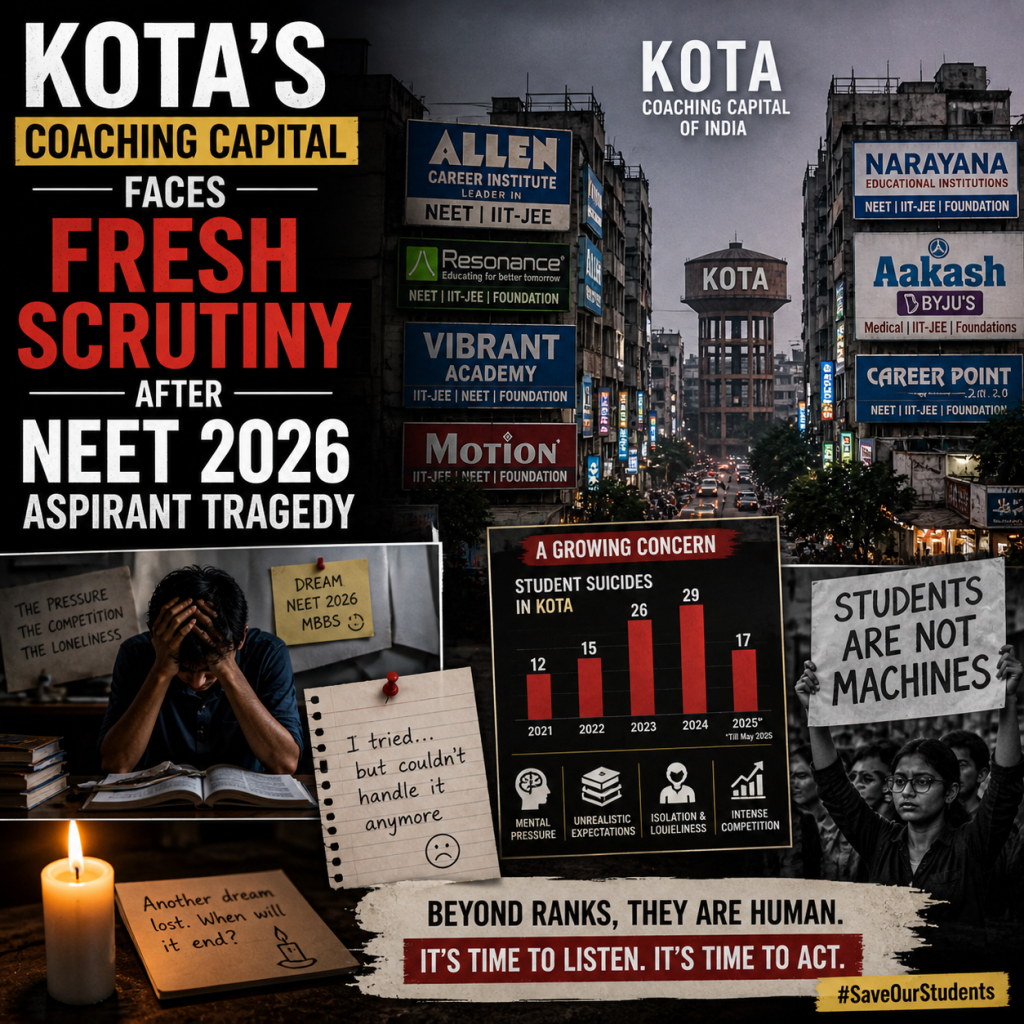
On the evening of May 4, 2026 reports emerged from Kota, Rajasthan that a young NEET aspirant originally from Uttarakhand had died by suicide just one day before the national medical entrance examination.
Incident, first covered by Medical Dialogues has once again placed the city’s famous coaching ecosystem under the spotlight. While the exact circumstances remain under investigation, the event has sparked renewed conversations about the emotional and psychological toll that competitive exam preparation can take on thousands of students every year.
Kota has long been known as India’s premier destination for NEET and JEE coaching. Every year more than 2 lakh students arrive from across the country, hoping to secure a seat in a government medical college. Atmosphere is one of relentless focus hostels filled with students studying late into the night, mock tests every week and parents back home waiting anxiously for results. For many dream of becoming a doctor carries the weight of family expectations, financial sacrifice and personal identity.
This latest case serves as a reminder that behind the success stories lies a quieter reality: the mental health struggles that too often go unnoticed until it is too late.
Understanding the Pressure Cooker Environment of Kota
Life for a typical NEET aspirant in Kota follows a demanding rhythm. Most students wake up by 5:30 or 6 a.m. attend coaching classes from morning till evening, then return to hostels for self study that stretches past midnight. Sundays are rarely off; they often mean extra doubt clearing sessions or full length tests. Meals are quick, social interaction is limited and homesickness is common especially for students from smaller towns or different states.
Competition is fierce. Only around 1 in 10 students who appear for NEET secure a government MBBS seat. The fear of failure is constant. Many students have already taken a drop year or two, adding to the sense that “this is my last chance.” When result fall short of expectations whether in weekly tests or the final exam emotional impact can be devastating.
Parents often investing lakhs of rupees in fees, travel and accommodation, unintentionally add pressure through frequent calls asking about test scores. Coaching institutes, while providing excellent academic training, sometimes lack robust systems for emotional support. Combination of academic intensity, isolation and high stakes creates a perfect storm for anxiety, depression and burnout.
Human Cost: What the Numbers and Stories Tell Us
National Crime Records Bureau data over the years has consistently shown that students form a significant portion of suicide cases in India. In coaching hubs like Kota, the numbers have drawn attention repeatedly. While exact figures for 2026 are still emerging, the pattern is clear: the pressure does not affect everyone equally but it affects far too many.
Consider story of Rahul (name changed), a 19 year old from a village in Bihar who joined a reputed Kota institute last year. He described his routine to a counselor: “I used to love biology in school. Now I only see it as 360 marks I must score. I haven’t spoken to my friends back home in months. My mother calls every Sunday and asks Beta kitne number aaye?’ I lie and say ‘theek thaak’ even when I scored 120 out of 720.” Stories like Rahul’s are common. Shift from enjoying a subject to viewing it purely as a scorecard changes the entire experience. Sleep deprivation, poor nutrition and lack of physical activity compound the problem. Many students report feeling trapped unable to return home without “wasting” their parents’ money yet unable to keep up with the pace.
What Parents and Students Can Actually Do: Practical Steps
Good news is that change is possible, and many families and institutes are already taking steps. Here are concrete realistic actions that have helped others:
For Students
- Build micro breaks into your day.Even 10 minutes of walking outside the hostel or listening to non study music can reset the brain. One student shared that she started a 15 minute evening walk with two hostel mates; it became her only time to talk about anything except tests.
- Track your energy, not just your scores.Keep a simple notebook: note how you felt after each study session (energized, drained, anxious). Over two weeks, patterns emerge. Adjust your schedule accordingly maybe biology at 7 a.m. works better than at 11 p.m.
- Create a “support buddy” system.Pair up with someone in your batch. Agree to check in once a day with a simple message: “How are you feeling today, not just how many questions you solved?” This reduces isolation without adding academic pressure.
- Practice the 5 minute rule for negative thoughts.When you catch yourself spiraling (“If I don’t get a government seat, my life is over”), pause and write down one fact: “I have prepared sincerely. One exam does not define my entire future.” Then return to the next task.
For Parents
- Replace “How many marks did you get?” with “How are you feeling about your preparation this week?” The shift in language matters enormously.
- Plan one non academic video call per week focused only on life back home family news, festivals or even silly jokes. This reminds the student they are loved beyond their scores.
- Visit Kota at least once during the year not just for results. Walk around the city together, eat local food and talk about life after NEET whatever the outcome.
For Coaching Institutes
Several institutes have begun appointing full-time student counselors and organizing weekly mental health sessions. The most effective ones treat counseling as a normal part of preparation, not a sign of weakness. If your institute does not offer this, ask for it collective student voices carry weight.
FAQ: Common Questions About NEET Preparation and Mental Health
Q1: How do I know if my stress has crossed from normal to harmful?
Watch for persistent sleep changes, loss of interest in things you once enjoyed, constant irritability or thoughts that “it would be easier if I weren’t here.” These are signals to reach out immediately.
Q2: My parents keep comparing me to toppers on social media. What should I do?
Show them this article or similar stories. Many parents change their approach once they understand the emotional cost. You can also ask them to join a parent support group several exist on WhatsApp for Kota parents.
Q3: Is taking a break during preparation a sign of weakness?
No, top performers often schedule deliberate rest. A tired brain cannot retain information. Even one full day off every 10–12 days can improve long-term performance.
Q4: What if my coaching institute discourages counseling?
You can still access external helplines listed above. Many students use them privately without informing the institute. Your mental health is more important than any mock test rank.
Q5: How can I support a friend who seems withdrawn?
Start with a low pressure message: “I noticed you’ve been quiet lately. I’m here if you want to talk or even just sit together.” Sometimes presence matters more than advice.
Moving Forward: A Call to Collective Responsibility
The tragedy reported on May 4, 2026 is not an isolated statistic. It is a young life with dreams, family and potential that ended far too soon. Every such incident forces us to ask uncomfortable questions: Are our education systems preparing students for life, or only for one exam? Can we celebrate effort as much as we celebrate ranks? Can we create environments where asking for help is seen as strength rather than failure?
The answers lie in small, consistent actions. If you are a student reading this know that your worth is not measured by a percentile. If you are a parent, your child needs your emotional presence more than your expectations. If you are an educator or policymaker, time to strengthen mental health infrastructure in coaching hubs is now.
Success in NEET or any competitive exam is meaningful only when the person achieving it is healthy enough to enjoy the journey and the destination. Let this be the year we choose both excellence and well being.
If this article resonated with you, share it with someone who might need to read it and if you are struggling right now, please reach out to one of the helplines listed above. You are not alone and help is available. Your future and your life matters.
Disclaimer
This post is for informational and educational purposes only. It does not constitute medical advice, legal opinion or an official investigation. Readers should consult qualified healthcare professionals for personal health concerns. All details are drawn from media reports and outcomes of any official inquiry may provide further clarity.