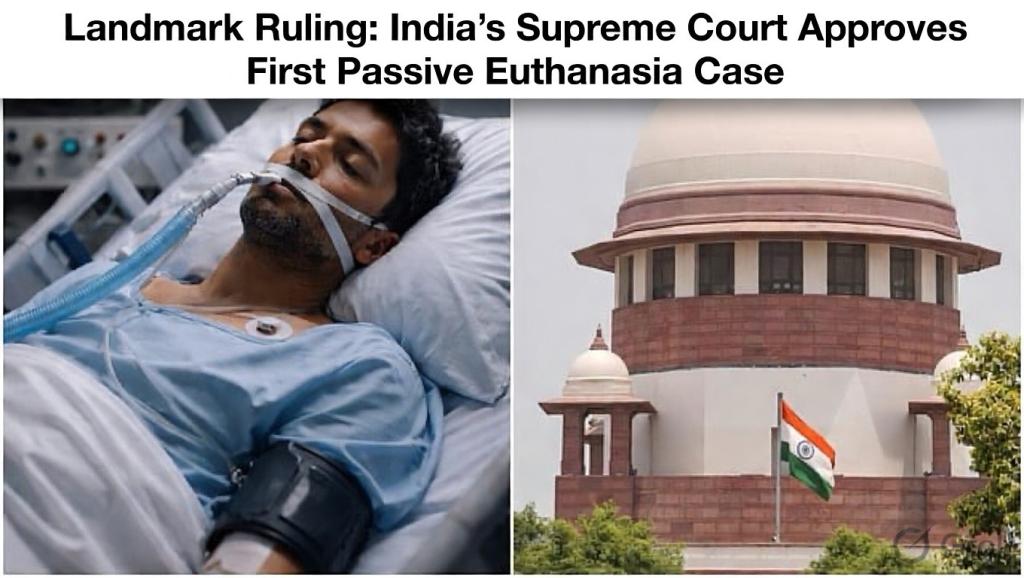
In a poignant and historic decision that underscores the delicate balance between the right to life and the right to die with dignity, the Supreme Court of India has permitted the withdrawal of life support for 32-year-old Harish Rana, who has been in a permanent vegetative state for over 13 years. This marks the first judicially approved instance of passive euthanasia in the country since the practice was legalized in 2018, sparking renewed discussions on end-of-life care, medical ethics, and human rights.
The Heart-Wrenching Story of Harish Rana
The Accident and Its Aftermath
Harish Rana’s ordeal began in August 2013 when, as a B.Tech student at Punjab University, he suffered a traumatic brain injury after falling from the fourth floor of his paying guest accommodation in Chandigarh. The accident left him with quadriplegia—a complete paralysis of all four limbs—and a 100% disability. For the past 13 years, Harish has relied solely on clinically administered nutrition (CAN) through a PEG tube for feeding and a tracheostomy for breathing support. Medical reports have consistently shown no signs of improvement, with complications such as severe bed sores compounding his suffering.
The Family’s Struggle and Legal Journey
His parents, Ashok Rana and his wife, have shouldered the emotional and physical burden of caring for him at home. After exhausting all medical avenues and witnessing their son’s prolonged agony, they approached the courts seeking permission to withdraw life-sustaining treatments. Their plea was initially dismissed by the Delhi High Court in 2024, but the Supreme Court revisited it in 2025 through a miscellaneous application. The bench, comprising Justices JB Pardiwala and KV Viswanathan, even met the family personally before delivering the verdict, highlighting the human element in this legal battle.
Legal Evolution of Euthanasia in India
Overview of Euthanasia Laws
Euthanasia, often dubbed “mercy killing,” has long been a contentious issue in India. Active euthanasia—administering a lethal substance—remains illegal, but passive euthanasia—withdrawing or withholding life support—was recognized as a fundamental right under Article 21 of the Constitution (right to life and personal liberty, including the right to die with dignity) in the landmark 2018 judgment in Common Cause v. Union of India. This ruling allowed for advance directives (living wills) and set guidelines for terminally ill or vegetative patients.
Updates and Precedents
The guidelines were streamlined in 2023 to reduce bureaucratic hurdles, such as eliminating the need for magistrate approval in certain cases. However, until the Harish Rana case, these had not been applied judicially. The court clarified that CAN qualifies as “medical treatment” that can be withdrawn if it merely prolongs biological existence without benefit, drawing parallels to the Aruna Shanbaug case (2011), where passive euthanasia was first discussed but not granted at the time.
Medical Boards’ Role in the Case
In Harish’s case, primary and secondary medical boards—from Noida District Hospital and AIIMS Delhi—unanimously concluded that recovery was impossible and withdrawal was in his best interest. The Supreme Court, reserving its judgment in January 2026, finally approved the plea on March 11, 2026, waiving the standard 30-day reconsideration period.
Key Directives from the Court
Emphasizing Dignity in the Process
The judgment emphasizes dignity throughout the process:
- Immediate withdrawal of CAN and other supports.
- Admission to AIIMS Delhi’s palliative care unit for a dignified end, with provisions for home-to-hospital transfer.
- A tailored plan to ensure comfort and respect.
- Mandates for High Courts to involve Judicial Magistrates in similar cases.
- Calls for the Union Government to establish district-level panels of medical experts and consider comprehensive euthanasia legislation.
Emotional Elements in the Hearing
Justice Pardiwala reportedly teared up during the hearing, quoting Shakespeare and American preacher Henry Ward Beecher to reflect on the moral complexities: “To be or not to be.”
Public and Expert Reactions
Mixed Responses and Praise
The ruling has elicited a mix of relief, empathy, and ethical debate across social media and legal circles. Senior Advocate Kapil Sibal hailed it as a “historic decision” that will provide relief to many families facing similar ordeals. On X (formerly Twitter), users expressed respect for the family’s resilience, with one post noting, “Sad but maybe the kindest outcome.” Another user shared, “This is allowed under law in India, but only with strict safeguards… deciding who lives or dies isn’t easy.”
Support from Medical and Legal Communities
Journalists and legal experts have praised the verdict for setting a precedent. One X post highlighted, “The Medical Fraternity would support this as they see firsthand the Trauma that families go through.” However, some voices urge caution, questioning whether this empowers dignity or challenges the sanctity of life. Overall, the response leans toward viewing it as a compassionate step forward, with calls for broader awareness and legislative support.
Implications and the Road Ahead
Setting Precedents for Future Cases
This verdict not only implements the 2018 guidelines for the first time but also expands their scope to include feeding tubes as life support. It could pave the way for more families in similar situations to seek relief, potentially reducing prolonged suffering and financial strain. Yet, it raises broader questions: How do we balance medical advancements with quality of life? Should active euthanasia be reconsidered?
What are your thoughts on this decision? Does it affirm human dignity, or does it open a slippery slope? Share in the comments below.