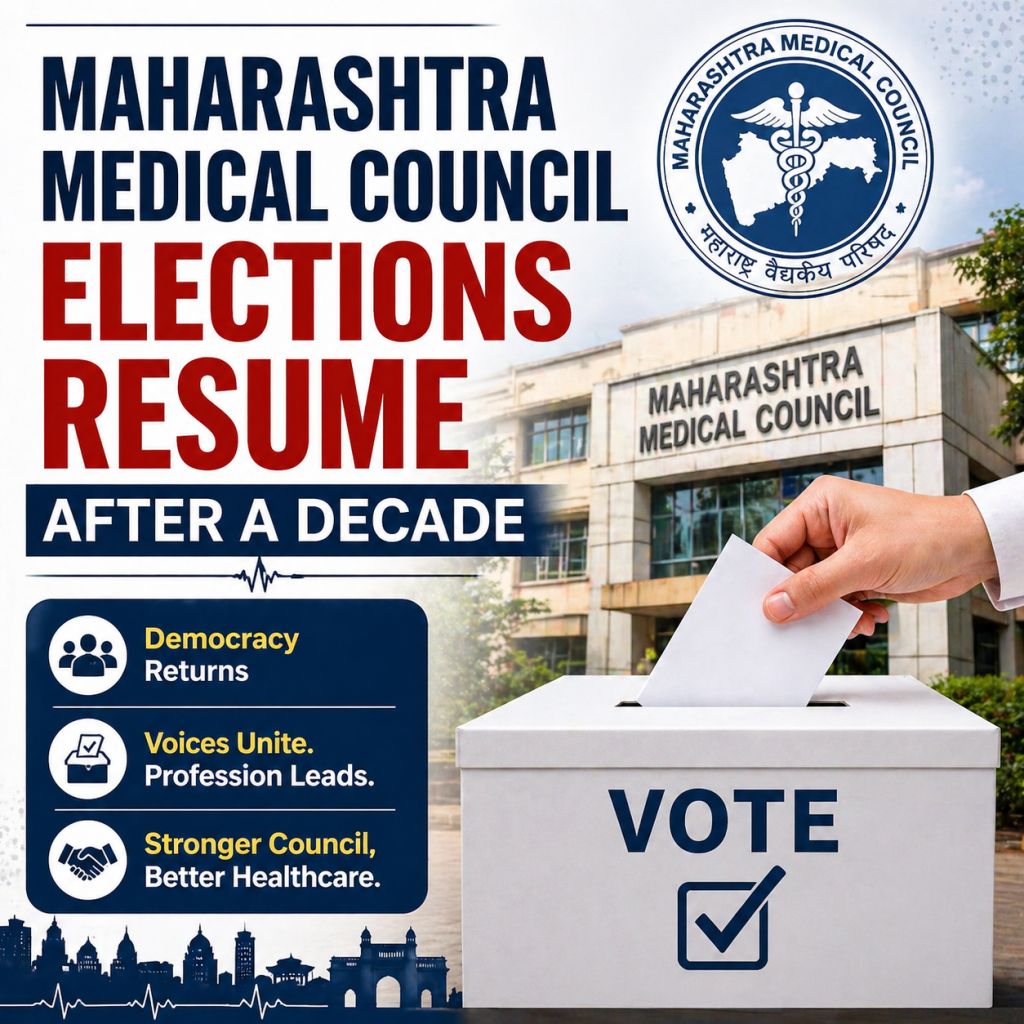
If you practice medicine in Maharashtra or live here, understanding this shift helps you prepare for what comes next. The process was not just about filling seats it reflects broader efforts to strengthen self regulation in healthcare at a time when trust, ethics and access remain pressing concerns.
What Exactly Does the Maharashtra Medical Council Do?
Maharashtra Medical Council serves as the primary regulatory authority for modern medicine practitioners across the state. Established under relevant state legislation, it maintains the official register of qualified doctors, ensures ethical conduct and addresses grievances related to professional misconduct.
Its day to day responsibilities include:
- Verifying and registering medical graduates
- Investigating complaints against doctors
- Imposing disciplinary measures when needed, such as warnings, fines or temporary suspension of registration
- Advising on continuing medical education requirements
- Supporting coordination with national bodies on standards of practice
Without regular elections, council operated with limited fresh input from the wider medical community. Many functions continued through existing members, yet the absence of new representation slowed responses to emerging issues like telemedicine guidelines, doctor burnout support and integration of technology in rural clinics. Consider a typical scenario: A patient in a smaller town files a complaint about over prescription or lack of informed consent with an understaffed or inactive council structure, such cases could drag on for months or years. Fresh elections aim to bring in voices that understand ground level realities better.
Why Did It Take a Full Decade for These Polls?
Elections for bodies like the MMC often face delays due to administrative notifications, legal challenges or procedural requirements. In this instance, 10 year gap stemmed from a combination of pending court matters and the need for updated electoral rolls. This period created a noticeable vacuum. Younger doctors entering practice after 2016 had limited opportunity to shape the council’s direction. Senior practitioners noted that policy discussions sometimes lacked the diversity of perspectives needed for a state as varied as Maharashtra from Mumbai’s high volume hospitals to primary health centres in Vidarbha or the Konkan region.
Recent polls addressed this by opening nominations across categories including representatives from medical colleges, district level practitionersand specialists. Voting was open to all eligible registered doctors who met basic criteria such as having an active license and no pending disciplinary actions.
How the Voting Process Played Out This Time
Unlike earlier cycles that relied heavily on physical polling stations, this round incorporated elements of digital facilitation where feasible, though final verification remained paper based for transparency. Candidates campaigned on platforms focused on faster grievance redressal, simplified renewal processes and stronger action against unqualified practitioners.
Doctors who participated described the atmosphere as one of cautious optimism. Many viewed it as an opportunity to elect members who could bridge gaps between urban teaching hospitals and district level practice. Turnout details will become clearer once official figures are released alongside the results.
One practical example: A general physician from Nashik shared that he voted after reviewing candidate statements on reducing bureaucratic hurdles for rural postings. Such personal priorities often drive participation more than abstract policy
debates.
What Changes Could the Results Bring on April 29?
The announcement on April 29 will reveal the new composition of elected members. While predictions remain speculative, several themes are likely to dominate early discussions:
- Faster complaint handling — Many doctors and patients hope for streamlined online portals and time-bound investigations.
- Support for ethical practice in underserved areas — Emphasis on incentives or guidelines that encourage quality care outside major cities.
- Alignment with national frameworks — Closer coordination with the National Medical Commission on issues like competency-based training and uniform registration norms.
- Addressing quackery — Renewed focus on public awareness campaigns and stricter enforcement in collaboration with local health authorities.
These shifts won’t happen overnight. The new council will need time to elect its office bearers, form committees and set priorities. However, the very act of holding elections signals a return to participatory governance.
Practical Steps Doctors and Patients Can Take Now
Whether you’re a practicing doctor or a concerned citizen, here are concrete actions that add value regardless of the final results:
For registered medical practitioners:
- Update your contact details and renewal status on the official MMC portal immediately. Outdated records often delay important communications.
- Review the code of ethics document available on the council website — familiarising yourself with it helps avoid unintentional violations.
- Join or follow district-level medical associations. These groups frequently share updates on council activities and upcoming continuing medical education sessions.
- If you have faced delays in past complaints or registrations, document everything and consider submitting a fresh representation once the new council is constituted.
For patients and the general public:
- Before consulting any doctor, cross check their registration status through the MMC’s public search facility. This simple step protects against unqualified individuals.
- If you encounter unethical behaviour such as refusal to provide records or misleading advertisements note dates, names and evidence. The council accepts written complaints with supporting documents.
- Stay informed through reliable state health department channels rather than unverified social media forwards.
These steps require minimal effort yet build long term trust in the system.
Real Life Impact: A Closer Look at Why This Matters
Take the example of Dr. Anjali Kulkarni (name changed for privacy), a paediatrician working in a semi urban clinic near Aurangabad. Over the past few years, she noticed an increase in parents bringing children treated earlier by informal practitioners. When she tried escalating concerns, responses were slow because the council lacked active oversight mechanisms. With new members expected soon, cases like hers could receive quicker attention. On the patient side, families in similar regions often travel long distances for second opinions. A more responsive council could indirectly improve local accountability and reduce such hardships.
Broader data from state health reports indicate that Maharashtra continues to face challenges in doctor distribution urban areas have higher concentrations while rural blocks struggle. An engaged council can advocate for policies that support retention and ethical rural practice without compromising standards.
Common Questions Answered
What is the Maharashtra Medical Council and who does it regulate?
It is the statutory body that registers and oversees qualified modern medicine doctors in Maharashtra. It does not cover AYUSH systems, which have separate councils.
Why should ordinary citizens care about these elections?
Because the council influences how complaints are handled, how doctors maintain standards, and ultimately the quality and safety of care available across the state.
How can I verify if a doctor is properly registered?
Visit the official MMC website and use the public registration search tool. You will need the doctor’s name or registration number.
What happens if someone disputes the election results?
Standard legal provisions allow for challenges through appropriate forums. The process includes scrutiny and opportunities for representation before final notification.
Will this change licensing or renewal procedures immediately?
No major overnight changes are expected. The new council will first review existing processes and may introduce gradual improvements based on feedback.
Looking Forward: Why Engagement Still Matters
The April 29 results represent more than a routine administrative exercise. They mark a return to regular democratic processes within professional self regulation something that benefits both the medical community and the people they serve.Strong councils help maintain public confidence in healthcare. When doctors feel represented and patients know their concerns can be addressed fairly, the entire system functions more smoothly. This is especially relevant in a state with diverse healthcare needs from tertiary care in metros to primary care in remote villages.
As the date approaches, take a moment to reflect on your own connection to this system. If you are a doctor, ensure your voice remains part of future conversations by staying updated. If you are a patient or family member remember that informed choices and timely reporting strengthen accountability for everyone. Maharashtra Medical Council elections after this long interval offer a chance to rebuild momentum. Real test will lie in how the new members translate their mandate into tangible improvements over the coming months. Staying aware and participating where possible turns this news into meaningful progress rather than just another headline.
Bookmark the official announcements and reliable health information sources for updates after April 29. Your engagement today shapes better healthcare tomorrow.
Disclaimer
This post is for informational and educational purposes only. It does not constitute medical advice, legal opinion or an official investigation. Readers should consult qualified healthcare professionals for personal health concerns. All details are drawn from media reports and outcomes of any official inquiry may provide further clarity.