The Allegations at GMC Baramulla
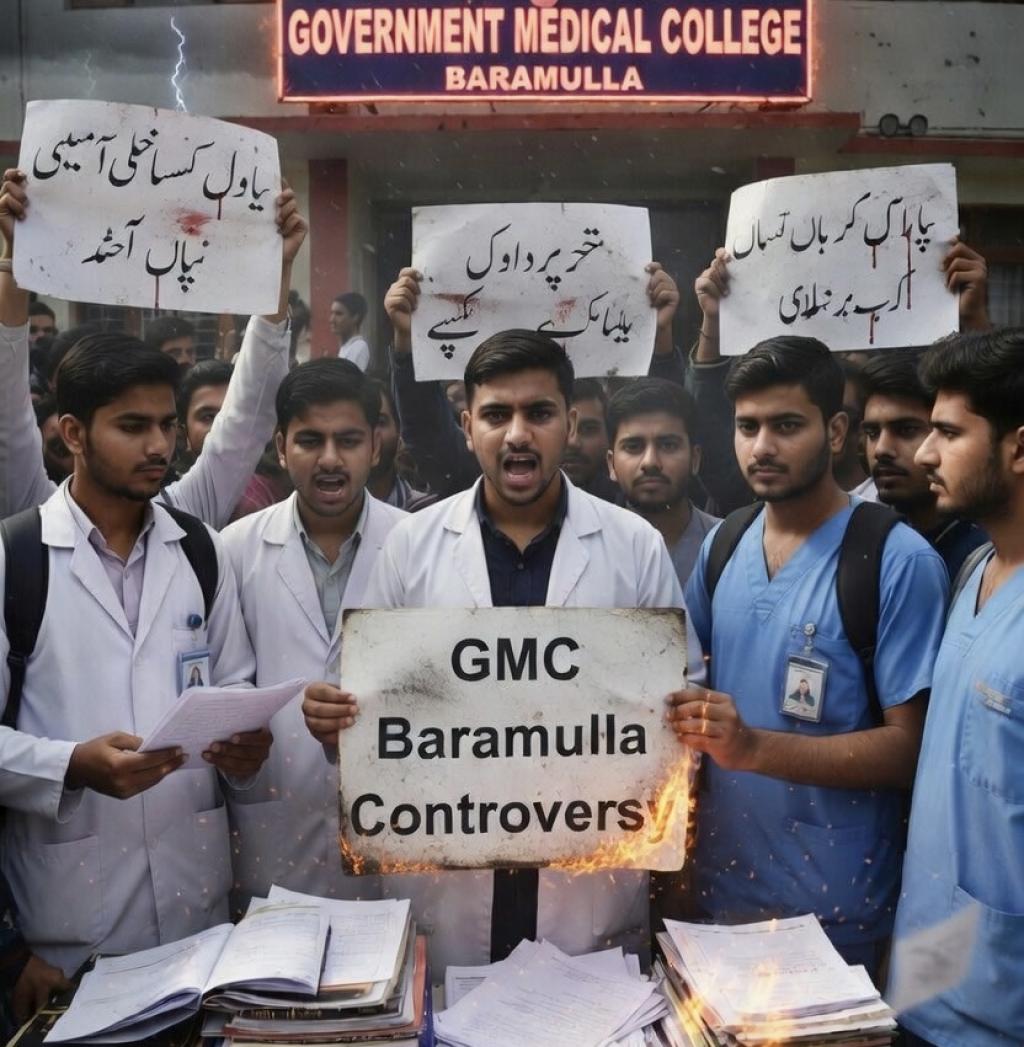
In mid-March 2026, screenshots from student WhatsApp groups and posts on 𝕏 went viral. These posts claimed that the Forensic Medicine and Toxicology (FMT) department required MBBS students to purchase a practical manual directly from the department for ₹650. However, similar materials were reportedly available in local markets for ₹200–300.
Students who purchased cheaper versions externally were allegedly still pressured to buy the department-issued manual. Some messages warned that failure to comply would result in being marked absent sometimes for up to 10 days which could negatively impact internal assessments, exam eligibility, and overall attendance records.
Forwarded messages from class representatives (CRs), reportedly attributed to the Head of Department (HOD), included statements such as:
•“Those students who are not taking practical notebook will be absent for 10 days.”
•“Get practicals from department… otherwise you won’t get attendance today.”
There are also claims that similar incidents occurred as early as November 2025.The issue gained traction online, with users tagging key authorities, including the National Medical Commission (NMC), Jammu & Kashmir officials, and the college administration. Questions were raised about whether departments can engage in such sales practices, use coercive tactics, and whether this contradicts the NMC’s focus on ethical and quality education.
Why This Matters: Exploitation in the Name of Education?
Medical education in India is already demanding, both academically and financially. MBBS students face intense competition, high fees (especially in private institutions), and rigorous schedules. In this context, mandatory purchases at inflated prices especially when linked to attendance can turn departments into de facto vendors and students into captive buyers.
Importantly, this issue does not appear to be isolated. Similar concerns have been shared online by students from other colleges, particularly in departments like physiology and forensic medicine. While not all claims are independently verified, the recurring nature of such complaints suggests a broader systemic issue.
Key concerns include:
•Commercialization of education
Government medical colleges are publicly funded institutions. Their primary role is education and healthcare not retail sales.
•Misuse of authority
Linking purchases to attendance, a critical academic metric, creates undue pressure and opens the door for abuse.
•Financial inequity
Students from economically weaker backgrounds are disproportionately affected, increasing the burden in an already expensive course.
•Questionable academic value
If the manual is essential, it should be reasonably priced, made available through libraries, or provided in digital format. Forced repurchasing raises doubts about its necessity and intent.
What Do Regulations Say?
The National Medical Commission (NMC), which replaced the Medical Council of India (MCI), sets standards for medical education through frameworks such as the Minimum Standard Requirements and Competency Based Medical Education (CBME) guidelines.
While these regulations cover infrastructure, teaching standards, and student facilities, they do not explicitly address department level sales of study materials. However:
•The NMC emphasizes ethical, student-centered education.
•Colleges are required to maintain well-equipped libraries with adequate textbooks and digital resources.
•There is no provision allowing coercive sales or linking purchases to attendance.
•Broader ethical guidelines discourage misuse of authority in academic settings.
If such practices are proven, they may violate institutional policies and could be considered a form of academic harassment.
The Way Forward: What Needs to Change?
1.Immediate Investigation
Authorities including the NMC and college administration, should investigate these allegations transparently. Public disclosure of the manual’s content, pricing, and necessity would help clarify the situation.
2.Clear Regulatory Guidelines
The NMC should consider issuing explicit advisories prohibiting coercive purchases and ensuring that essential academic materials remain accessible and affordable.
3.Stronger Student Protection Mechanisms
Institutions should establish safe and anonymous reporting channels, strengthen grievance redressal systems, and ensure that students are aware of their rights.
4.Affordable and Accessible Alternatives
Departments should promote the use of open-source materials, low-cost resources, or integrate practical content into standard textbooks and digital platforms.
Conclusion
Education should empower future doctors, not burden them with unnecessary financial and emotional stress. If the allegations at GMC Baramulla are accurate, they highlight deeper structural issues within parts of India’s medical education system.Students deserve a transparent, fair, and supportive learning environment one that prioritizes knowledge and ethics over profit.
Constructive dialogue and timely action can ensure that such concerns lead to meaningful reform, benefiting not only current students but the future of healthcare education in India.