In the sunlit corridors of government medical colleges across Rajasthan, from the historic gates of SMS Medical College in Jaipur to newer campuses in Jodhpur and Udaipur, a quiet but firm conversation is taking place. Senior teachers and their younger colleagues are discussing a proposal that could reshape how long experienced doctors stay in teaching roles and what that would mean for the next wave of medical professionals entering the system.
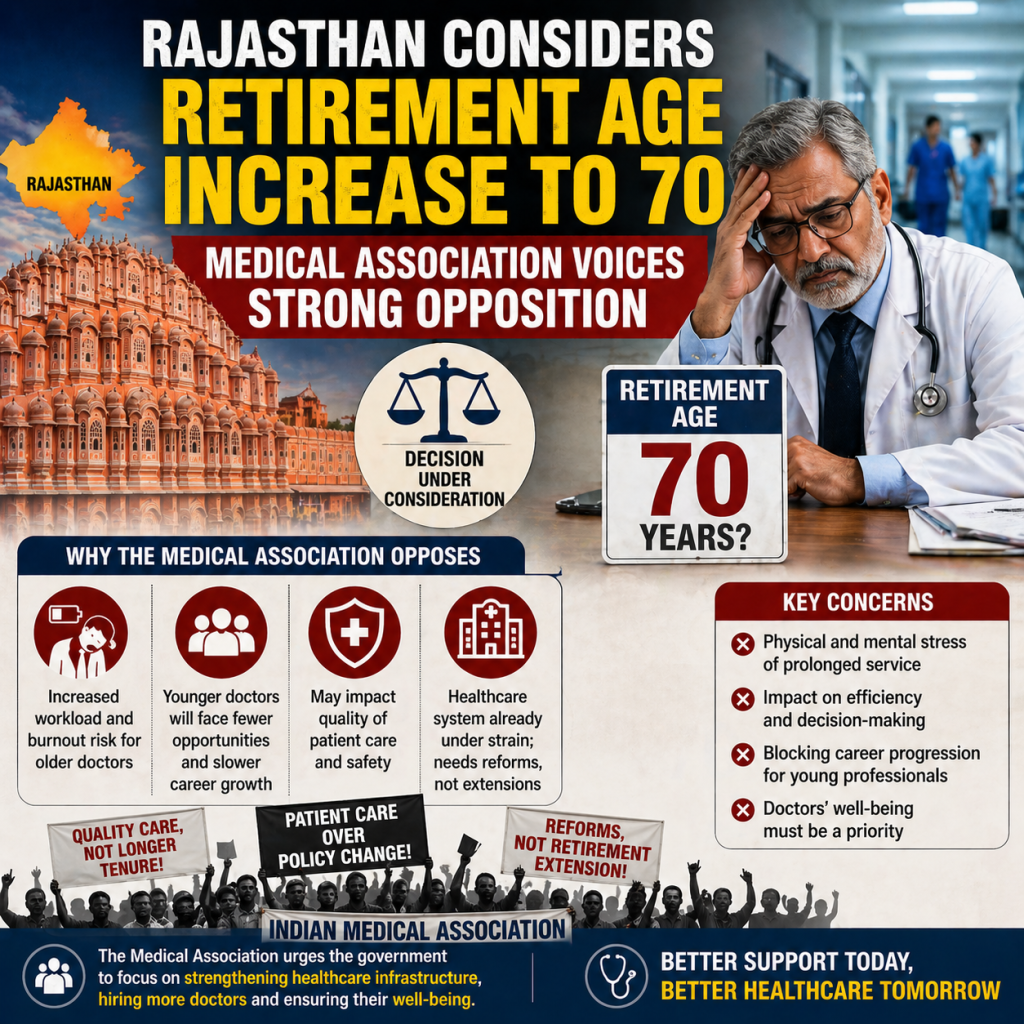
Rajasthan Medical College Teachers Association (RMCTA) has formally written to the state’s medical education department, stating its opposition to increasing the retirement age for medical college faculty from the current 65 to 70. letter highlights worries about blocked career paths, slower recruitment of fresh talent and the long term health of medical education itself. While the government has not yet confirmed any final decision, the teachers’ collective voice has sparked fresh debate across campuses and hospital wards.
This is not just an internal administrative matter. For thousands of medical students, contractual teachers waiting for regular posts, and families relying on government hospitals, the outcome could quietly influence the quality of doctors graduating in the coming decade. Let’s unpack what’s really at stake without the usual policy jargon.
Heart of the Teachers Concerns
At its core, RMCTA’s position rests on a simple observation: medical colleges already have enough experienced hands at the top. What they need more urgently is a steady flow of younger faculty who can grow into leadership roles over time.
The association points out that many qualified doctors are already working on short term contracts often for years hoping for permanent positions. If senior professors continue well into their late 60s, those contractual teachers may wait even longer for promotions and regular appointments. This creates a bottleneck that affects not just individual careers but the overall energy and innovation in classrooms and operation theatres.
One practical example comes from a mid sized government college in Bikaner. A 34 year old assistant professor who has been on contract since 2021 recently shared that she and her batch mates are still awaiting regularisation. “We’re not asking for shortcuts,” she said during a campus discussion. “We just want the system to keep moving so that when we’re ready for the next step, posts are actually vacant.”
Teachers also reference the Dynamic Assured Career Progression scheme which is meant to reward performance with timely promotions. When senior posts remain occupied longer than expected, entire ladder slows down. In simple terms, a capable young doctor might remain stuck at assistant professor level well into their 40s simply because the professor above them hasn’t retired.
How We Got Here: A Quick Look at Past Changes
Retirement rules for medical teachers in Rajasthan have already shifted once in recent memory. Back in 2018, the state raised the age from 62 to 65 for those in the medical education branch. Administrative posts, however stayed at 62. That earlier change was presented as a way to retain expertise during a period of rapid expansion of medical colleges.
Now with more colleges functioning and student intake growing, some voices in administration are again talking about extending service years. Supporters of the idea argue that senior faculty bring irreplaceable clinical experience especially in super specialty areas where finding replacements can take time. They also note that training a new professor to the same level takes years. RMCTA however believes the current 65 year mark already strikes a reasonable balance. They argue that further extension risks turning temporary measures into permanent fixtures ultimately hurting the very system it aims to strengthen.
Real Impact on Young Doctors and the Next Generation
Consider the journey of a typical medical graduate in Rajasthan today. After completing MBBS and often a postgraduate degree many bright candidates join government colleges on contractual or adhoc basis. The promise is that good performance will lead to regular posts and steady growth. when that growth is delayed, several things happen. Some doctors leave for private practice or move to other states with faster career tracks. Others stay but feel demotivated which can subtly affect teaching quality and research output. Over time this creates a less dynamic environment for the thousands of undergraduate and postgraduate students who rely on their teachers for both knowledge and mentorship.
Patients in government hospitals also feel the effects indirectly. A healthy mix of experienced seniors and energetic juniors often leads to better training for residents, which translates into improved care standards years later. When the pipeline slows that balance tilts.
What the Other Side Is Saying
To be fair not everyone sees the proposal as problematic. Some senior doctors and administrators quietly support the idea of flexibility. They point to occasional shortages in certain high demand specialties and argue that forcing experienced hands out at 65 can create sudden gaps especially in colleges still building their faculty strength.
A senior professor at a Jaipur college who preferred not to be named, noted during an informal chat: “We’ve seen departments struggle when two or three seniors retire in the same year. Having the option to retain a few key people for a couple more years can help maintain continuity in teaching and patient services.” The medical education department itself has so far stayed silent, with officials declining detailed comments when approached. This silence has only increased speculation on both sides.
Practical Takeaways for Medical Students and Early Career Doctors
If you’re currently studying medicine or have just started your teaching journey in Rajasthan, here are a few grounded steps that can help you navigate whatever policy decision comes next:
- Focus on building a strong research and publication record early. In a system where promotions can get delayed, documented academic work often carries extra weight when opportunities finally open.
- Network across colleges. Many regular appointments and collaborative projects happen through professional connections rather than formal advertisements alone.
- Gain exposure beyond your own department whether through short fellowships, skill workshops or even temporary postings in other states. Versatility makes you more valuable when vacancies do arise.
- Stay updated on policy announcements. Following official medical education department notifications and RMCTA updates can help you plan your next career move with better timing.
These steps don’t guarantee instant success, but they give you more control in an environment where external policies can shift.
FAQ: Quick Answers to Common Questions
What is the current retirement age for medical college teachers in Rajasthan?
It stands at 65 years for faculty in the medical education department, while administrative posts retire at 62.
Why exactly is the teachers’ association opposing the increase to 70?
They believe it would slow down recruitment of new doctors, delay promotions for those already in the system, and reduce opportunities for younger faculty without solving any major shortage.
How could this affect medical students?
A slower faculty pipeline can mean fewer fresh perspectives in classrooms and potentially longer waits for regular teachers in some departments, though experienced seniors would still be available.
Has Rajasthan changed retirement rules before?
Yes, In 2018 the age was raised from 62 to 65. The current proposal would mark the second such extension in less than a decade.
What happens next?
Medical education department is expected to review the RMCTA letter. Any final decision will likely involve consultations with multiple stakeholders before implementation.
Looking Ahead: Finding the Right Balance
Policy decisions like this rarely have simple winners or losers. On one hand experienced teachers have spent decades building knowledge that benefits students and patients alike. On the other a healthy system needs regular renewal so that capable younger professionals can step up without unnecessary delays.
Rajasthan’s medical education sector has grown significantly in recent years with new colleges and increased seats. The real challenge now is ensuring that growth is matched by thoughtful workforce planning one that values both experience and opportunity.
As the debate continues most useful thing anyone can do is stay informed and engaged. Whether you’re a medical student planning your future, a parent supporting a young doctor, or simply someone who cares about the quality of healthcare in Rajasthan, your awareness matters. Follow official updates, participate in campus discussions when possible, and share balanced perspectives with peers because in the end, the doctors who will treat us tomorrow are being shaped by the decisions we make about their teachers today and that’s something worth paying attention to for all of us.
Disclaimer
This post is for informational and educational purposes only. It does not constitute medical advice, legal opinion or an official investigation. Readers should consult qualified healthcare professionals for personal health concerns. All details are drawn from media reports and outcomes of any official inquiry may provide further clarity.
Link: According to news report from The Time of India
https://timesofindia.indiatimes.com/city/jaipur/doctors-body-in-rajasthan-opposes-move-to-raise-retirement-age-to-70/amp_articleshow/130617271.cms