RAJ-SURAKSHA announced in Rajasthan Budget 2026 introduces a statewide emergency response system for road accidents, heart attacks and critical cases. The scheme includes a 24×7 command centre, tele ECG at CHCs, CPR training for drivers and 250 advanced ambulances to reduce preventable deaths and improve trauma care across Rajasthan.
RAJ-SURAKSHA: Rajasthan’s New Emergency Response Health System Explained
The Rajasthan government has announced a major step toward strengthening emergency medical response across the state. During the Rajasthan Budget 2026–27 presentation, Deputy Chief Minister and Finance Minister Diya Kumari introduced a new statewide initiative called RAJ-SURAKSHA, which stands for Rajasthan System for Urgent Response, Accident Stabilization and Hospital Access.
This scheme has been designed to ensure that patients suffering from road accidents, heart attacks and obstetric emergencies receive timely treatment and stabilization. The announcement reflects a policy shift from focusing only on hospital infrastructure to building a comprehensive emergency response network that begins at the site of injury or illness and continues through transport and definitive care.
The introduction of such a system is particularly significant for Rajasthan, a state that has consistently reported high numbers of road traffic injuries and fatalities.
The growing burden of road accidents and medical emergencies in Rajasthan
Road traffic accidents remain one of the leading causes of preventable deaths in India. Nationally, India records more than 1.7 lakh road accident deaths every year, translating to nearly 485 deaths every day. Rajasthan contributes significantly to this burden.
Recent data shows that Rajasthan recorded over 24,000 road accidents and more than 11,700 deaths in a single year. In 2025 alone, thousands of fatalities had already been reported before the year concluded. National highways in the state account for a disproportionately high number of deaths. Although they constitute a small percentage of the road network, they contribute to more than one third of total road fatalities.
Urban centres such as Jaipur also report hundreds of accident deaths annually, highlighting the persistent gaps in pre-hospital trauma care, emergency transport and timely intervention. Survival in trauma and cardiac emergencies often depends on treatment within the golden hour, making rapid response systems essential.
The RAJ-SURAKSHA initiative attempts to address these systemic gaps by creating a coordinated emergency medical network across Rajasthan.
Announcement in Rajasthan Budget 2026–27
The scheme was formally announced during the Rajasthan Budget 2026–27 by Finance Minister Diya Kumari. It forms part of a broader push to improve healthcare access, emergency services and critical care infrastructure across the state.
The objective of RAJ-SURAKSHA is to ensure that emergency patients receive immediate stabilization, accurate referral and quick access to appropriate hospitals. The programme also aims to integrate technology, training and ambulance services into a unified response system.
This is one of the few state-level initiatives in India that attempts to build a structured emergency care ecosystem rather than isolated services.
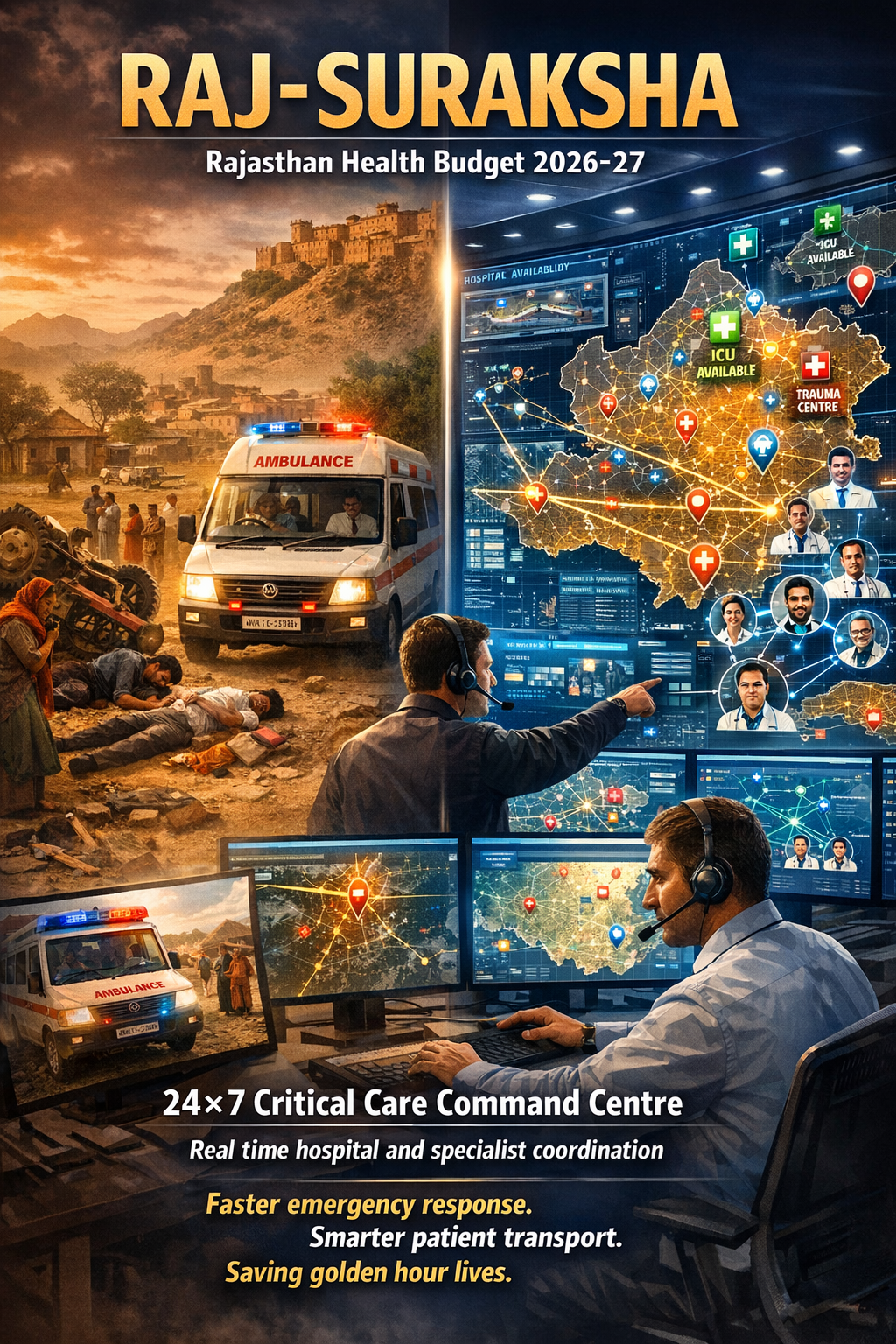
Establishment of a 24×7 critical care command centre
One of the central components of the scheme is the creation of a round-the-clock critical care command centre. This command centre will function as the coordination hub for emergency response across the state.
It will provide real-time information regarding the nearest available hospitals, trauma centres, specialists and critical care facilities. A digital repository of doctors and medical institutions will also be created so that emergency teams can quickly identify where a patient should be transported.
In many emergency situations, especially in rural areas, valuable time is lost due to confusion about referral centres or lack of specialist availability. A centralized command system can reduce such delays and ensure that patients are transported directly to appropriate facilities instead of being shifted multiple times.
Live specialist consultation for severe trauma cases
Another important feature of the scheme is the provision of live consultation with national-level specialists for serious accident cases. Local doctors managing trauma patients will be able to connect with specialists in real time.
This tele-consultation model is particularly useful for district hospitals and community health centres that may not have trauma surgeons, neurosurgeons or cardiologists available at all times. Access to expert guidance during the initial stabilization phase can significantly improve outcomes in critical cases.
Such integration of telemedicine into emergency care reflects a broader trend toward digital health networks and remote specialist support.
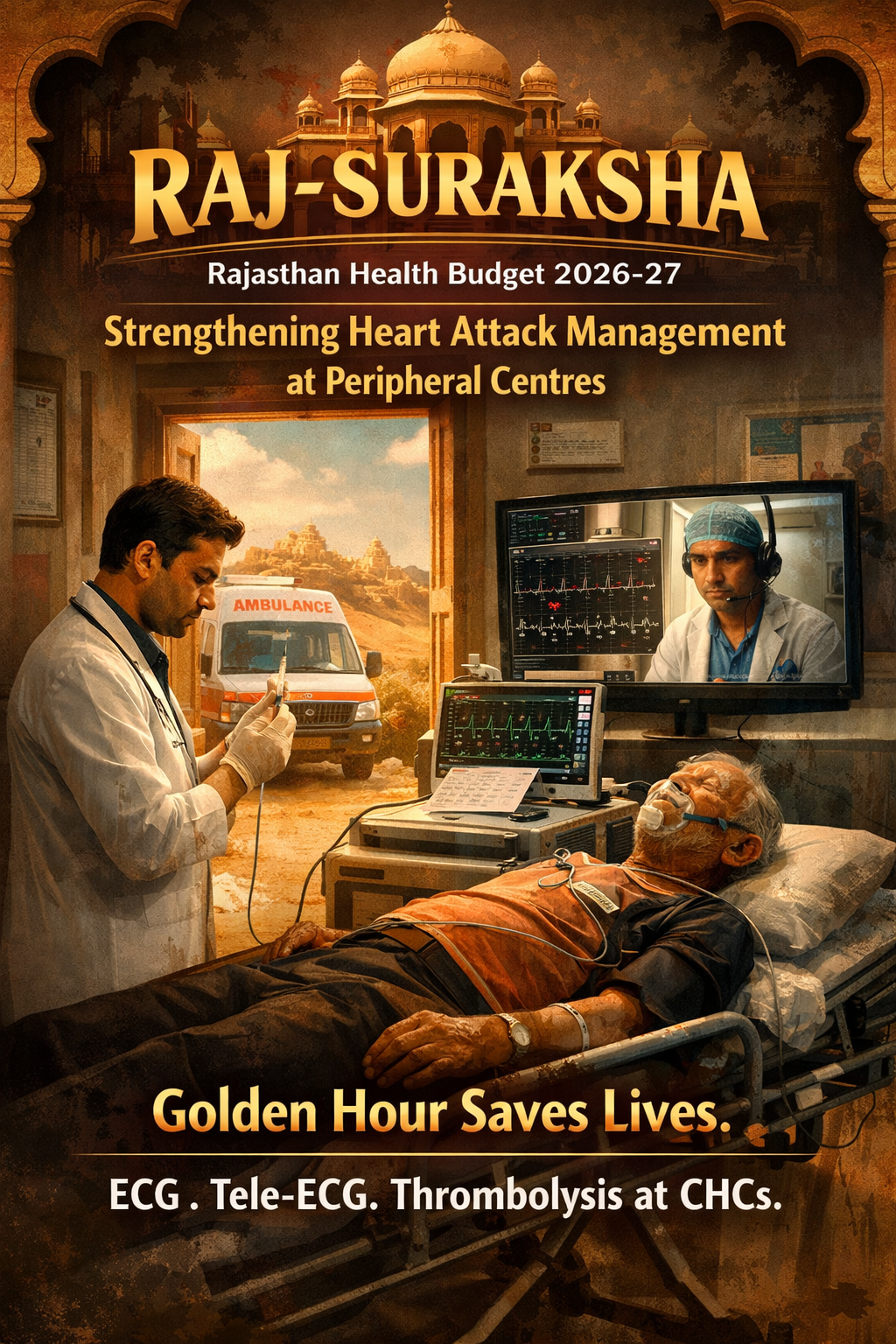
Strengthening heart attack management at peripheral centres
Cardiovascular emergencies, particularly acute myocardial infarction, require rapid diagnosis and early treatment. Recognizing this, the scheme proposes to equip community health centres with ECG and tele-ECG facilities along with thrombolysis capability.
Early ECG can confirm diagnosis while tele-ECG allows remote cardiologists to interpret results and guide treatment. Availability of thrombolysis at peripheral centres can save crucial time for patients who cannot immediately reach tertiary cardiac hospitals.
If implemented effectively, this component can reduce mortality associated with heart attacks by enabling treatment within the golden hour at the local level.
Training and certification of healthcare personnel
The scheme also emphasizes capacity building among healthcare workers. Doctors and paramedical staff at the divisional level will receive structured training in cardiac life support certification in a phased manner.
Skill-based training is essential because infrastructure alone cannot improve emergency outcomes. Healthcare personnel must be trained to recognize cardiac arrest, perform resuscitation and stabilize patients before referral.
Regular certification and refresher programmes will be necessary to ensure that these skills remain current and effective.
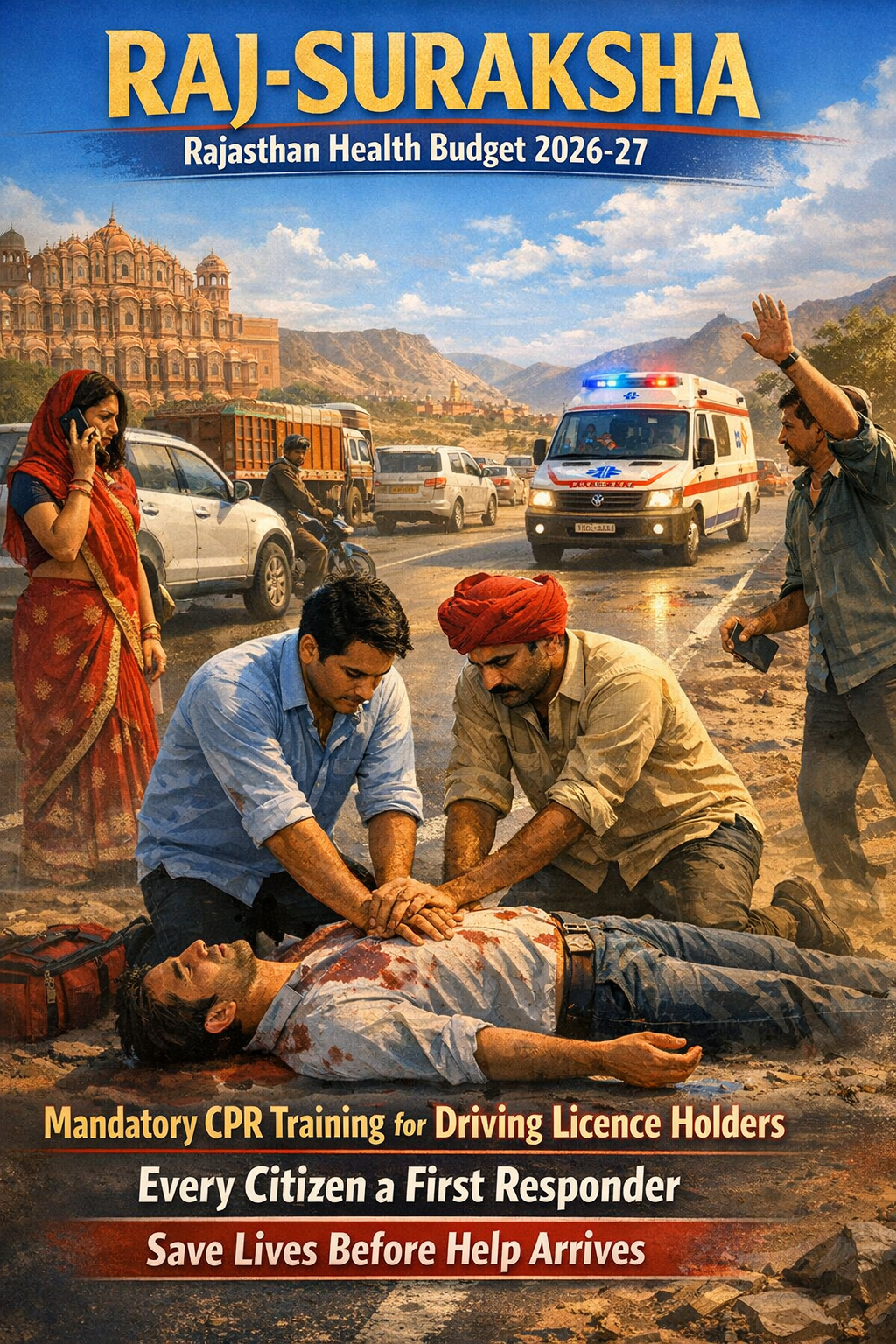
CPR training for the general public and drivers
A notable public health measure under the scheme is the proposal to make CPR training mandatory for driving licence holders. Road accidents often occur in locations where professional medical help may take time to arrive. In such situations, bystanders are the first potential responders.
Training drivers and the general public in CPR can create a large pool of first responders capable of providing immediate life-saving support. This approach has been successfully implemented in several developed countries where community CPR training has improved survival rates from cardiac arrest and trauma.
If implemented effectively in Rajasthan, this measure could significantly improve bystander response and reduce preventable deaths.
Expansion of ambulance services and highway deployment
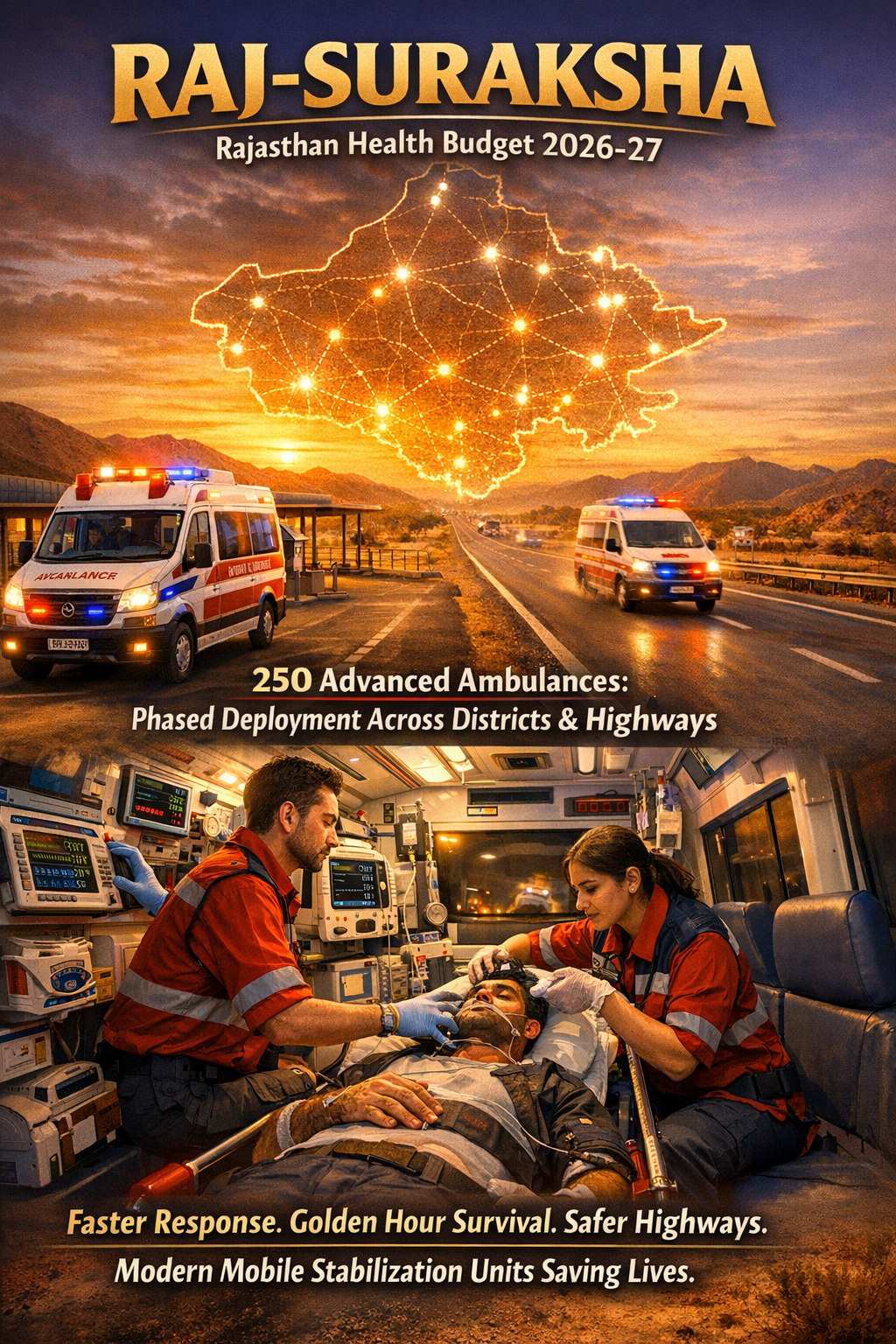
The state government has also announced the phased deployment of 250 advanced ambulances. These ambulances will be strategically placed across districts and at highway rest areas to ensure rapid response.
Highways account for a large proportion of fatal accidents in Rajasthan. Placing ambulances at regular intervals along highways can reduce response time and improve survival during the critical first hour after injury.
Modern ambulances equipped with life-saving equipment and trained personnel can function as mobile stabilization units, bridging the gap between accident sites and hospitals.
Broader healthcare and trauma infrastructure push
The RAJ-SURAKSHA initiative is part of a larger effort to strengthen healthcare infrastructure in Rajasthan. Budget announcements have also included plans to upgrade trauma centres, expand free treatment schemes and conduct emergency training in collaboration with national institutions.
These complementary measures are essential because an effective emergency response system requires not only transport and stabilization but also functional trauma and critical care facilities at referral centres.
Integration of ambulance networks, command centres and hospital infrastructure will determine the overall success of the scheme.
Public health significance and long term impact
From a public health perspective, the scheme addresses key gaps in India’s emergency care system. These include delays in pre-hospital care, lack of coordination between facilities and inadequate bystander response.
Evidence shows that trauma survival improves significantly when patients receive definitive care within the first hour. Similarly, early treatment of heart attacks reduces mortality and long-term complications.
By focusing on early stabilization, rapid transport and coordinated referral, Rajasthan is attempting to build a comprehensive emergency care model that could potentially be replicated in other states.
Critical analysis
The RAJ-SURAKSHA initiative represents a progressive and structured approach to emergency healthcare planning. The emphasis on command centres, peripheral thrombolysis, CPR training and ambulance deployment suggests a clear understanding that emergency medicine requires an integrated system rather than isolated interventions.
However, the ultimate success of the scheme will depend on implementation. Rural and remote districts often face shortages of trained personnel and functional equipment. Tele-consultation networks require reliable connectivity. Ambulance systems require maintenance, staffing and fuel budgets. Training programmes must be continuous rather than one-time events.
Data integration and real-time monitoring will also be essential. Without audit of response times, patient outcomes and system efficiency, the scheme may not achieve its intended impact.
If executed with proper monitoring and accountability, RAJ-SURAKSHA could become a model for emergency medical response across India. If not, it risks becoming another well-intentioned announcement with limited ground-level change.
The National Testing Agency has officially announced the new date for the NEET UG 2026 re examination after cancelling the earlier exam due to the alleged paper leak controversy. The re exam will now be conducted on June 21, 2026, affecting more than 22 lakh medical aspirants across India.
PMOS, previously known as PCOS, is a newly renamed condition that better reflects its hormonal and metabolic effects beyond the ovaries. The change from Polycystic Ovary Syndrome to Polyendocrine Metabolic Ovarian Syndrome highlights its association with insulin resistance, obesity, fertility issues, and long term health risks affecting millions of women worldwide.
A doctor in Bhilwara allegedly attempted suicide by consuming phenyl after accusing a private hospital operator of financial exploitation, unpaid salary, mental harassment, and police inaction. The incident has sparked concern over workplace conditions and disputes in the medical profession.