The Growing Importance of Data in Public Health
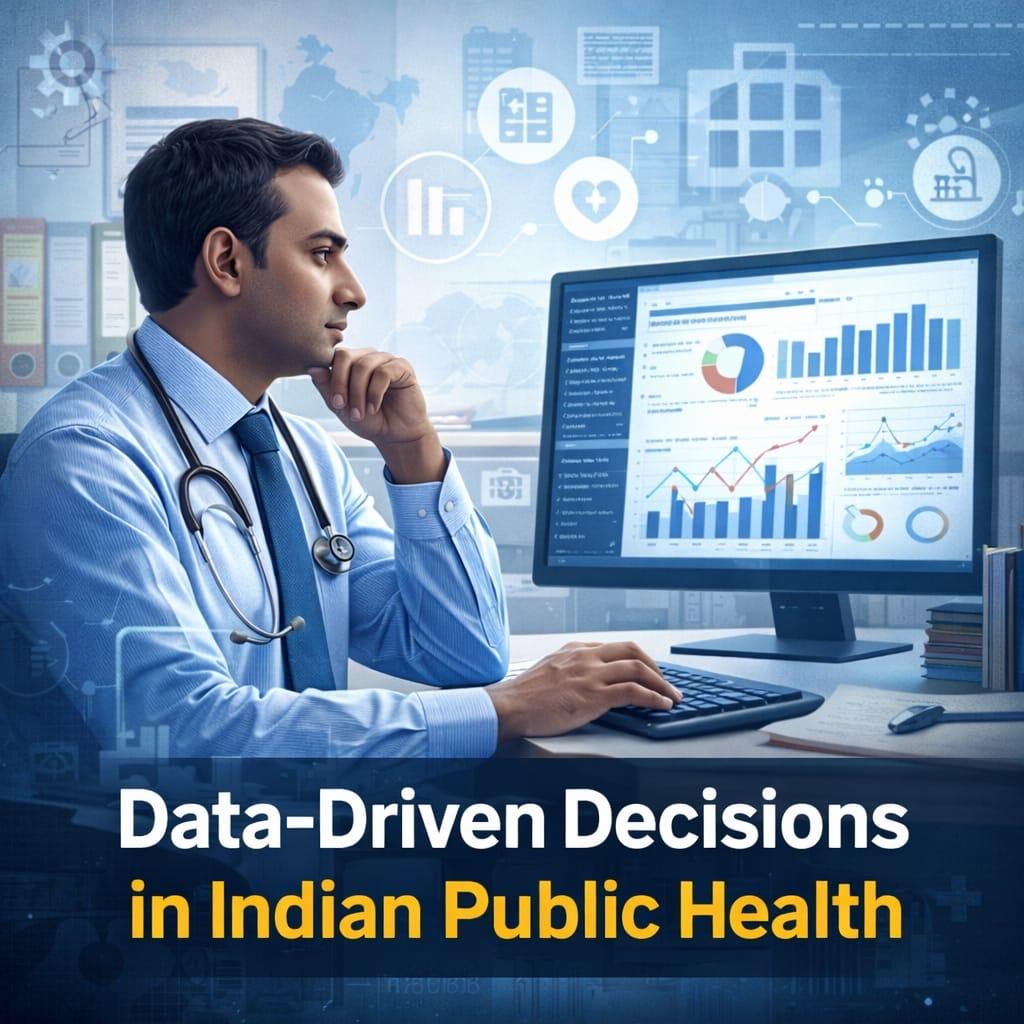
In recent years, the global healthcare landscape has witnessed a paradigm shift toward evidence based decision making. With the expansion of digital health infrastructure and the increasing availability of real time data, public health systems are better equipped than ever to design, implement, and evaluate interventions. In India, initiatives such as the Health Management Information System (HMIS) and Integrated Disease Surveillance Programme (IDSP) have significantly enhanced data collection at various administrative levels.
However, a critical question remains: Are healthcare administrators effectively utilizing this data to inform their decisions?
A recent cross sectional study focusing on sub district level public health administrators, primarily medical officers, attempts to answer this question. The findings reveal a concerning gap between data availability and its practical application in decision making processes.
Study Overview and Methodology
The study was conducted among medical officers functioning at sub district levels, including primary health centers (PHCs) and community health centers (CHCs). These administrators play a pivotal role in implementing national health programs and ensuring effective healthcare delivery at the grassroots level.
Using a structured questionnaire, researchers assessed the extent to which these officials engaged in data informed decision making. Key parameters included:
● Frequency of data usage
● Types of data sources utilized
● Confidence in interpreting data
● Barriers faced in applying data to decision making
The study design allowed for a comprehensive evaluation of both behavioral and systemic aspects influencing data utilization.
Key Findings: Awareness Without Adequate Application
One of the most striking findings of the study was the discrepancy between awareness and implementation. While a majority of respondents acknowledged the importance of data in improving healthcare outcomes, only a limited proportion consistently used data for planning and decision making.
Many medical officers reported that they relied on routine reports and summaries rather than conducting in depth analyses. Decision making was often influenced by immediate practical considerations, prior experience, or directives from higher authorities rather than data driven insights.
This indicates that while the conceptual understanding of data driven governance exists, its integration into daily administrative practice remains insufficient.
Barriers to Data Informed Decision Making
1. Lack of Training and Analytical Skills
A significant proportion of respondents highlighted inadequate training as a major barrier. Many medical officers expressed difficulty in interpreting complex datasets and using analytical tools. Without sufficient training in epidemiology, biostatistics, or data analytics, the ability to extract meaningful insights from data remains limited.
2. Time Constraints and Workload
Sub district health administrators often manage multiple responsibilities, including clinical duties, program implementation, reporting, and administrative tasks. This heavy workload leaves little time for detailed data analysis, leading to superficial or minimal use of available information.
3. Limited Infrastructure and Resources
Despite the availability of digital systems, infrastructural limitations such as poor internet connectivity, lack of computers, and inadequate technical support were frequently reported. These challenges hinder the efficient use of digital health platforms.
4. Data Quality and Reliability Issues
Some participants expressed concerns regarding the accuracy and completeness of data entered into health systems. Inconsistent or unreliable data reduces confidence and discourages its use in decision making.
Sources of Data Commonly Used
The study identified several data sources accessed by medical officers, including:
● Health Management Information System (HMIS)
● Routine program reports
● Field surveys and registers
● Disease surveillance data
However, the usage of these sources was often limited to reporting requirements rather than analytical purposes. Advanced tools such as dashboards and predictive models were rarely utilized.
Implications for Public Health Policy
The findings of this study have important implications for public health governance in India. As the country continues to invest in digital health initiatives, ensuring that data is not only collected but also effectively utilized becomes crucial.
Failure to leverage available data can result in:
● Inefficient allocation of resources
● Delayed identification of health trends
● Suboptimal program implementation
● Missed opportunities for targeted interventions
To address these challenges, policymakers must focus on bridging the gap between data generation and its application.
Recommendations for Strengthening Data Use
1. Capacity Building and Training
Regular training programs focusing on data analysis, interpretation, and visualization should be conducted for medical officers. Incorporating practical, hands on sessions can enhance confidence and competence.
2. Integration of User Friendly Tools
Simplified dashboards and decision support systems can help administrators quickly interpret data and make informed decisions without requiring advanced analytical expertise.
3. Institutional Support and Incentives
Encouraging a culture of data driven decision making through institutional policies and incentives can motivate healthcare administrators to adopt these practices.
4. Improving Data Quality
Ensuring accuracy, completeness, and timeliness of data is essential. Regular audits and feedback mechanisms can help maintain data integrity.
5. Reducing Administrative Burden
Streamlining reporting processes and reducing redundant tasks can free up time for administrators to engage in meaningful data analysis.
Conclusion: Moving Toward Evidence Based Governance
The study highlights a critical gap in India’s public health system, while data collection mechanisms are well established, their utilization in decision making remains limited. Addressing this gap requires a multifaceted approach involving training, infrastructure development, and systemic reforms.
As healthcare challenges become increasingly complex, reliance on intuition or experience alone is no longer sufficient. Data driven decision making offers a powerful tool to enhance efficiency, improve outcomes, and ensure accountability.
Strengthening this aspect of public health administration will be essential for achieving sustainable healthcare improvements and maximizing the impact of national health programs.