Antibiotic Misuse – A Growing Public Health Threat
Antibiotics have revolutionized modern medicine by effectively treating bacterial infections. However, their irrational and excessive use has led to a global crisis, antimicrobial resistance (AMR). India, with its vast population and easy access to medications, faces a significant challenge in regulating antibiotic use.
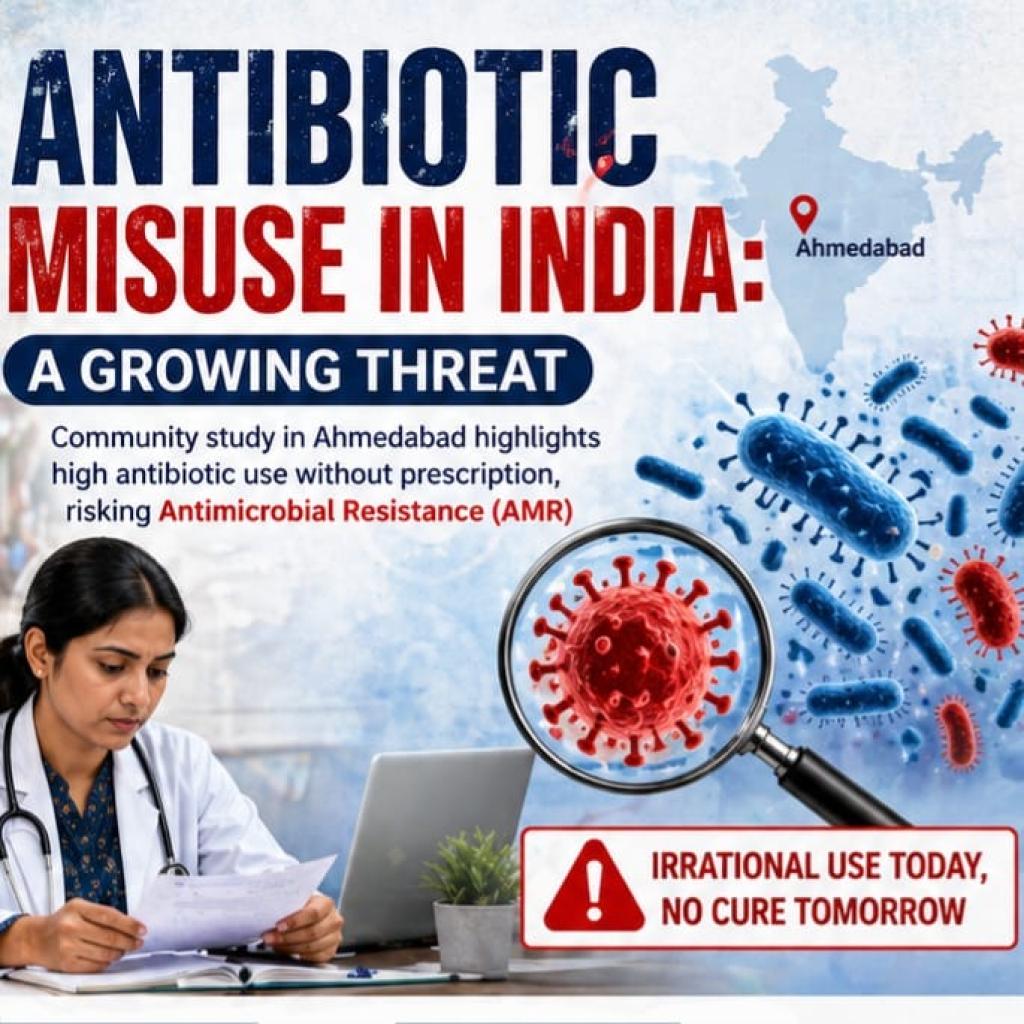
A recent community based cross sectional study conducted in Ahmedabad sheds light on antibiotic consumption patterns at the grassroots level. The findings reveal alarming trends that could accelerate the development of resistance if not addressed urgently.
Study Overview and Methodology
The study was conducted in the catchment area of an Urban Health Training Centre (UHTC) in Ahmedabad. Researchers adopted a community based cross sectional design to capture real world antibiotic usage, including over the counter and non prescription consumption, an aspect often missed in hospital based studies.
A total of 2,278 individuals were screened, out of which 349 participants met the inclusion criteria (recent illness or drug consumption within the past three months). Data collection was carried out in three phases using structured questionnaires, verification of prescriptions, and physical evidence such as drug strips or medical records.
Cluster sampling was used to ensure representation across different geographic areas, and statistical analysis included prevalence rates, confidence intervals, and chi square tests.
Key Findings: High Prevalence of Antibiotic Consumption
The study found that 33.5% of participants consumed antibiotics in the previous three months. This indicates a substantial burden of antibiotic use at the community level.
Key observations include:
● Higher antibiotic use in children (42.6%) compared to adults (28.1%)
● Increased usage among males (38.8%) compared to females (28.5%)
● Most common indications:
○ Fever (54.7%)
○ Gastrointestinal symptoms (42.7%)
○ Respiratory infections (41%)
These findings suggest that antibiotics are frequently used even for conditions that may not always require them.
Alarmingly High Non Prescription Use
One of the most concerning findings was that 37.5% of antibiotics were obtained without a prescription, despite being legally classified as prescription only drugs.
Sources of non prescription antibiotics included:
● Over the counter pharmacy sales
● Self medication
● Advice from friends or healthcare workers
● Previous prescriptions reused
This widespread availability significantly contributes to irrational use and increases the risk of antimicrobial resistance.
AWaRe Classification: A Disturbing Pattern
The study used the WHO AWaRe classification to categorize antibiotics into:
● Access (first line, safer options)
● Watch (higher resistance potential)
● Reserve (last resort drugs)
Findings revealed:
● 59.9% of antibiotics belonged to the Watch group
● 38.8% belonged to the Access group
● Only 1.7% were from the Reserve group
Ideally, Access group antibiotics should dominate usage. However, the higher consumption of Watch group drugs indicates inappropriate prescribing practices and potential misuse.
Children at Higher Risk
The study highlights that antibiotic use was significantly higher among children, particularly those under five years of age.
Possible reasons include:
● Increased susceptibility to infections
● Parental pressure for quick recovery
● Empirical prescribing without confirmatory tests
Notably, no Reserve group antibiotics were used in children, but Watch group antibiotics were still widely consumed, raising concerns about early exposure to higher risk drugs.
Inadequate Diagnostic Support
Another critical finding was that only about 22% of patients underwent basic laboratory investigations before being prescribed antibiotics.
This suggests that:
● Many prescriptions are empirical rather than evidence based
● Diagnostic uncertainty leads to over prescription
● There is a lack of adherence to standard treatment protocols
This practice not only contributes to misuse but also increases healthcare costs and resistance.
Factors Associated with Antibiotic Use
The study identified several factors significantly associated with antibiotic consumption:
● Age
● Sex
● Qualification of healthcare provider
● Number of illness episodes
Interestingly, socioeconomic status, education, and occupation did not show a strong association, indicating that misuse is widespread across different population groups.
Public Health Implications
The findings of this study have serious implications for India’s healthcare system.
Key concerns include:
● Rising antimicrobial resistance
● Ineffective treatment of common infections
● Increased healthcare burden and costs
● Reduced effectiveness of life saving antibiotics
The high use of Watch group antibiotics and widespread non prescription consumption highlight systemic gaps in regulation and awareness.
Recommendations: Urgent Need for Action
1. Strengthening Prescription Regulations
Strict enforcement of laws to prevent over the counter sale of antibiotics is essential.
2. Promoting Rational Prescribing
Training programs for healthcare providers should emphasize evidence based antibiotic use.
3. Public Awareness Campaigns
Educating the community about the dangers of self medication and incomplete antibiotic courses is crucial.
4. Encouraging Diagnostic Testing
Improving access to affordable diagnostic facilities can reduce empirical prescribing.
5. Monitoring and Surveillance
Regular audits and surveillance systems should be implemented to track antibiotic consumption patterns.
Strengths and Limitations of the Study
The study’s major strength lies in its community based design, capturing real world antibiotic usage beyond hospitals.
However, limitations include:
● Recall bias due to self reported data
● Cross sectional design limiting causal inference
● Seasonal variations not accounted for
● Potential selection bias from cluster sampling
Despite these limitations, the study provides valuable insights into antibiotic use at the grassroots level.
Conclusion: A Wake Up Call for Rational Antibiotic Use
This study highlights a critical issue in India’s public health landscape, widespread and often irrational use of antibiotics, including without prescriptions.
The overuse of Watch group antibiotics and inadequate diagnostic support further compound the problem. Without timely intervention, these practices could accelerate antimicrobial resistance, making common infections harder to treat.
Addressing this issue requires a coordinated effort involving policymakers, healthcare providers, and the community. Rational antibiotic use is not just a medical necessity, it is a public health priority.