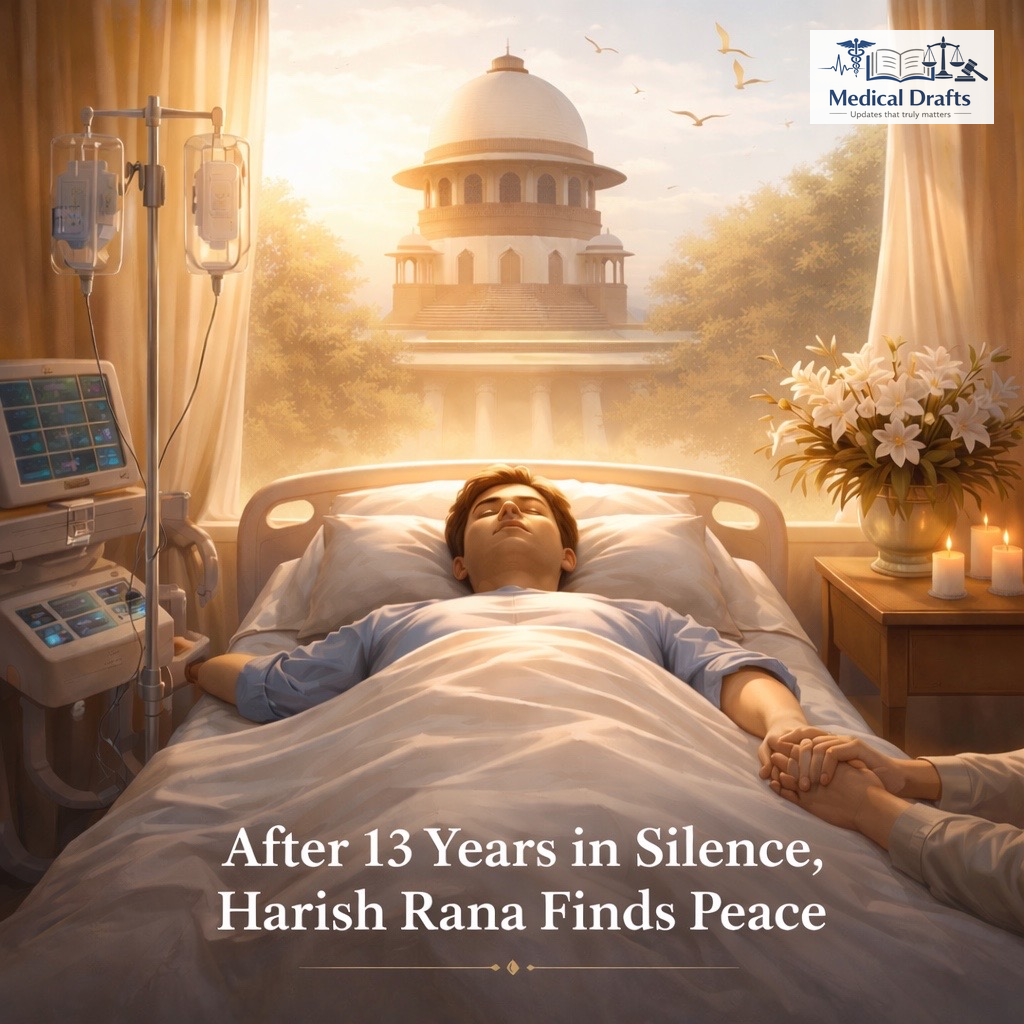
On March 24, 2026 India witnessed a quiet but profound moment in its evolving conversation around life, death and human dignity. Harish Rana a 31 year old man who had lived in a persistent vegetative state for over 13 years passed away peacefully at AIIMS Delhi at 4:10 PM. His death came after the Supreme Court of India in a historic ruling on March 11, 2026 allowed the gradual withdrawal of his artificial nutritional support, first time the country has implemented passive euthanasia for a patient without a prior living will.
This case is not about ending life prematurely. It is about allowing nature to take its course when modern medicine can only prolong suffering without any hope of recovery. As India grapples with questions of medical ethics, family burdens and constitutional rights. Harish Rana’s story offers a compassionate lens into the “right to die with dignity.”
The Man Behind the Landmark Case
Harish Rana was once a bright young B.Tech student at Panjab University in Chandigarh. In August 2013 at the age of 20, he suffered a tragic fall from the fourth floor of his paying guest accommodation. The accident caused severe brain damage specifically diffuse axonal injury that left him in a permanent vegetative state. He lost all awareness, suffered 100% quadriplegia, and required constant medical assistance for feeding, breathing support and daily care.
For 13 long years, Harish’s devoted family, his parents and younger brother from Ghaziabad, Uttar Pradesh cared for him at home. They managed frequent hospital visits, treated complications like bedsores and infections and held onto hope even as medical boards repeatedly confirmed there was no possibility of recovery. Eventually, the emotional, financial and physical toll became unbearable. The family approached the Supreme Court seeking permission to withdraw life sustaining measures so that Harish could pass with dignity.
What Exactly Is Passive Euthanasia?
It is important to understand the difference clearly, especially in a country where active euthanasia remains illegal.
- Passive euthanasiainvolves withdrawing or withholding treatment (such as a feeding tube, ventilator or hydration) that is artificially keeping a terminally ill or vegetative patient alive. Death occurs naturally from the underlying condition.
- Active euthanasiainvolves administering a substance to deliberately end life. India does not permit this.
In Harish Rana’s case,Supreme Court directed AIIMS Delhi to admit him on March 14 and follow a supervised, gradual withdrawal of clinically assisted nutrition and hydration (CANH). Doctors monitored the process in the palliative care unit to ensure comfort and peace. This aligns with the landmark 2018 Supreme Court judgment in the Common Causecase, which legalized passive euthanasia with strict safeguards, including the option of “living wills” (advance medical directives).
What makes Harish’s case unique is that it is the first real world applicationof those guidelines for a patient who had left no prior directives. The Court emphasized that Article 21 of the Indian Constitution right to life also includes the right to die with dignity when life becomes merely an artificial extension of suffering.
The Supreme Court’s Compassionate Ruling
On March 11, 2026, a bench led by Justices J.B. Pardiwala and K.V. Viswanathan reviewed medical reports confirming Harish’s irreversible condition. The judges heard emotional appeals from his parents, who described 13 years of tireless caregiving with no hope of improvement.The Court ruled that continuing artificial support in such hopeless cases goes against human dignity. It ordered a carefully monitored process at AIIMS to ensure transparency and medical ethics. The judgment has been hailed as a milestone because it sets a precedent for future cases involving patients in permanent vegetative states without advance directives.
Legal experts note that this decision strengthens the framework for end of life care while protecting against misuse. It calls on the government to consider a comprehensive law on passive euthanasia to reduce the need for repeated court interventions.
A Gentle Farewell and a National Conversation
Harish Rana’s 13 year journey ended not in controversy but in quiet dignity. His family, doctors and the judiciary worked together to honor his humanity when medicine could offer no more.
As a society we owe it to families like the Ranas to continue this conversation with empathy and reason. Death is an inevitable part of life. When recovery is impossible, allowing a peaceful exit is not giving up,it is an act of profound respect.
Rest in peace, Harish Rana. Your story has opened doors to greater compassion in Indian healthcare and law.