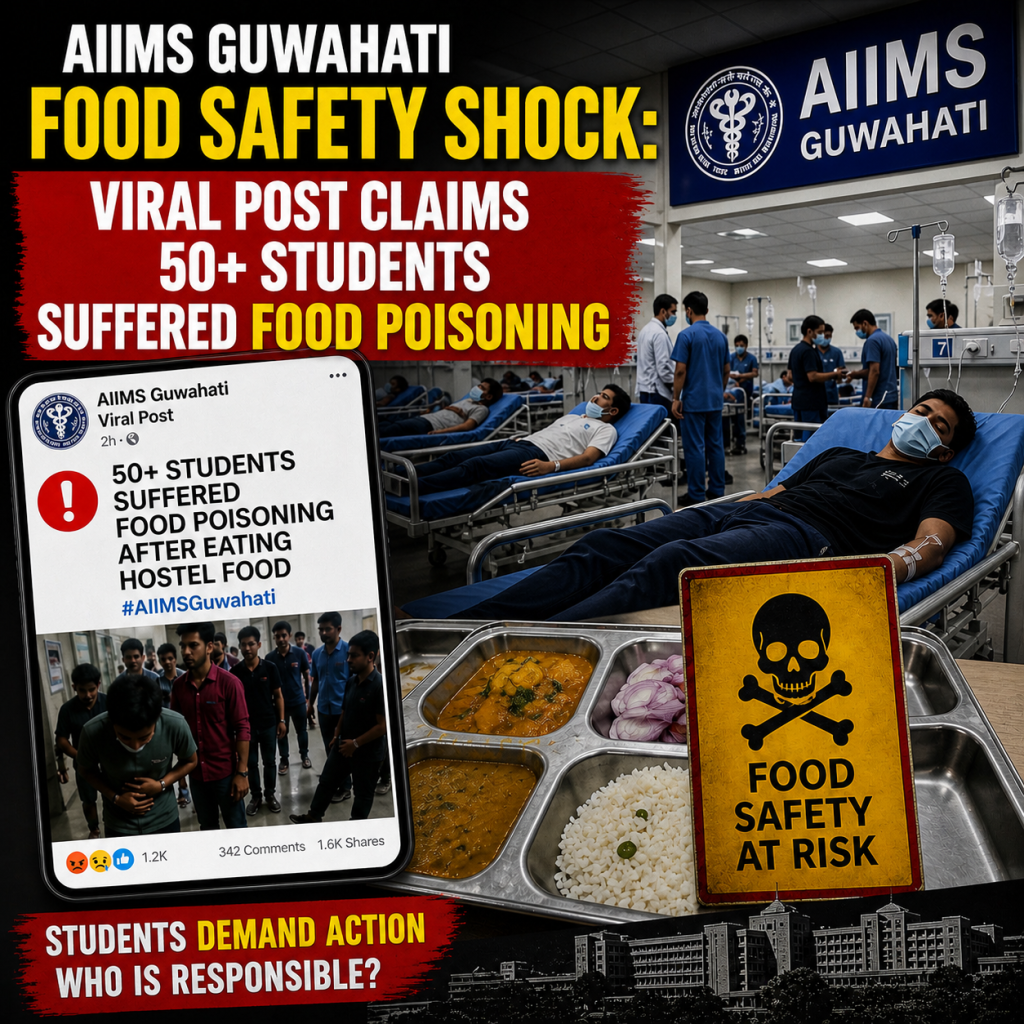
A single tweet posted late on May 1, 2026 by a parent identifying himself as the father of an MBBS student at AIIMS Guwahati quickly spread across social media platforms and WhatsApp groups. The post described food poisoning affecting the writer’s son and more than fifty other students, along with repeated complaints of insects and hair in meals. It painted a picture of neglect in one of India’s premier medical institutes and called for urgent intervention from national health authorities.
By the next morning claim had reached thousands of people sparking worry among current students, parents and alumni. Yet within hours, the official AIIMS Guwahati account responded with a measured statement that painted a very different picture. According to the institute only one suspected case of food related illness had been recorded. An enquiry committee was already at work medical care had been provided and no evidence supported claims of a large scale outbreak.
This back and forth raises important questions about how health concerns spread in the digital age, how premier institutes handle student welfare and what families can actually do when they hear alarming reports. Let’s look at the facts as they stand today.
The Viral Post That Started It All
The original message came from an account named Sanemed (@drhimanshu256). In simple urgent language, writer shared a personal story: his son studying MBBS at AIIMS Guwahati had fallen ill after eating mess food. He added that more than fifty classmates experienced similar symptoms. The post went further claiming that students regularly found insects or hair in their plates and that unhygienic kitchen conditions had become routine. It accused the administration of pressuring students to continue eating in the same facility or face restrictions on exams.
Language was emotional and direct. It tagged the Prime Minister’s Office, the Health Ministry, FSSAI and Assam Chief Minister. Within hours, post had gathered hundreds of likes and shares. Screenshots began circulating on WhatsApp, exactly like the one many readers may have seen. For parents whose children study far from home, such messages hit hard. They trigger immediate fear: Is my child safe? Is the food really that bad?
What AIIMS Guwahati Actually Said
Later same day, institute’s verified handle posted a clear clarification. It acknowledged that student health remains its top priority. However, it stated that only a single case of suspected food related illness had come to light so far. That case was under active medical review. An enquiry committee had already been formed, and preliminary findings did not support the idea of a mass outbreak.
Statement added that the institute had begun immediate corrective steps. These included fresh inspections of food preparation areas, stricter hygiene checks, and coordination with relevant food safety regulators. It also noted that some circulating reports appeared to rest on unverified information rather than confirmed facts. This kind of quick, transparent reply from an autonomous institute of national importance is worth noting. It shows the administration is listening, even when the news arrives through social media rather than official channels.
Similar Stories at Other AIIMS Campuses
Food quality complaints in hostel messes are not new. Just two months earlier, in February 2026, students at AIIMS Nagpur raised similar concerns after finding insects and even a deep fried caterpillar in their dinner. Photos spread rapidly online. The administration there launched an inquiry and promised action though no mass hospitalisation was reported.
Older incidents at other medical colleges have followed the same pattern: students voice frustration about compulsory mess fees, inconsistent food quality, and limited options for those who fall sick. In some cases, students have alleged that skipping mess meals could affect exam eligibility, a claim that surfaces repeatedly across campuses.
These patterns suggest a deeper, systemic challenge rather than isolated failures. Medical students often live on tight schedules with limited time to cook or source outside food. When the on campus option falls short on hygiene, impact on health and studies can be immediate.
Why This Matters Beyond One Campus
Future doctors are trained in these very hostels. Their physical well-lbbeing directly affects how well they can learn and later, how safely they will treat patients. A single case of food borne illness might seem minor but repeated exposure to poor hygiene can lead to chronic issues, missed classes and added stress during already demanding MBBS years.
India has made progress on food safety through FSSAI guidelines and regular inspections of institutional kitchens. Yet gaps remain, especially in large residential campuses where thousands of meals are prepared daily. Temperature control, proper storage, pest management and staff training all play roles. When any link weakens, problems surface quickly.
The current episode at AIIMS Guwahati therefore serves as a reminder that even top tier institutes must keep improving daily operations. It also highlights how social media now acts as an early warning system sometimes accurate, sometimes exaggerated pushing administrations to respond faster than before.
Practical Steps Students and Parents Can Take
If you or someone you know studies at AIIMS Guwahati or any similar institute, here are grounded actions that actually help:
- Document everything. Keep dated photos of meals that look questionable. Note symptoms and when they started. Written records carry more weight than verbal complaints.
- Use official channels first. Most institutes have student grievance cells, mess committees, and designated faculty for hostel welfare. Start there. Many issues get resolved quietly once brought to the right desk.
- Know your rights. Under FSSAI rules, institutional kitchens must follow basic hygiene standards. If you suspect serious lapses, you can file a complaint directly on the FSSAI portal or through the state food safety authority. Provide clear evidence; anonymous tips are less effective.
- Watch for early signs. Mild stomach upset after a meal is common but persistent vomiting, diarrhoea, or fever needs prompt medical attention. Report it to the campus health centre immediately rather than waiting.
- Build peer support. Student unions or batch representatives can collect multiple complaints and present them together. A single voice is easy to dismiss; a group of fifty carries more influence.
Parents can help by staying calm but informed. Calling the hostel warden or the student welfare office with specific questions often yields better results than forwarding viral posts.
What Comes Next
The enquiry committee at AIIMS Guwahati is expected to complete its work in the coming days. Its findings will likely include recommendations on kitchen upgrades, staff training, or even temporary changes to the menu until standards improve. The institute has already signalled that student safety sits at the top of its list.
For now, situation appears contained. No fresh hospitalisations have been reported, and daily operations continue. The episode however has opened a useful conversation about transparency. When students feel heard and see visible improvements, trust in the system grows. When communication falters, rumours fill the gap.
FAQ: Quick Answers to Common Questions
What exactly triggered the recent claims at AIIMS Guwahati?
A parent’s social media post alleged that more than fifty students suffered food poisoning and that insects were frequently found in meals. The institute later clarified that only one suspected case had been officially recorded.
Is the mess food safe to eat right now?
Institute states that corrective hygiene measures are already in place and that no large scale outbreak exists. Students are advised to report any personal discomfort immediately to the campus health centre.
How can a student formally complain about food quality?
Start with the hostel mess committee or student welfare office. For serious hygiene concerns, complaints can also be lodged with the state food safety department or through the FSSAI website with supporting evidence.
Have similar problems happened at other AIIMS?
Yes, In February 2026 students at AIIMS Nagpur reported insects in food, prompting an internal inquiry. Such complaints surface from time to time across residential medical colleges.
What should parents do if they see alarming posts?
Verify through official institute channels before reacting. Encourage your child to use grievance mechanisms and maintain open communication with wardens and faculty.
Final Thoughts
Social media moves fast and genuine concerns can get mixed with unverified numbers. In this case, the parent who posted clearly cares deeply about his son’s well being. The institute for its part has chosen transparency over defensiveness. Both reactions point to the same underlying truth: student health in India’s medical colleges deserves constant attention.
If you are a student or parent connected to AIIMS Guwahati or any similar campus, the best step right now is simple. Stay informed through official updates. Keep documenting issues calmly and remember that constructive pressure combined with patience often produces better kitchens, healthier students, and stronger institutions.
Young people training to become doctors today will one day care for all of us. Making sure they eat safely is not just their concern; it is everyone’s. Let’s keep the conversation going with facts, empathy and practical action.
Disclaimer
This post is for informational and educational purposes only. It does not constitute medical advice, legal opinion or an official investigation. Readers should consult qualified healthcare professionals for personal health concerns. All details are drawn from media reports and outcomes of any official inquiry may provide further clarity.