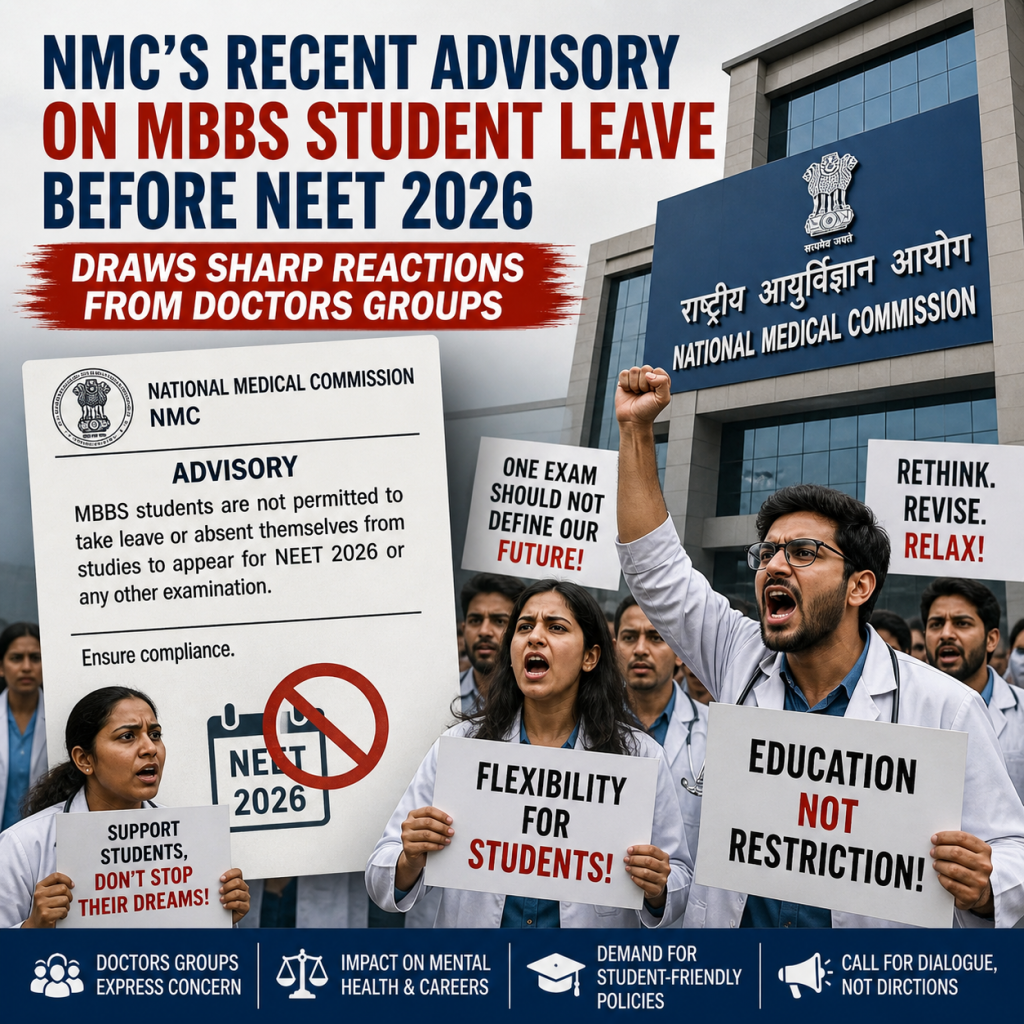
In the run up to one of India’s biggest entrance exams, a quiet notice from the National Medical Commission has suddenly become the centre of a heated discussion. On April 23, 2026 NMC asked all medical colleges across the country to avoid granting leave to MBBS students on May 2 and May 3, 2026 except in rare, well documented cases. The move was meant to protect the integrity of the NEET-UG 2026 examination scheduled for May 3.
What started as an internal guideline has now turned into a public conversation. Two prominent doctors’ bodies, Federation of All India Medical Association (FAIMA) and the Healthcare Reforms Doctors Association (HRDA) from Telangana have written to the NMC expressing strong disagreement. They argue that the advisory treats future doctors with unnecessary suspicion and have asked for the notice to be taken back along with a formal apology.
This is not just another exam-related rule. It touches on bigger questions: How do we balance the need for fair examinations with the well being and dignity of young medical students? And what does this say about the relationship between regulators and the
medical community?
What Exactly Does the Advisory Say?
NMC’s public notice is straightforward but firm. It tells medical colleges not to approve casual or routine leave requests for MBBS students on the two days mentioned. Only genuine emergencies supported by proper paperwork and justification would be considered.
Purpose is simple: to stop any possibility of students getting involved in activities that could compromise the examination, notice came after the Ministry of Education highlighted past cases where some students had been linked to unfair practices during important exams. The idea was to create a focused environment in the final 48 hours before the test. For many colleges, this means students are expected to be present for classes or self study sessions on those days, with attendance being closely monitored. Some institutions have already started circulating internal circulars explaining the new restrictions to their students.
Why This Advisory Was Issued Now
NEET-UG is the single gateway for admission into MBBS and BDS courses across India. Every year, more than 20 lakh students appear for it. The exam is high stakes one bad day can change someone’s entire career path. Over the past few years, the government and exam authorities have taken several steps to make the process cleaner: tighter security at centres, biometric verification and stricter rules against malpractices.
April 23 advisory fits into this larger effort. Officials believe that even a small chance of students being away from campus on the eve of the exam could create opportunities for unfair means. By asking colleges to limit leave, they hope to reduce that risk and send a clear message that the system will not tolerate any compromise. At the same time, timing just days before the actual exam has made many people uncomfortable. Students who may have planned family visits, health check ups or simply needed a mental break now face uncertainty.
How Doctors Associations Are Responding
The strongest pushback has come from organised doctors’ groups. In their joint representation to the NMC, FAIMA and HRDA described the advisory as reflecting “an unfortunate mindset” that views medical students with suspicion. They pointed out that most MBBS students are already among the most disciplined and hardworking young people in the country. Imposing a blanket restriction, they said, feels unfair and demoralising.
The associations have made three clear demands:
- Immediate withdrawal of the April 23 advisory
- A public apology from the NMC to the medical student community
- A promise that similar measures affecting students’ dignity will not be repeated
They argue that such steps can create an atmosphere of distrust at a time when students are already under immense pressure. Medical education, they remind everyone is not just about passing an entrance test it is about building professionals who will one day care for patients with empathy and integrity.
Many individual doctors on social media and professional forums have echoed similar thoughts. Some have shared stories of their own student days when small acts of trust from teachers made a big difference in their confidence and performance.
What This Means for Current MBBS Students
For students currently in medical colleges, the advisory has created practical challenges. Consider Priya (name changed), a second year MBBS student in a government college in Maharashtra. She had planned to visit her ailing grandmother in another city on May 2. Now she is unsure whether her college will approve even a short leave even though she has submitted medical documents for her grandmother.
Stories like Priya’s are common right now. Some students worry about missing important family events or health related needs. Others are simply anxious about how strict attendance rules will affect their already packed schedules.
On the positive side many colleges are trying to be reasonable. Some have clarified that genuine medical emergencies or documented family crises will still be considered on a case by case basis. The key is proper communication with the administration well in advance.
Bigger Picture: Trust, Pressure, and Medical Education
This controversy is part of a larger conversation happening across Indian medical education. On one hand, repeated incidents of paper leaks and unfair means in various entrance exams have made authorities extremely cautious. On the other hand, medical students already face one of the toughest academic journeys in the country long hours, heavy syllabus and constant evaluation.
When regulators treat students primarily as potential rule breakers rather than future healthcare leaders, it can affect morale. Several senior doctors have pointed out that the medical profession runs on trust between doctors and patients between teachers and students, and between the system and young professionals. Any policy that weakens that trust needs careful thought.
At the same time, no one disputes the need for clean examinations. The real question is how to achieve that without making students feel targeted.
Practical Steps Students and Colleges Can Take
If you are a medical student or a parent reading this, here are some grounded suggestions based on how similar situations have been handled in the past:
- Communicate early — If you have a genuine reason for leave, speak to your college administration as soon as possible with all supporting documents. Most colleges prefer transparency over last-minute requests.
- Focus on what you can control — Use the restricted days for focused revision rather than worrying about the rule itself. Many toppers in previous years have done their best work in the final 48 hours by staying calm and organised.
- Know your rights — While colleges must follow NMC guidelines, they also have to consider humanitarian grounds. Keep records of all your communications with the administration.
- Stay informed through official channels — Check your college notice board and the NMC website regularly. Rumours spread fast during exam season.
- Support each other — Senior students and student unions can play a helpful role in representing genuine concerns to the college management in a calm organised manner.
Looking Ahead: What Could Happen Next?
As of May 3, 2026nNMC has not yet issued any fresh clarification or withdrawn the advisory. The exam itself is expected to proceed as scheduled with the usual heavy security arrangements. Whether the doctors’ associations’ demands will lead to any policy change remains to be seen.
What is clear is that this episode has started an important discussion. In the coming weeks, we may see more voices from medical colleges, student bodies, and education experts joining the conversation. The outcome could shape how future guidelines around exam security are framed hopefully with more consultation and sensitivity.
Frequently Asked Questions
What is the exact date of the NEET-UG 2026 exam?
National Eligibility cum Entrance Test (Undergraduate) 2026 is scheduled for May 3, 2026.
Can students still get leave for genuine emergencies?
Yes, advisory allows exceptions in exceptional cases with proper justification and documentation. Students should apply well in advance through their college administration.
Which doctors’ groups have raised objections?
The Federation of All India Medical Association (FAIMA) and the Healthcare Reforms Doctors Association (HRDA), Telangana, have jointly written to the NMC demanding withdrawal of the advisory and a public apology.
Will this advisory affect attendance requirements for the academic year?
The notice is limited to May 2 and 3, 2026. It does not change the overall 75% attendance rule that already exists for MBBS courses. However, colleges may count presence on these two days more strictly.
How can students share their concerns constructively?
Students can write to their college deans or student welfare committees with specific, polite suggestions. Many colleges have feedback mechanisms in place during exam periods.
This controversy reminds us that rules, no matter how well intentioned, affect real people with real lives. Medical students are not just exam takers,they are the doctors who will treat us and our families in the years to come. Finding the right balance between protecting the system and respecting the individuals within it is never easy but it is necessary.
If you are a student preparing for NEET or already in medical college, take a moment today to focus on your preparation while also staying aware of your rights and responsibilities. Talk to your mentors, support your peers, and remember that your voice, when expressed calmly and factually can contribute to better policies in the future.
The coming days will show how this situation evolves. For now, the best we can do is approach it with clarity, patience, and a genuine concern for both fairness in examinations and the well being of India’s future doctors.
Stay informed. Stay balanced and take care of your health both mental and physical during this important phase.
Disclaimer
This post is for informational and educational purposes only. It does not constitute medical advice, legal opinion or an official investigation. Readers should consult qualified healthcare professionals for personal health concerns. All details are drawn from media reports and outcomes of any official inquiry may provide further clarity.