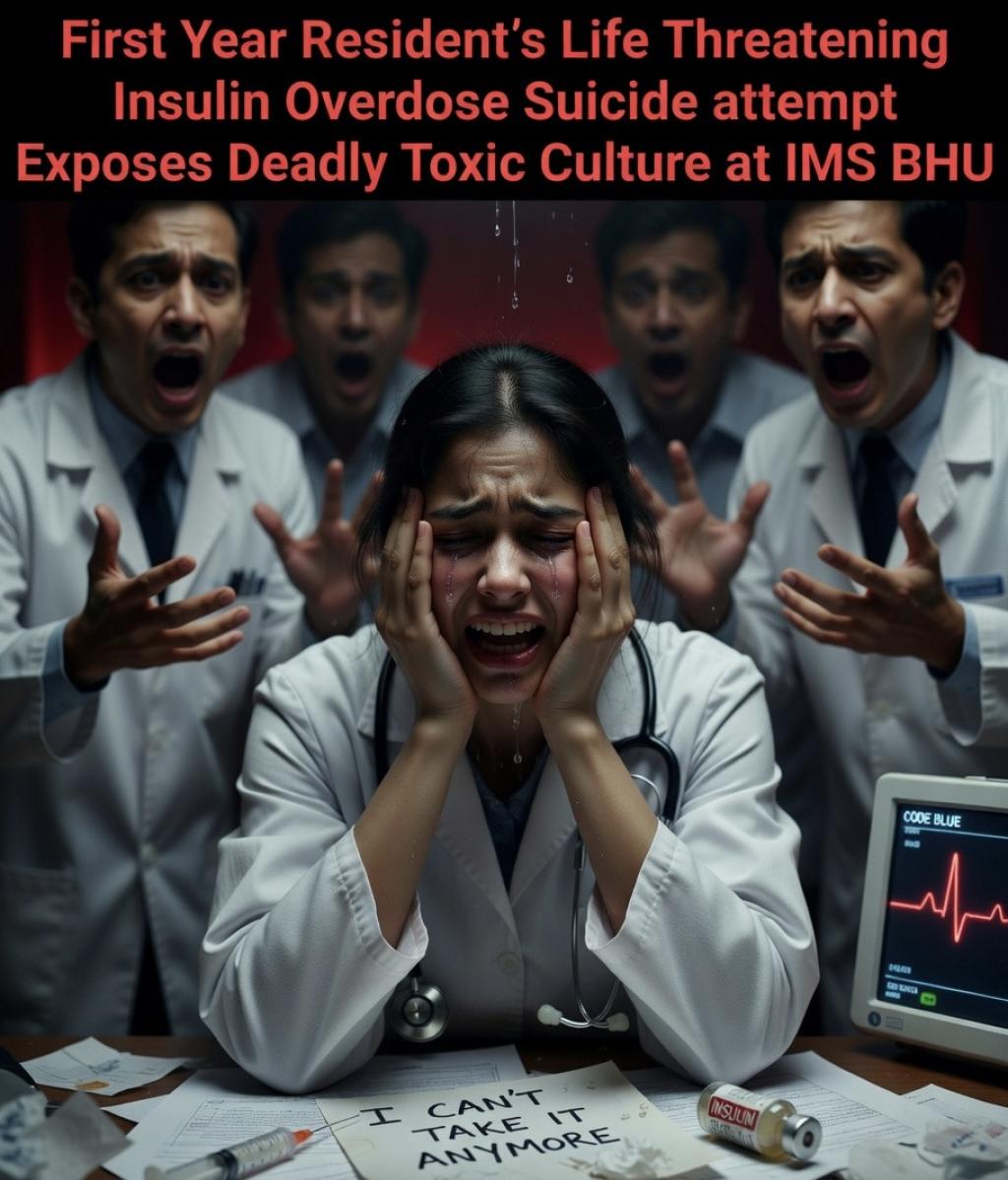
Recently a heartbreaking incident in Varanasi has left many people shocked, saddened, and deeply concerned. A 25-year old woman doctor, who is in her first year of postgraduate training (PGY-1) in the General Surgery department at the Institute of Medical Sciences, Banaras Hindu University reportedly attempted to end her life by administering a very large amount of insulin to herself. Reports suggest that she injected more than 100 doses which caused her blood sugar to drop to extremely dangerous levels.
As a result, she lost consciousness and fell into a coma. She is currently on a ventilator in the intensive care unit (ICU), fighting for her life. Doctors are providing every possible treatment, including dialysis as her kidneys have also been affected. Her family has been informed and the hospital administration has stated that the exact reason behind the incident will only become clear once she regains consciousness.
How the News Spread and the Alleged Reasons
The news began circulating around March 13 and quickly spread across social media platforms and medical discussion groups. Many people are expressing concern and discussing the possible reasons behind this tragic event.
She had reportedly been facing repeated public humiliation, body-shaming, and alleged workplace bullyingover a prolonged period.She also reportedly had cellulitisand had been working continuously in the ward without sleep for nearly three days. Several incidents in recent days appear to have worsened her mental distress:
•During an orientation session, she was reportedly told in front of her co-JRs that she needed a psychiatric evaluation.
•In the elective OT, she was reportedly publicly shouted at by a senior for being 1–2 minutes late in bringing micropore(a task usually handled by OT staff). She reportedly had a panic attack in the OT and was asked to leave the surgery.
Despite repeatedly expressing that she wanted to leave the department due to extreme stress and a toxic work environment, her concerns were allegedly not addressed.She is also reported to be a gold medalist in General Surgery during her MBBS examinations.Many colleagues and members of the medical community are urging authorities to conduct a fair and transparent investigationand take strict action if any wrong doing or harassment is found.
The Difficult Life of Resident Doctors in India
The life of a resident doctor in India, especially in demanding specialties such as surgery, can be extremely challenging. Residents often work between 80 and 100 hours a week, sometimes with very little sleep. They manage critical emergencies, care for seriously ill patients, and simultaneously prepare for examinations.
In addition to these responsibilities, they may face strict supervision from seniors, overwhelming workloads, and constant pressure to perform perfectly. Despite experiencing fatigue, burnout, anxiety or depressionmmany young doctors hesitate to speak about their struggles because of fear, stigma or concerns about how it might affect their careers.
Unfortunately, incidents involving severe mental distress among medical trainees have surfaced repeatedly in different medical colleges across the country.
Why Does This Keep Happening?
Several factors contribute to the mental and emotional strain faced by resident doctors:
• Extremely long working hours with minimal breaks
• Bullying, humiliation or harsh behavior from seniors
• Lack of sufficient time for rest, family life or personal well-being
• Limited access to mental health support within hospitals
• Stigma surrounding mental health and seeking help
• Fear that raising concerns could harm future career prospects
Healing the Healers
Doctors dedicate their lives to healing others, yet the question remains: who supports and heals the healers when they themselves are struggling?
The medical community must recognize that doctors are human beings who also need care, rest, empathy and emotional support.
Changes Needed for a Better Future
Meaningful changes are necessary to ensure the well-being of young doctors. Medical institutions should consider implementing clear limits on duty hours, similar to policies followed in some other countries. Hospitals should provide accessible mental health services, including confidential counseling and regular psychological check-ins.
Strict policies must also be enforced to prevent harassment, bullying, or toxic workplace behavior. Senior doctors and faculty members should receive training on mentorship, communication and supportive leadership so that they can guide junior doctors in a constructive and compassionate manner.
Equally important is building a culture of empathy within the medical community. Students, residents and faculty members should support one another. Sometimes a simple question such as “How are you really feeling?” or “Do you want to talk?” can make a meaningful difference in someone’s life.
A Message of Hope and Support
To any doctor or student who may be reading this and feeling overwhelmed: asking for help is a sign of courage, not weakness. There are organizations and helplines, including those supported by the Indian Medical Association and other groups, that offer confidential support and a listening ear.
You are not alone, and your life holds immense value—to your patients, your loved ones, and the future of healthcare.
Final Thoughts
Everyone hopes that this young doctor recovers soon and regains her health. At the same time, this painful incident should serve as a wake-up call for the entire medical system. It is essential to create a healthier, more compassionate environment so that no young doctor feels pushed to the breaking point.
Taking care of patients is important but taking care of the people who provide that care is equally vital.
Let us take better care of ourselves and of each other.