Medical colleges across India are under scanner of NMC after a shocking AEBAS attendance scam surfaced. Ghost faculty, cloned SIM cards and suspected Chinese software are allegedly being used to bypass Aadhaar Enabled Biometric Attendance System (AEBAS) and show fake compliance. Investigations and regulatory action have begun. Is India’s medical education system being digitally compromised?
What is AEBAS?
The Aadhaar Enabled Biometric Attendance System (AEBAS) is a centralized digital attendance platform mandated by the National Medical Commission for all medical colleges across India to ensure real time presence of faculty, residents and staff. It uses Aadhaar linked facial recognition and geofencing technology to verify that teachers are physically present within the college campus while marking attendance.
AEBAS Mandatory Attendance Rule
The National Medical Commission has made Aadhaar Enabled Biometric Attendance System mandatory for all faculty members, residents and even students in every government and private medical college in India. Under NMC regulations and UG-MSR guidelines, attendance of all teaching faculty must be recorded only through AEBAS and linked directly to the NMC central monitoring portal to prevent ghost faculty and proxy attendance. The Commission issued a public notice on 16 April 2025 directing all medical colleges to shift fully to face based Aadhaar authentication for attendance, and this system officially became compulsory across India from 1 May 2025, replacing fingerprint and other local attendance methods. From this date, every faculty member is required to mark daily attendance through the Aadhaar linked facial authentication mobile app or approved biometric system within the campus geofenced area.
Biometric Attendance Scam Explodes Across Private Medical Colleges
A major attendance fraud has erupted across several private medical colleges in India, exposing how technology meant to enforce accountability is being manipulated to maintain ghost faculty on paper. Investigations and media reports have revealed that faculty attendance linked to Aadhaar based facial recognition is being faked on a large scale. Teachers are being marked present on the National Medical Commission portal even when they are physically absent from campuses. The scandal has raised serious questions about regulatory oversight, faculty shortages and the integrity of medical education being delivered to thousands of students.
From Fingerprint Fraud to Facial Recognition Manipulation
The biometric attendance system for medical college faculty was strengthened after earlier fraud involving silicon fingerprint cloning came to light. To eliminate manipulation, authorities shifted to Aadhaar enabled facial recognition attendance, making it mandatory for teachers to mark presence through a live face authentication system within a geo fenced campus zone. Faculty members are required to look into their registered mobile phones and blink for real time verification. The system was expected to eliminate ghost faculty and ensure that only physically present teachers could mark attendance. Instead, the new system has reportedly been compromised through more sophisticated digital methods.
How the Fraud Works Inside the System
Sources and cyber experts indicate that the fraud involves a coordinated use of cloned SIM cards, remote device access and face replay technology. In many cases, a faculty member registers attendance through a phone that is remotely controlled by another person or through a manipulated device. Pre recorded eye blinking videos are injected into the camera feed to simulate live authentication. Because the Aadhaar based system verifies facial presence and blinking, replaying a realistic video allows the system to accept attendance as genuine. When combined with cloned SIM cards linked to Aadhaar registered mobile numbers, the authentication appears legitimate to central servers.
Chinese Origin Software and Remote Access Tools Under Scanner
Investigative inputs suggest that certain foreign developed applications, reportedly of Chinese origin, are being used to bypass live facial authentication. Although the exact software names have not yet been officially disclosed by authorities, cyber experts believe that these tools fall into categories such as virtual camera injection software, deepfake face replay tools and remote device mirroring applications. These tools can feed a prerecorded or simulated live video directly into the camera interface of attendance applications, making the system believe that the person is present in real time. Some tools also allow GPS spoofing and remote login, enabling attendance marking even when the faculty member is not within the required campus geo fence.
Nexus Between College Management and Faculty
Evidence suggests that this is not an isolated individual fraud but a systemic practice in several institutions. Many private colleges allegedly maintain minimum required faculty only on paper to satisfy National Medical Commission norms. Retired professors and part time teachers are contracted for limited days but shown present throughout the week through manipulated biometric attendance. During inspections, these faculty members are physically brought to the campus to maintain compliance. Reports indicate a nexus between sections of college management, certain faculty members and local administrative facilitators who ensure that attendance records match regulatory requirements despite actual shortages.
Regulatory Action and Ongoing Investigation
Following exposure of the attendance fraud, state health departments and regulatory bodies have initiated internal inquiries into several private medical colleges. Attendance logs, Aadhaar authentication trails and device level data are being examined for irregular patterns such as repeated logins from identical devices or mismatched geo location data. Some institutions are believed to have received show cause notices seeking explanations for discrepancies between attendance records and physical verification. Authorities are also exploring the involvement of cyber crime units to trace the software and digital tools being used for manipulation. However, no official list of software or arrests related to the technology providers has yet been publicly announced.
Threat to Medical Education and Patient Safety
The consequences of this scam extend far beyond attendance fraud. Ghost faculty and fake attendance directly impact the quality of teaching and clinical training provided to medical students. When experienced teachers are absent and only present on paper, students lose critical academic guidance and clinical exposure. Over time this can produce poorly trained doctors entering the healthcare system, ultimately affecting patient safety and public trust. If faculty shortages are hidden through digital manipulation, regulatory bodies cannot accurately assess the teaching capacity of institutions, leading to a systemic decline in medical education standards.
Technology Versus Regulation: Who Will Win
This scandal highlights a growing challenge where digital monitoring systems can be bypassed by equally advanced technological tools. As authentication systems become more sophisticated, so do methods used to manipulate them. Experts are now calling for stronger safeguards such as real time centralized monitoring, multi factor biometric verification, device binding with institutional networks and surprise physical audits. Cyber forensic analysis of attendance logs and SIM usage patterns will be crucial in identifying organised manipulation. Whistleblower protection for faculty who are pressured by management to participate in such fraud is also urgently needed.
The biometric attendance scam unfolding in medical colleges represents one of the most serious integrity crises in India’s medical education sector. What began as an effort to eliminate ghost faculty has exposed a deeper nexus of technological manipulation and institutional complicity. With investigations underway and regulatory scrutiny intensifying, the coming months will determine whether authorities can dismantle this network and restore credibility to the system. The future quality of medical training and healthcare delivery in India may depend on how decisively this scandal is addressed.
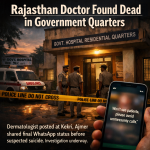
A 35 year old government dermatologist, Dr Ashok Kumar Meena, was found dead at his residential quarters in Kekri, Ajmer. He had shared a WhatsApp status saying “Won’t see patients, please avoid unnecessary calls” before missing duty. Police suspect suicide. No note found. Investigation is underway into the circumstances surrounding the death.
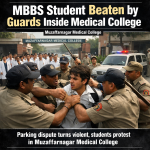
An MBBS student was allegedly chased and brutally beaten by security guards at Muzaffarnagar Medical College, Begrajpur, Uttar Pradesh, after a parking dispute. Students protested demanding suspension of guards and FIR registration. The incident has raised serious concerns over campus safety and accountability.
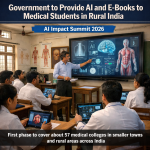
At the ongoing AI Impact Summit in New Delhi, the government has announced plans to provide AI tools and e book access to medical students in about 57 government medical colleges in smaller towns and rural areas. The initiative aims to bridge the academic gap, improve clinical learning, and modernise medical education across India through digital resources.