Introduction to the Issue
In the rapidly expanding landscape of medical education in India, where the number of MBBS and PG seats has surged dramatically in recent years, one key question keeps resurfacing: How transparent is the quality assessment of our medical colleges?
Parliamentary Discussion
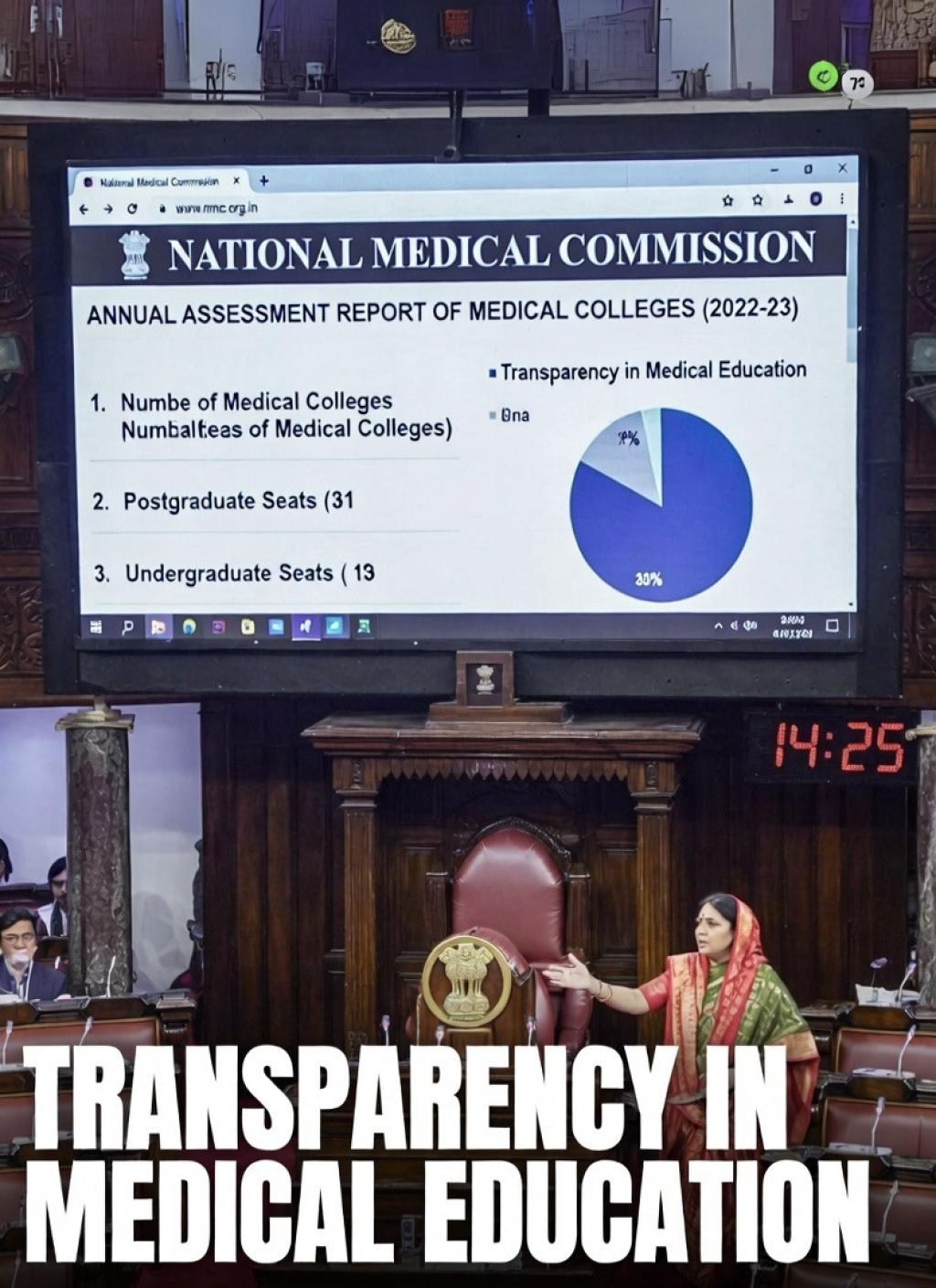
On March 8, 2026, this very issue made its way into the Lok Sabha when Union Minister of State for Health and Family Welfare, Smt. Anupriya Patel, responded to a pointed question from parliamentarian Shri Durai Vaiko. The discussion, reported widely including by Medical Dialogues, centered on the Annual Medical College Assessment Reports — detailed inspections that evaluate infrastructure, faculty strength, patient load, clinical exposure, and overall compliance with standards set by the National Medical Commission (NMC).
The Core of the Controversy
The query highlighted several concerns:
Concern 1: Uploading of Reports
Has the NMC stopped uploading these annual assessment reports on its official website?
Concern 2: Withholding Reports
Why are reports being withheld each academic year, even though the Central Information Commission (CIC) has issued multiple directives to upload them annually?
Concern 3: Past Practices
Isn’t the government aware that the erstwhile Medical Council of India (MCI) used to proactively publish complete assessment and inspection reports in line with Section 4 of the Right to Information (RTI) Act, 2005?
Concern 4: Steps for Transparency
What steps is the government taking to ensure timely publication so that aspiring students can make informed choices based on real data about faculty, infrastructure, and hospital patient load?
Importance for Students
These are valid worries. With India adding tens of thousands of medical seats over the past few years (over 48,000 MBBS seats and 29,000 PG seats from 2020-21 to 2025-26 alone), the quality of training institutions has become a national priority. Students and parents invest heavily — financially and emotionally — in medical education. Access to honest, detailed assessment reports helps distinguish top-tier colleges from those struggling with deficiencies.
The Government’s Response
Minister Anupriya Patel clarified the Centre’s position, drawing directly from information provided by the NMC:
Proactive Disclosures
A wide range of critical information is already proactively disclosed on the NMC website (nmc.org.in). This includes:
Disclosure Details
Recognition status of courses
Seat matrix
Regulations
Application processes
Services for UG/PG graduates and doctors
Admission details
Annual renewal of colleges
Counselling processes
Updates and Communication
These are updated regularly and communicated via public notices.
Restrictions on Reports
However, the specific annual assessment reports involve third-party information. Under the RTI Act, disclosure can be legally restricted when reports contain personal data, confidential details, or commercially sensitive information belonging to the colleges.
Legal Opinion
The NMC is currently seeking a legal opinion on how to handle this aspect while staying compliant.
Commitment to Obligations
Importantly, the Commission reiterated its full commitment to implementing statutory obligations, adhering to the RTI Act, and following CIC orders.
Available Reports
Interestingly, the NMC does maintain a section for College Assessment Reports listing assessments carried out since 2011, with some reports linked (though not necessarily the full annual compilations in question).
Why This Matters for Students and the Future of Healthcare
The shift from the MCI era — where full reports were more routinely published — to the current NMC framework has sparked debate about transparency. While the government emphasizes existing disclosures, critics argue that summarized or partial information isn’t enough. Full reports reveal granular issues like faculty shortages, inadequate beds, or poor clinical exposure — factors that directly impact training quality and, ultimately, patient care.
Impact on Healthcare
In a country aiming to produce world-class doctors amid rapid expansion, hiding or delaying such insights could undermine public trust. Students deserve to know if a college meets the promised standards before committing years of study and lakhs of rupees.
Looking Ahead
This parliamentary exchange isn’t just bureaucratic back-and-forth — it’s a reminder that medical education regulation must balance institutional privacy with public interest. The NMC’s ongoing legal review could lead to clearer guidelines, perhaps redacted versions of reports or more detailed public summaries.
Advice for Students
For now, aspiring medical students should:
- Regularly check the NMC website for the latest on college recognitions, seats, and available assessment data.
- Use tools like NEET counselling portals and official notices.
- Stay informed through credible sources like Medical Dialogues or parliamentary records.
Final Thoughts
Transparency isn’t optional in something as vital as training India’s future doctors. As the debate continues, one hopes the balance tips firmly toward openness — for the sake of students, institutions, and the health of the nation.
What are your thoughts? Have you ever checked NMC disclosures while choosing a college? Share in the comments!