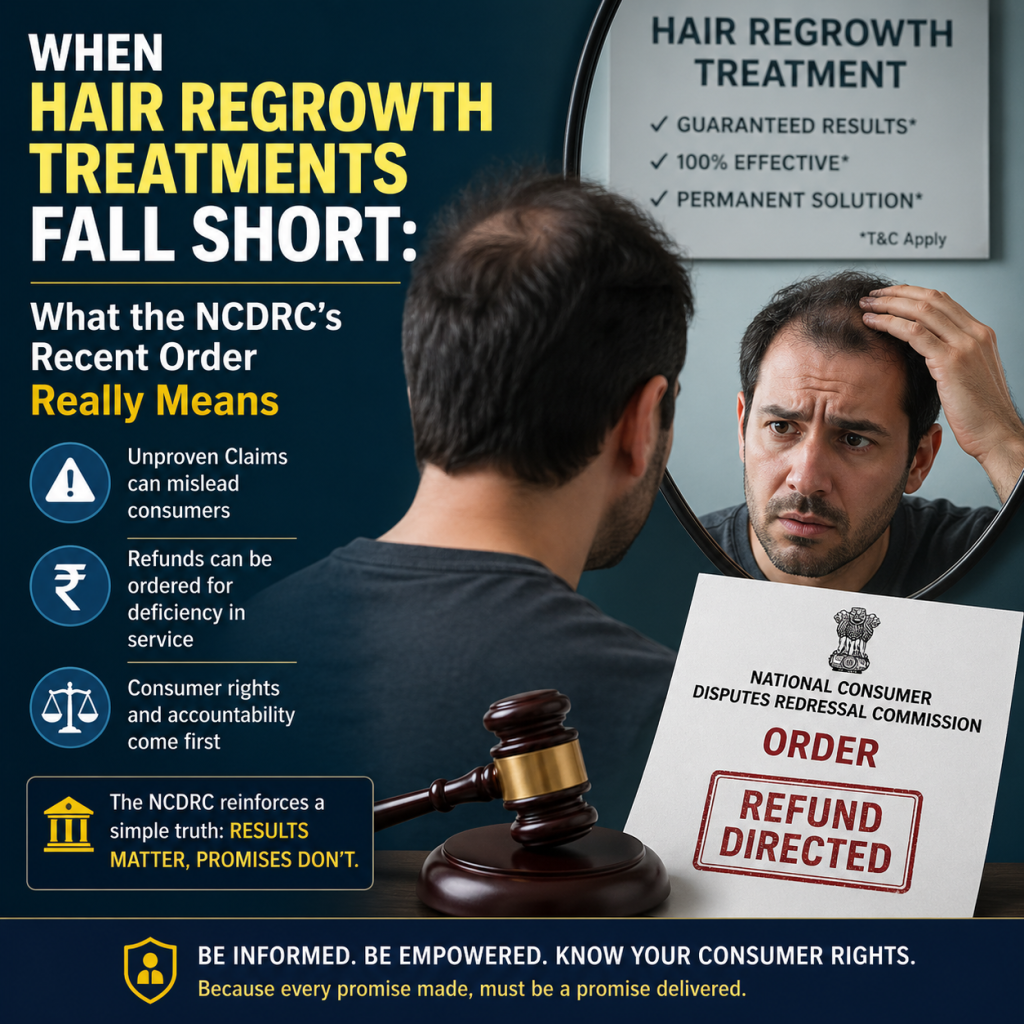
You’ve watched the ads, read the glowing reviews and finally decided to try a platelet rich plasma or PRP session for your thinning hair. Clinic promises noticeable improvement in density and texture. You pay a substantial sum go through the sessions, follow every instruction yet six months later, mirror tells a different story. Your hair looks much the same. Naturally, disappointment turns into anger. Many people in this situation have filed complaints seeking refunds or compensation, assuming the provider must have been careless but a fresh order from the National Consumer Disputes Redressal Commission has drawn a clear line: an unsuccessful outcome by itself is not enough to establish medical negligence.
Commission’s April 27, 2026 decision quashed compensation awards in cases where patients could not produce independent expert evidence showing that the doctor or clinic had fallen below accepted standards of care. In other words, the mere fact that the treatment “didn’t work” does not automatically make the provider liable. This ruling matters because cosmetic and aesthetic procedures have grown rapidly across India. People spend significant amounts on hair restoration, skin treatments and body contouring often with high hopes fuelled by social media. When results fall short of expectations, disputes follow. NCDRC’s stand brings much needed clarity while reminding everyone that medicine is not a guaranteed service.
What Is PRP Hair Treatment ?
PRP involves drawing a small amount of your own blood spinning it in a centrifuge to concentrate the platelets and then injecting that plasma back into the scalp. Idea is that growth factors in the platelets can stimulate dormant hair follicles. Dermatologists and trichologists have used it for years for androgenetic alopecia and other hair loss conditions. It is generally considered low risk when performed correctly but results vary widely. Some patients see modest thickening after three or four sessions; others notice little change. Age, genetics, hormone levels, nutrition and how consistently you follow after care all play roles. No treatment can override every biological factor. NCDRC did not question the legitimacy of PRP itself. It simply said that disappointment alone cannot prove the doctor did something wrong.
Why the Commission Reached This Conclusion
Medical negligence cases in India follow a well established legal path, patient must show four things: doctor owed a duty of care that duty was breached, breach caused harm and the harm resulted in damages. In cosmetic procedures, proving breach is especially difficult without expert testimony.
Gommission observed that hair regrowth treatments are not like setting a broken bone where success can be measured in clear X-rays. Hair growth depends on multiple variables without a qualified medical expert stating that the clinic deviated from standard protocol for example by using contaminated equipment, incorrect injection technique or failing to screen for contraindications, complaint cannot succeed.
This is not a new legal principle but it is a timely reminder in an era when online reviews and quick fix marketing sometimes create unrealistic expectations. Ruling protects honest practitioners from being penalised for natural biological variation while still leaving the door open for genuine cases of negligence.
Real Life Scenarios: Where the Line Gets Drawn
Consider two patients who both received PRP at different clinics. Patient A, 38 year old software engineer had been losing hair for five years. He chose a well known dermatology chain signed detailed consent forms that clearly stated “results are not guaranteed” and completed four sessions. His hair density improved slightly but not dramatically. He felt the money was wasted and filed a complaint.NCDRC dismissed it because no expert evidence showed any deviation from accepted practice, clinic had followed standard protocols; biology simply responded modestly.
Patient B visited a small salon style setup that advertised “guaranteed hair regrowth in 90 days” technician (not a qualified doctor) performed the injections without proper sterilisation within weeks the patient developed scalp infections and scarring. Here an independent dermatologist’s report confirmed substandard technique and lack of medical supervision. In such a case, commission would likely find negligence because clear expert evidence existed, difference lies in proof not in whether the hair grew back.
Practical Steps Before You Book Any Hair Restoration Procedure
If you are thinking about PRP or similar treatments, a little homework can save both money and heartache. First, verify credentials. Look for a dermatologist or plastic surgeon registered with the Medical Council of India. Avoid places where only technicians perform injections without a doctor present. Second, ask direct questions during consultation. What percentage of your patients with my hair loss pattern see visible improvement after three sessions? What are the most common side effects? What happens if I see no change? A reputable provider will answer honestly and show you realistic before and after photos of similar cases not stock images. Third, read the consent form carefully. It should mention that results vary and that no guarantee is offered. If a clinic promises “100 % regrowth,” treat that as a red flag. Fourth, keep your own records. Photograph your scalp from the same angles and lighting every four weeks. Note any side effects or changes in your routine. These records become useful if you ever need to demonstrate what actually happened. Finally, consider your overall health. PRP works best when combined with good nutrition, stress management and treatment of any underlying conditions such as thyroid imbalance or vitamin deficiencies. A single procedure is rarely a magic bullet.
How Clinics Can Reduce Disputes
For providers, ruling is a reminder to communicate clearly. Detailed consent forms, realistic outcome discussions and proper documentation of every step protect both the patient and the practice. Many established clinics now include a “realistic expectations” paragraph that patients must initial. Some even offer staged payments tied to visible progress rather than upfront full fees. Transparent follow up protocols also help. A simple phone call or review appointment at the three month mark can address concerns before they escalate into formal complaints.
What This Ruling Does Not Change
The decision does not mean patients have no recourse if something genuinely goes wrong. Infections caused by poor hygiene, incorrect diagnosis leading to inappropriate treatment or failure to obtain informed consent can still form the basis of a claim provided expert evidence supports it. Nor does it prevent regulatory bodies from acting against unqualified practitioners. Medical Council and state health authorities continue to monitor standards. Patients who suspect serious malpractice should still report to these bodies in addition to consumer forums.
FAQ
What is the main takeaway from the NCDRC order on hair treatments?
Commission held that an unsuccessful PRP or similar hair regrowth procedure by itself does not prove medical negligence. Patients need independent expert medical evidence showing the provider breached accepted standards of care.
Can I still file a complaint if my hair treatment failed?
Yes but success will depend on whether you can produce expert testimony that the clinic or doctor deviated from proper medical practice. Mere disappointment with results is unlikely to be enough.
How do I find a trustworthy clinic for PRP?
Choose a centre led by a qualified dermatologist, ask to see realistic case studies of patients with similar hair-loss patterns, and ensure the consent form clearly states that results are not guaranteed.
What kind of evidence helps in these cases?
Photographs taken at regular intervals, medical records, second opinions from independent specialists, and documentation of the exact protocol used by the clinic all strengthen a claim when genuine negligence is suspected.
Does this ruling apply only to PRP or to other cosmetic treatments too?
principle that outcome alone does not equal negligence applies broadly to aesthetic procedures where results depend on individual biology. Each case is still judged on its own facts and evidence.
Moving Forward with Clear Eyes
NCDRC’s recent order does not shut the door on accountability; it simply insists that accountability be based on evidence rather than expectation. In a field where marketing often outpaces medical reality, this distinction protects both patients and honest practitioners. If you are considering hair restoration or any aesthetic treatment, approach it as an informed consumer. Ask questions, manage your expectations and choose providers who prioritise transparency over promises. Should you ever face an unsatisfactory outcome, document everything and seek a second medical opinion before deciding on legal steps.
Medicine even cosmetic medicine remains part science and part art. No ruling can change that. What we can do is enter these decisions with eyes wide open, armed with realistic information and a clear understanding of our rights and responsibilities as patients, next time you see an advertisement promising dramatic hair regrowth, remember this: best result often comes from choosing wisely not from chasing guarantees.
Disclaimer
This post is for informational and educational purposes only. It does not constitute medical advice, legal opinion or an official investigation. Readers should consult qualified healthcare professionals for personal health concerns. All details are drawn from media reports and outcomes of any official inquiry may provide further clarity.
Link: According to news report from Lawbeat
https://lawbeat.in/amp/news-updates/can-failed-hair-regrowth-treatment-be-medical-negligence-ncdrc-says-no-quashes-compensation-orders-1585160