The recent incident in Swarupnagar, North 24 Parganas, has once again highlighted the critical issues affecting healthcare delivery in parts of India particularly in private nursing homes and rural facilities.
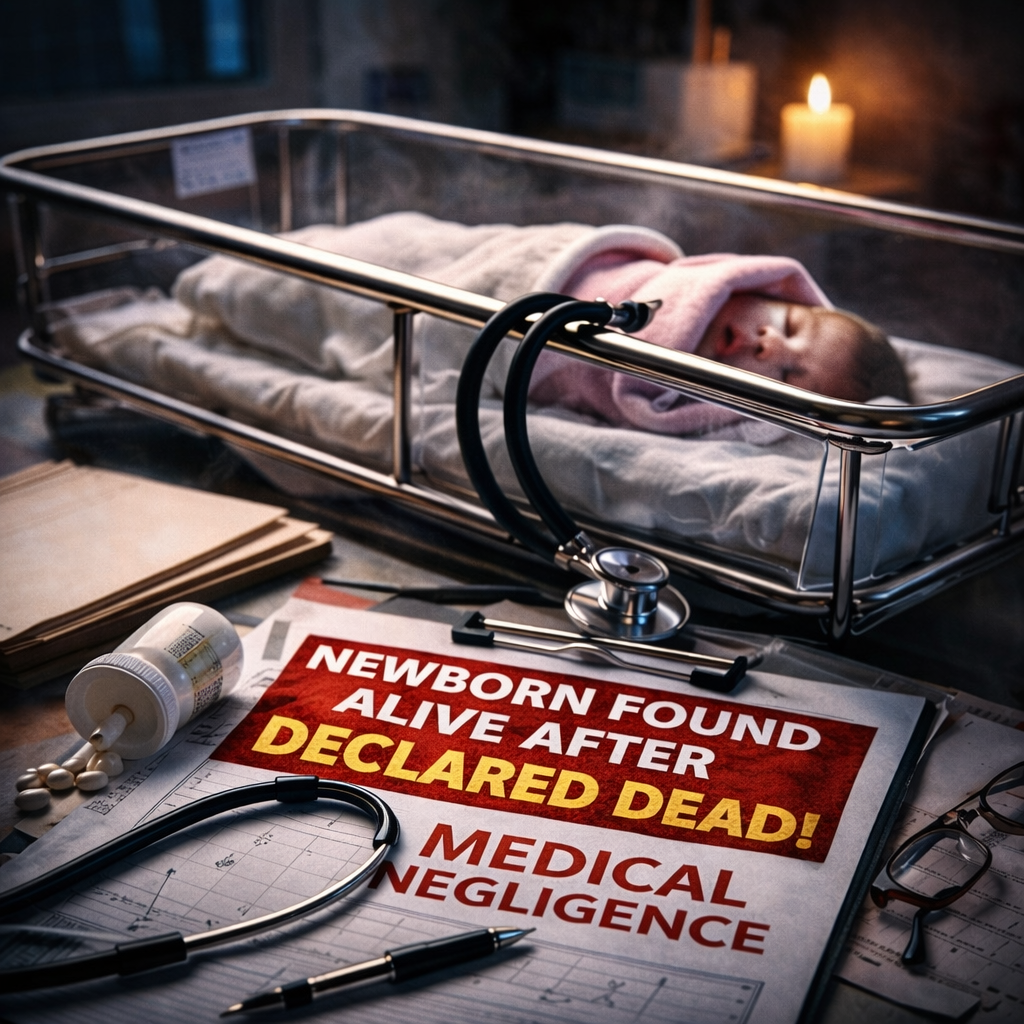
On March 20, 2026 a newborn baby girl was declared dead shortly after birth at a private nursing home, only to be discovered alive hours later by her grieving family. This is not just a tragic mistake it is a stark reminder of how fragile trust in the medical system becomes when basic protocols fail.
The Shocking Sequence of Events
Rubina Parvin a 28 year-old woman was admitted to a nursing home in Swarupnagar on Wednesday evening due to labor pain, She delivered a baby girl in the morning.
According to reports medical staff informed the family soon after delivery that the newborn had not survived. The infant’s body was wrapped in gauze and cloth and handed over to the family, who returned home to prepare for burial.
What happened next was both heartbreaking and miraculous.
Around 3 PM approximately four to five hours later family unwrapped the bundle to perform the final rites. Family shocked saw a baby showed signs of life. Her hands and legs were moving.
The family immediately rushed the infant to Basirhat District Hospital, where doctors confirmed that both the mother and the baby were alive and stable and receiving proper medical care.
Allegations of Negligence
The family has filed a formal complaint at Swarupnagar police station, accusing the nursing home of gross medical negligence. They allege that:
•The baby was not properly monitored after birth
•Vital signs were not adequately checked before declaring death
•The body was handed over without sufficient verification or a second opinion
The nursing home has denied institutional wrong doing. However it has issued a show cause notice to the doctor involved and initiated an internal inquiry. Some have described the incident as a “misunderstanding,” but such an explanation raises serious concerns when a life was at risk.
Why Do Such Incidents Occur?
Unfortunately, this is not an isolated case. Similar incidents have been reported across India particularly in under resourced healthcare settings.
Newborns especially premature or low birth weight babies can have very weak vital signs. Without proper equipment or trained personnel, it can be difficult to detect breathing or a heartbeat accurately.
Common contributing factors include:
•Lack of neonatal expertise
•Inadequate equipment such as pulse oximeters and monitoring devices
•Rushed assessments due to workload or pressure
•Failure to follow standard medical protocols
Declaring a newborn dead without thorough and repeated verification can lead to devastating consequences.
Critical Questions That Must Be Answered
This incident raises several important questions:
•Were standard protocols for confirming neonatal death followed?
•Was the newborn observed for an adequate period after delivery?
•Why was there no referral to a higher medical facility?
•Why was a second opinion not sought before handing over the body?
Broader Implications for Healthcare
West Bengal like many other states, continues to struggle with a two tier healthcare system:
•Government hospitals are often overburdened and understaffed
•Private nursing homes offer faster access but vary significantly in quality and accountability
Incidents like this erode public trust, especially among vulnerable communities who depend on local healthcare facilities. They also highlight the urgent need for stronger regulation and oversight.
What Needs to Change
To prevent such incidents in the future several key measures must be implemented:
1. Mandatory Protocols
Strict adherence to national guidelines for neonatal assessment, including Apgar scoring and continuous monitoring must be enforced before declaring death.
2. Accountability
Incidents of negligence should be investigated thoroughly. Mere internal inquiries are not sufficient legal action and license reviews may be necessary.
3. Training and Infrastructure
All delivery centers must be equipped with basic neonatal care tools and staff must receive proper training in neonatal resuscitation and monitoring.
4. Public Awareness
Families should be aware of their rights and feel empowered to seek second opinions or transfers if something seems wrong.
A Close Call That Should Not Be Repeated
As someone from Kolkata, close to where this incident occurred, it is deeply alarming to see how narrowly this tragedy was avoided.While the baby’s survival feels miraculous, such outcomes should never depend on chance or the vigilance of family members. Every newborn deserves competent, careful, and compassionate medical care from the very first moment of life.
Final Thoughts
This incident must not be dismissed as a one off mistake or forgotten as just another headline. It should serve as a turning point prompting stricter regulations, better training and stronger accountability across healthcare systems Because no family should ever have to mourn a child who is still alive.
What are your thoughts on this incident? Have you heard of similar cases in your area? Share your views and help raise awareness because healthcare is everyone’s responsibility.