Introduction
India’s medical education sector is witnessing one of its largest expansions in recent years. In a written reply in Parliament, the Union Ministry of Health and Family Welfare recently announced that 43 new medical colleges have been established for the academic year 2025–26, along with the approval of 11,682 additional MBBS seats and 8,967 postgraduate (PG) medical seatsacross the country.
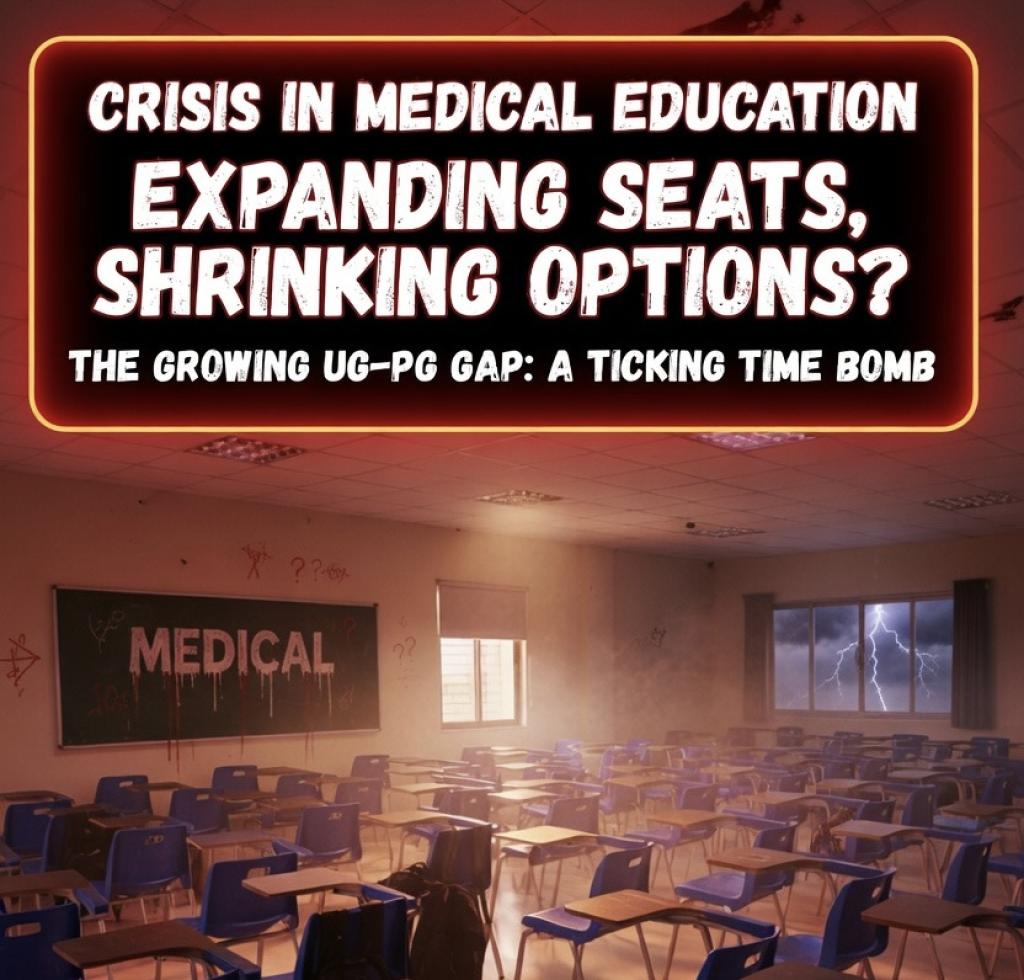
The move is part of a broader effort to strengthen the healthcare workforce and expand medical education infrastructure, especially in underserved districts. However, while the numbers suggest progress, a deeper look reveals a persistent structural imbalance: the widening gap between undergraduate (UG) and postgraduate (PG) training opportunities in medicine.
The Numbers Tell a Story
According to government data presented in Parliament, India currently has approximately 1,28,875 MBBS seats and around 80,291 PG medical seatsacross government and private institutions.
Although the addition of thousands of seats annually is aimed at addressing the doctor shortage, the ratio between UG and PG seats remains uneven. Simply put, not every MBBS graduate can pursue postgraduate training, even if they aspire to specialise.
This imbalance has created an increasingly competitive ecosystem in which the MBBS degree is no longer viewed as the endpoint of medical education, but merely a stepping stone.
The Rising Pressure on Young Doctors
For today’s medical students, the pressure to pursue postgraduate training begins early in the MBBS journey. The reasons are both professional and systemic.
First, clinical practice in modern healthcare increasingly favours specialists over general practitioners. Patients often prefer consulting MD/MS-qualified doctors, and hospital systems increasingly recruit specialists rather than general MBBS doctors.
Second, the intense competition for PG seats has transformed entrance examinations such as NEET-PG and INI-CETinto defining career milestones. Many graduates spend years preparing for these examinations, sometimes attempting them multiple times before securing a seat.
This phenomenon has created what many educators call “the endless entrance exam cycle”, where fresh graduates transition directly from internship into coaching classes rather than clinical practice.
The Emerging Super-Specialisation Race
The imbalance does not end with postgraduate education. Increasingly, MD/MS graduates themselves face pressure to pursue super-speciality degrees such as DM or MCh.
In many tertiary hospitals and academic institutions, the hierarchy of medical qualification continues upward. The result is a cascading academic ladder:
MBBS → MD/MS → DM/MCh
Each step involves another national-level entrance examination and years of training.
This expanding hierarchy reflects both the rapid technological advancement of medicineand the increasing demand for specialised care, but it also intensifies career uncertainty for young doctors.
Infrastructure vs.Training Quality
Another concern surrounding rapid seat expansion is the capacity of institutions to maintain training quality. The government’s strategy includes linking new medical colleges to district hospitals to expand access and address regional disparities in healthcare infrastructure.
While this approach improves geographic distribution of medical education, experts caution that faculty shortages, infrastructure gaps, and clinical exposuremust keep pace with the increase in student intake.
Without adequate teaching hospitals and faculty strength, the mere addition of seats may not translate into better-trained doctors.
The Way Forward
India’s healthcare system undeniably needs more doctors, particularly in rural and semi-urban areas. Expanding MBBS seats is therefore a necessary step. However, the long-term sustainability of medical education will require parallel reforms in postgraduate training capacity and career pathways.
Possible solutions include:
- Expanding PG training programs proportionately
- Strengthening family medicine and community medicine pathways
- Creating structured non-academic specialist training tracks
- Improving working conditions and career prospects for MBBS doctors
Without these reforms, the medical education pipeline risks producing a generation of doctors caught between increasing opportunities at the undergraduate level and limited avenues for specialization.
India may be producing more medical graduates than ever before, but until the UG–PG imbalance is addressed, the pressure on young doctors will continue to grow.